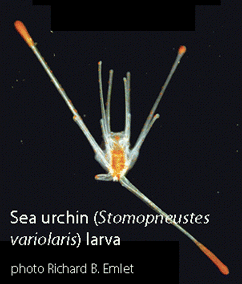
 Identifying marine life is a major challenge. On land, nearly all animals visible without a microscope are in one of two phyla: Chordata or Arthropoda, the latter most often represented by insects. In contrast, many ancient lineages are present in the oceans. Abundant marine phyla with well-known representatives include Mollusca (molluscs), Porifera (sponges), Cnidaria (corals, jellyfish), Ctenophora (comb jellies), Echinodermata (sea urchins, others), as well as Chordata (e.g. fish) and Arthropoda (e.g. crabs). Many marine species have strange immature forms (see sea urchin larva above), which may puzzle specialists and others. Even marine vertebrates can be challenging. Using mitochondrial DNA, researchers recently discovered that what were thought to be three families of deep-sea fishes were in fact larval, male, and female forms of a single family of fish (Johnson Biol Lett 2009). Observation of marine life is difficult except in a few near shore areas. It is easier for a school child with a pair of binoculars to survey the moon than for a team of oceanographers with expensive equipment to study the deep ocean.
As with the enigmatic fish species described above, routine application of DNA-based identification will advance oceanographic science, and I imagine will have an even more transformative impact than in terrestrial research. To help establish the DNA reference library, we have the Marine Barcode of Life Initiative (MarBOL), a joint effort of Census of Marine Life (CoML) and Consortium for the Barcode of Life (CBOL), which aims to “enhance our capacity to identify marine life” through DNA barcoding. I note that PLoS ONE recently set up “The MarBOL Collection” of papers devoted to marine barcoding and look forward to seeing how this scientific “newsstand” develops. In June, PLoS ONE received an impact rating of 4.351, placing it in the top 25% percentile of biology journals, making it a prominent place for highlighting and disseminating scientific developments.

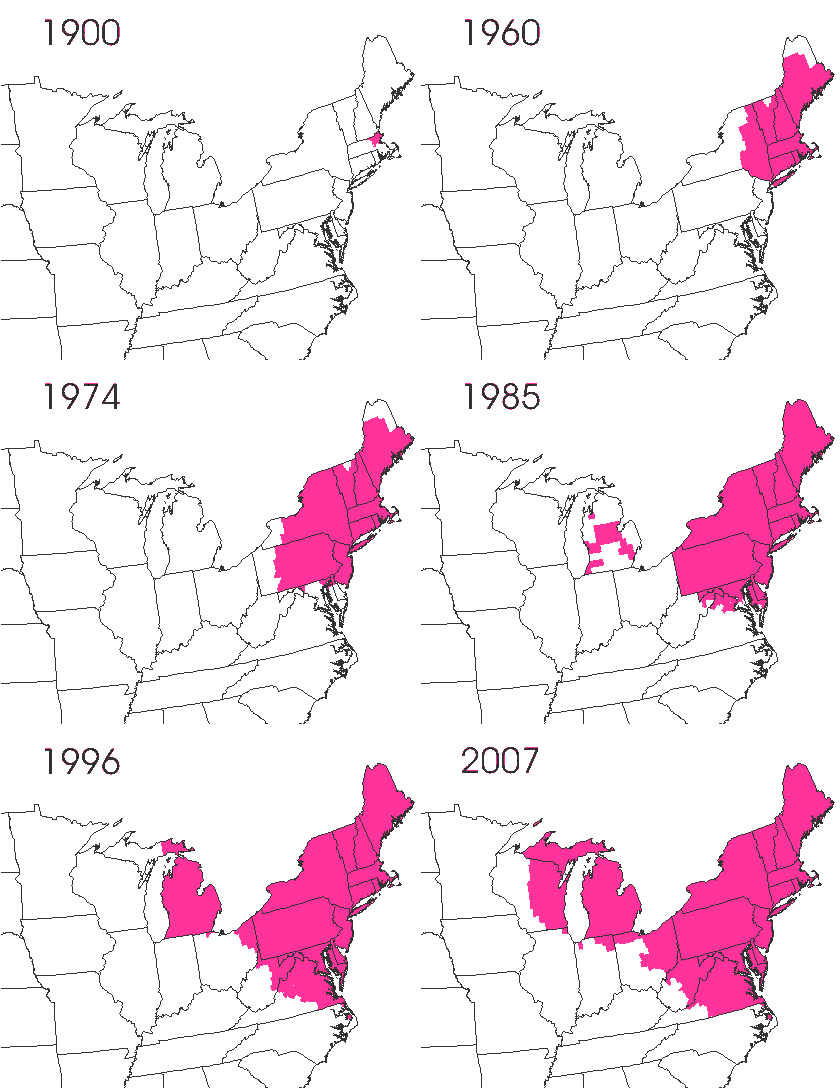 In the late 1860’s, a French entomologist, Étienne Léopold Trouvelot, living in Medford, Massachusetts, imported gypsy moths (
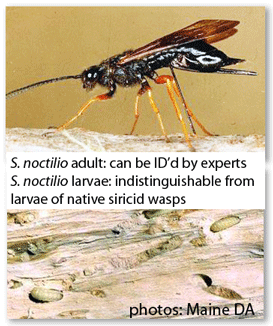 The first step in controlling invasive species is detection. In
 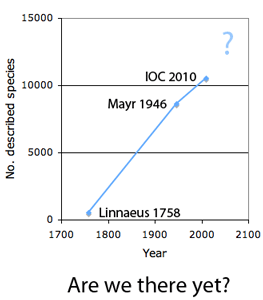 How many birds in the world? In the tenth edition of Systema Naturae (1758) (copy in US Library of Congress can be viewed or downloaded
 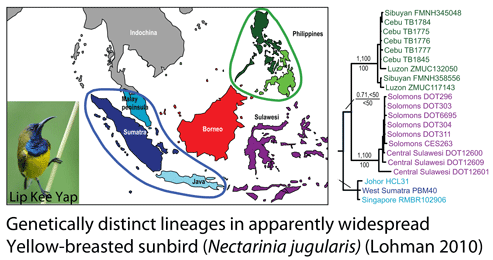 In some regions and categories of birds, the proportion of unrecognized species may be even higher. In
 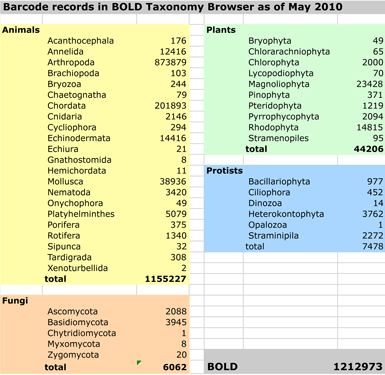 work with. Nonetheless, DNA barcoding of plants is ready for practical application and is providing immediately useful information (e.g. “DNA barcoding exposes a case of mistaken identity in the fern horticultural trade”
 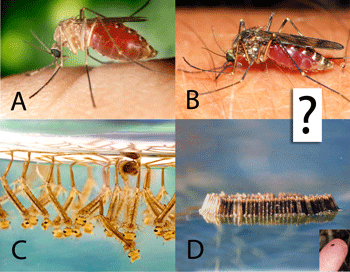 Biting insects transmit human and animal diseases, including protozoan (e.g., malaria, leishmania, trypanosoma (sleeping sickness, Chagas disease)), filiarial (e.g., onchocerciasis, Guinea worm), and viral (e.g., yellow fever, West Nile, dengue) diseases. Control measures rely on identifying the insects, which generally requires expert training.