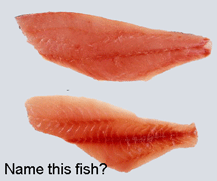
 Over 1000 fish species can be legally sold in the United States, a challenge for accurate labelling. Many fish products such as fillets cannot be identified to species, even by experts. DNA surveys suggest that at least for some expensive species, most fish products are mislabelled. In 2004 Nature 430:309, scientists at University of North Carolina analyzed mtDNA of fish labelled as red snapper, which by US law can only be applied to a Caribbean snapper species, Lutjanus campechanus. 77% (17/22) fish purchased from 9 vendors in eight states were not L. campechanus, and most were species from other regions of the world, or could not be identified to species due to lack of reference sequences.
More recently, the availability of commercial DNA testing has enabled enterprising news stations to do their own research. Last year a Florida television station found that 6 of 11 restaurant entrees labeled as local grouper were other species, including Asian catfish and tilapia, and last month a Los Angeles television station reported that red snapper entrees at 4 local restaurants were either tilapia, catfish, or mahi mahi. Following up on the news media, the Florida Attorney General’s office did their own testing, found 17 of 24 restaurants sold entrees mislabeled as grouper, and made legal settlements. What is needed is needed is a widely available method backed up by a reliable reference library that can be routinely applied to identification of fish and fish products in the marketplace. DNA barcoding is designed to be just that.
The Food and Drug Adminstration (FDA) Regulatory Fish Encyclopedia (RFE) aims “to assist with the accurate identification of species and help federal, state, and local officials and purchasers of seafood identify species substitution and economic deception in the marketplace.”
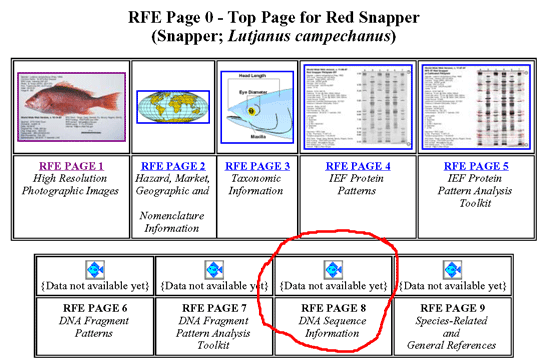
The species pages include scientific and common names, pictures of whole fish and fish products, analytic gels of fish proteins, and excitingly, an empty space for reference DNA sequence information. For reliable identification, the fish reference library needs comprehensive taxonomic coverage and adequate sampling of variation within species, ie DNA barcoding. I believe the Fish Barcode of Life Initiative (Fish-BoL), which has already collected barcodes from over 16,000 specimens representing more than 3500 species, will provide a widely used tool that will benefit consumers and the many species of fish that require management or protection.
 A dozen articles in current issue of
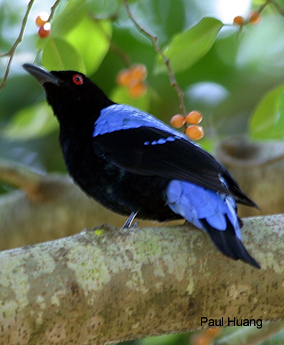 The Indomalayan biogeographic region spans a vast area of tropical biodiversity and includes inumerable islands with high numbers of endemic species. A large scale genetic survey with DNA barcoding is likely to help lead to dramatic increases in species counts in particular and better understanding of biodiversity in general. Additional collecting may be particuarly important in this region, as it is at present the least well-represented in frozen tissue collections. There was strong enthusiasm among regional participants, and recognition the initiative has public appeal and the potential to engage new sources governmental support.
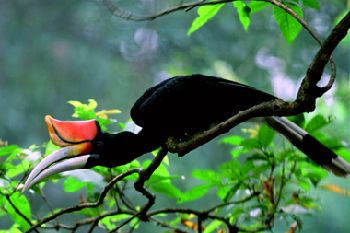 I look forward to organizational and scientific progress in this exciting region.