In Chile in early January we visited some of the world’s largest tree plantations as well as the wondrous intact indigenous forest of Isla Mocha. Thanks to Savithri Narayanan for her photo of this sign “Soy el arbol!!” on a tree in a Chilean park with its true and poetic message (translated into English by Jesse).
News

“A reliable, consistent, and democratic tool for species discrimination”
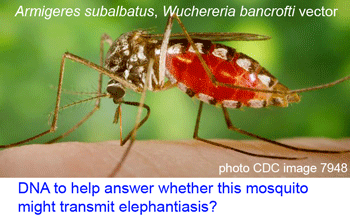 Human filariasis, caused by various species of insect-transmitted parasitic nematodes, affects more than 120 million persons in Africa, South America, and Southeast Asia, and includes elephantiasis and river blindness. In 7 january 2009 Frontiers Zool, 10 researchers from 5 institutions in Italy, France, Japan, and Venezuela apply DNA barcoding and traditional morphologic taxonomy to identification of parasitic filarioid worms. According to the authors, a molecular tool for identification of filiaria is a “desirable goal for many reasons” including “parasites conferred to diagnostic laboratories are often of poor quality due to the difficult[y] of sampling adults and undamaged organisms,” as a “method for the identification of filarioid nematodes in vectors,” and “nematode biodiversity is still highly underestimated both at the morphological and molecular level.”
Ferri and colleagues analyze diagnostic utility of 12S and barcode-region COI sequences and morphologic examination by experts to an assemblage of data from 165 individual specimens (73 newly analyzed for this study) representing about 60 species. Their data set encompasses most of the important human and animal filarioid parasites, including Wuchereria bancrofti and Brugia malayi, agents of human tropical elephantiasis, Loa loa (human ocular filariasis), Onchocerca volvulus (human river blindness), and Dirofilaria immitis (dog and cat heartworm), plus specimens recovered from wild animals ranging from bats to toads.
The authors applied a medical test approach to the sequence data, looking at which distance cutoffs produced “minimum cumulative error,” in which they include type I false positive (failure to assign to correct species, analogous to oversplitting) and type II false negative (failure to distinguish between species; analogous to lumping). I find their approach refreshing in that it recognizes the uncertainty inherent in any identification method. Even “gold standard” tests have error rates. Just as a medical laboratory considers a range of factors when adopting a new test method–cost, speed, sensitivity, accuracy, replicability, and training requirements, for example, we might usefully look at methods for species identification, including traditional morphologic techniques, in a similar way. In taking such an approach, we can recognize there are often marked differences between the methods we use to detect something and the methods used to define it.
As a medical testing example, automated systems for rapid detection of bacteria in blood cultures rely on monitoring pressure changes in headspace gas in liquid culture bottles, as growing bacteria consume or produce gases. At the same time we do not define bacteria as “organisms that produce pressure changes in laboratory culture bottles,” for example. Similarly, percent differences between nucleotide sequences of the test specimen and those in a reference library might be a rapid way to “detect” a species, but this does not mean these are a defining characteristic of a species. We recognize species conceptually as independent evolutionary lineages, and practically on the basis of discriminatory characters (eg morphologic, behavioral, or nucleotide substitutions at specific sites). In the day-to-day work of specimen identification and detection of new species however, sequence distances may work just fine as diagnostic signatures.
Back to the article. Ferri and colleagues report COI worked better than 12S as a diagnostic, primarily due to difficulty in finding a consistent algorithm for aligning 12S sequences. With COI, the minimum cumulative error was 0.62% at a K2P distance threshold of 4.8%. The errors were due to low interspecific distances between 2 congeneric pairs [Onchocerca volvulus (human host) and O. ochengi (cattle); Cercopithifilaria longa (Japanese serow, a goat-antelope) and C. bulboidea (Sika deer); might some of the morphologic differences between these species pairs represent phenotypic changes induced by the different hosts?]. More sampling within species will help determine if it is possible to molecularly discriminate among these species using a character- rather than distance-based method.
The authors call for an integrated taxonomic approach to solve discrepancies between morphologic and molecular methods, and conclude “we propose DNA barcoding as a reliable, consistent, and democratic tool for species discrimination in routine identification of parasitic nematodes.”
DNA speeds discovery of overlooked species
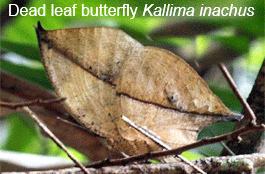 Just as new telescopes reveal previously hidden details of the universe, genetic surveys regularly reveal previously hidden (aka cryptic) species. Of course these species are cryptic only in the sense that morphological analysis is not the right tool to “see” them with. To my ear the word “cryptic” suggests camouflaged organisms that blend in with the environment, such as the Dead leaf butterfly Kallima inachus. Unlike camouflage, which is presumably a protection adaption, it is my impression there is nothing biologically special about morphologic crypsis except for the difficulty we have in recognizing it; that is, what we call cryptic species exhibit the same sorts of distinct ecological and behavioral adaptations found in those whose differences are more visible to the human eye.
To restate the above, when multiple individuals are examined for gene(s) that reflect species-level differences (this is the essence of DNA barcoding), many animal and at least some plant species are discovered to be comprised of two or more genetic clusters, each carrying diagnostic nucleotide substitutions. When appropriate analytic tools are applied, these within-species clusters are often found to be reciprocally monophyletic lineages that have been reproductively isolated for hundreds of thousands to millions of years. In studies where the painstaking work of natural history observation has been carried out, these genetic clusters usually show ecological and behavioral differences and sometimes previously overlooked morphological distinctions, consistent with species-level status. In short, DNA analysis speeds discovery of new species. In many cases, it reveals species that would otherwise probably remain unrecognized indefinitely.
The premise of DNA barcoding is that a very short segment (ie for animals 648 bp COI barcode region) is usually sufficient to screen for new species and to assign specimens to known species. Of course, more sequencing is always of interest, but the added discriminatory value for detecting species-level differences is small compared to the added cost. Moving backwards in evolutionary time, a neighbor joining tree constructed with 648 bp barcode sequences often groups genera and families correctly; however it generally does not contain enough information to establish branching order or uncover deeper-level associations that are the heart of phylogenetic study, so there is plenty for systematists to do.
Now for some data. In 25 december 2008 Mol Phylo Evol researchers from University of Gothenburg and University of Florida report on Lumbriculus variegatus Muller, 1774, a segmented freshwater worm widely distributed in Europe and North America, commonly used as a model laboratory organism, in environmental toxicology, and sold as pet food for fish and amphibians under name “blackworm.” Part of the laboratory interest in L. variegatus lies in its remarkable ability to re-generate after fragmentation; any of the approximately 200 segments can re-form a complete adult worm; most populations reproduce through auto-fragmentation. Given that L. variegatus is a common, widely-distributed organism described over 200 years ago and is regularly used in scientific study, one might not expect any taxonomic surprises.
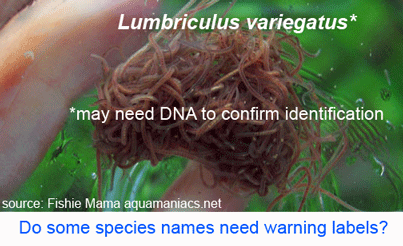 Gustafsson and colleagues were initially studying a neuropeptide gene FMRFamide using L. variegatus purchased from a commercial supplier in California, with puzzling results suggesting polyploidy with multiple gene copies. This lead them to further characterize approximately 50 individuals collected at multiple sites in Europe and North America. Sequencing of COI, 16S, and ITS sorted the specimens into 2 phylogenetically distinct (maximum parsimony and Bayesian analysis) clades with 17% mean difference in COI, with the same genetic structure in mitochondrial COI/16S as nuclear ITS. Both clades were found in North America and Europe, sometimes at the same site. The authors conclude “it thus seems reasonable to regard these two main lineages within the L. variegatus complex as different species, regardless of which species concept one adheres to.” Of course, it may be they have rediscovered a named species; they caution that more study needs to be done including sampling the other named species in genus Lumbriculus (see EOL page).
DNA barcoding is an efficient instrument for revealing species-level differences. Routine application of DNA barcoding can enhance quality control in work with model organisms, cell lines, and collected specimens, and the long-term value of species descriptions.
WSJ Tucker
An opinion piece in the 29 December 2008 Wall Street Journal by William Tucker quotes Jesse’s low view of investments in so-called renewable energy sources from this interview in Weltwoche magazine.
Best wishes for 2009

The past year with the Barcode Blog has been exciting and challenging. Looking forward to 2009!
Mark Stoeckle
Program for the Human Environment
The Rockefeller University
Plant specialists work towards standardization
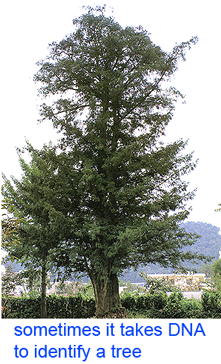 In 26 November 2008 Mol Ecol researchers from University of British Columbia report on a meeting of 1200 plant specialists, entitled “Botany without Borders”, held on the campus in July 2008, which brought together the annual meetings of Botanical Society of America, the Canadian Botanical Association/L’Association Botanique du Canada, American Fern Society, and American Society of Plant Taxonomists. According to authors Kane and Cronk, DNA barcoding was a recurring theme of presentations and posters.
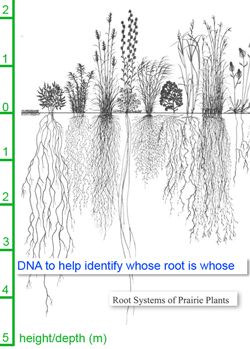
Plants continue to challenge a standardized approach to species identification using short DNA sequences from a uniform location on the genome, aka DNA barcoding. Genetic divergences among lineages make it difficult to design broad-range primers that amplify a desired target region across the diversity of plants and, at the same time, sequence differences among closely-related plant species are generally an order of magnitude fewer than those among animals, with the result that short sequences are often inadequate to assign specimens to species. Looking beyond these difficulties, the potential societal and scientific value of a standardized genetic identification method for plants is enormous. For one example cited in the meeting report, wild nutmeg trees of the genus Compsoneura can be identified by examining the tiny flowers on male trees, but trees are usually not in flower and female trees always lack these distinguishing characters. (It is remarkable that something as large as a tree can sometimes not be identified even by specialists!) In one study (Newmaster, Mol Ecol Notes 2007), a DNA barcoding approach using 2 short plastid sequences enabled identification of 94.7% of samples to species, compared to 40% using field characters. A standardized DNA-based approach should be a big boost to soil science by enabling the underground parts of plants, ie roots, to be readily named (Ridgway, BMC Ecol 2003).
 The authors conclude “DNA barcoding in plants is clearly here to stay and there is consequently an urgent need to rise to the scientific challenges it presents.” Some of those scientific challenges are explored in November 2008 Taxon by researchers from National Museum of Natural History, Washington, D.C., and National Center for Biotechnology Information, Bethesda, Maryland. Erickson and colleagues lay out a set of standard approaches to quantifying DNA barcoding success in plants.
The authors state “PCR amplification must be the primary criterion for selecting a DNA barcode,” i.e. the chosen region should have the best rate of successful amplification across the diversity of plants. They suggest 90% or greater rate of recovery as a guideline. Second, they suggest each or any additional markers should improve PCR success by reducing the number of non-recovered PCRs by 50% and improve identification by at least 10%, using a parameter they call “probability of correct identification (PCI),” which is defined pretty much as it sounds. Applying this statistic to existing plant studies indicates the best results are with 2 plastid barcodes in which case PCI approaches an average of 90%, which of course includes much lower rates among some groups. Nonetheless, in local flora successful identification to species level may often approach 100%, because closely-related congeneric species are not present. The effort to establish a standardized genetic library of DNA barcodes for world’s plants is moving ahead.
mtDNA recovery from old bones hints at DNA durability, ubiquity
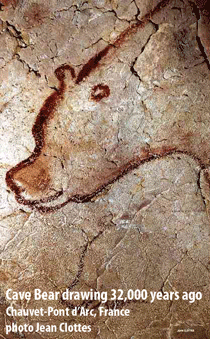 In another seeming step towards Jurassic Park, two groups of researchers recovered full-length mitochondrial DNA sequences from 22,000 to 44,000 year-old bones of extinct European and North American bears. Full-length mtDNA has been recovered from similarly ancient specimens, but in those cases frozen tissues preserved in permafrost were used. Both groups used specialized PCR protocols employing several hundred primer pairs designed to recover short fragments, rather than one of the newer sequencing technologies, demonstrating the continued power of DNA amplification.
In 28 july 2008 BMC Evol Biol Proc a group of 18 researchers led by Johannes Krause, Max Planck Institute, Germany, recovered full-length mtDNA from a 44,000 year old Ursus spelaeus (European cave bear) bone found in an Austrian cave, and from a 22,000 year-old skull of Arcdotus simus (American giant short-faced bear) from Eldorado Creek, Canada. In 11 november 2008 Proc Natl Acad Sci USA, 14 researchers led by Jean-Marc Elalouf, Institute de Biologie et Technologies de Saclay, France, report full-length U. spelaeus mitochondrial genome from a 32,000 year-old bone from the legendary Chauvet-Pont d’Arc Cave, home to the oldest rock art pictures ever found.
If we found a bone from one of these extinct bears in our backyard, could it be identified by its COI barcode? Submitting the long-ago bears’ COI barcode region sequences (positions 48 to 705) to BOLD ID engine flags both species as not in database, with a NJ tree similar to that created by full-length genomes (ie the extinct U. spelaeus is sister to U. arctos (Brown bear) and U. maritimus (Polar bear), and extinct Arcdotus simus is 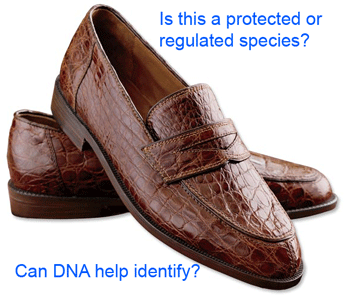 sister to Tremarctos ornatus (Spectacled bear). Of course it would be difficult to recover a full-length sequence–what about the 130 base pair “mini barcode” proposed for broad-scale biodiversity analysis? This is within the size range(ie < 180 bp) that Elalouf and colleagues report best for recovery of ancient DNA. Remarkably, A. simus mini-barcode submitted to BOLD ID engine gives NJ tree correctly showing T. ornatus as its sister species and U. spelaeus mini-barcode correctly picks out U. arctos and U. maritimus as most closely-related species.
Recovering DNA from ancient bones leads to CSI-like thoughts of where else we might usefully recover DNA for species identification. DNA has been recovered from naturally shed feathers, flakes of seal skin at breathing holes in polar ice, hair and saliva left by predators of sheep, bird faeces, and, turning to world of commerce, ancient and modern processed leather goods (Long 2007). I look forward to analyses of the many processed foods with what is currently an unverifiable “list of ingredients.”
Paul McCartney writes song for CoML Film
Beatle Paul McCartney’s blog confirms he is writing a song for the Jacques Perrin’s Ocean film made in cooperation with the Census of Marine Life.
Some taxonomists worry when DNA barcodes highlight unfinished taxonomy
In Cladistics 25 Sept 2007, Steven Trewick from Massey University, New Zealand applies mtDNA to help sort out endemic flightless grasshoppers in genus Sigaus, which are restricted to mountainous alpine habitat on New Zealand’s South Island. Here we might expect a complex pattern of diversification. These are small, terrestrial, flightless, presumably non-vagile (ie don’t travel far) animals in a deeply fragmented habitat. Their habitat lies in New Zealand’s central mountains, the Southern Alps, formed by a geologically recent uplift 5 to 2 million years ago. Like other organisms restricted to elevated mountain terrain, they are effectively living on “sky islands.” In this setting, we might expect a plethora of relatively young species with very narrow ranges, with difficulty determining which forms merit species-level status.
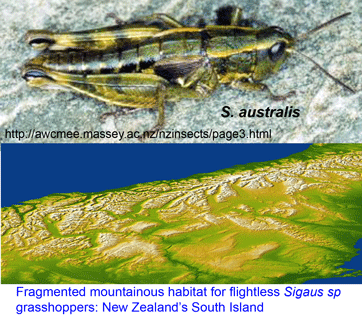 Trewick focused on Sigaus australis species complex, which includes the apparently widely-distributed S. australis, and 5 sympatric or parapatric species with much narrower ranges (S. childi, S. obelisci, S. homerensis, and 2 undescribed species). Within this complex he analyzed 160 individuals collected at 26 locations (mostly S. australis (136 individuals) and 1-13 individuals for the more restricted species). For mtDNA analysis, an approximately 600 bp region of 12-16S and about 500 bp of 3′ COI (ie not overlapping COI barcode region!) were examined.
Although the 3′ COI fragment analyzed in this grasshopper paper has been utilized in a number of invertebrate mtDNA studies, it is just one of many mtDNA targets that give essentially equivalent phylogenetic information (eg, in this study COI and 12S-16S gave same results). The hodgepodge of mtDNA regions analyzed in species-level animal work means that most data cannot be compared or combined. In my view, ALL animal mtDNA studies should include the standard COI barcode (defined relative to the mouse mitochondrial genome as the 648 bp region that starts at position 58 and stops at position 705; https://barcoding.si.edu/PDF/DWG_data_standards-Final.pdf), plus of course any other regions of interest. Standardization on the barcode region ensures long-term usefulness, both as a reference for identification and for comparisons across the diversity of animals. In addition to a defined genic target region, DNA barcode standards have other advantages, including that records are linked to voucher specimens and list primer sequences and include bidirectional trace files and quality scores.
In the present study single-strand conformation polymorphism (SSCP) of a 380 bp 12S fragment was used to screen for differences, and then individuals with different SSCP results were subjected to sequencing, so in the end just 40 of 160 Sigaus sp grasshoppers were sequenced for COI. This also means that there is voucher data in GenBank for just these 40 individuals. Continuing down the DNA barcode standard checklist, primer sequences are not easily accessible (there is a published reference for the primers, but access requires article purchase), it is not stated if bidirectional sequencing was done, and trace files and quality scores are not provided. I hope that future studies on New Zealand orthopterans will include the 5′ COI region and the remaining information, as I believe this will increase their long-term utility both as an identification reference and for comparisons across diversity of animal life (>520,00K individuals representing >50,000 species in BOLD so far). There is a big opportunity for grasshopper specialists to contribute–the BOLD taxonomy browser contains records for only 191 of the approximately 10,000 species in family Acrididae!
To skip to the conclusion, the sequence analysis gave an entirely different picture than existing morphologic taxonomy. 12S-16S and COI gave identical results: four well-supported geographically-structured clades within the widespread S. australis morphospecies, 3 of which had partly overlapping ranges. The 5 described or proposed species in the complex nested within these clusters, with shared or similar mtDNA haplotypes to S. australis from the same region.
The author concludes that the results show that “haplotype sharing and paraphyly essentially invalidate the DNA barcoding approach.” I disagree. To my reading, the most parsimonious explanation is that 1) morphologic taxonomy has overlooked deeply divergent genetic lineages, which likely represent different species, in S. australis for over 100 years, and 2) a number of morphologically distinctive forms have arisen very recently.
In support of the first point I note that in April 2008 report “Diversity and taxonomic status of some New Zealand grasshoppers” by the same author and Simon Morris, “Attention needs to be given to the spatial distribution of diversity within [S. australis complex]…Further morphological study may support the splitting of one or more of the groups indicated by phylogenetic analysis of mtDNA sequences.”
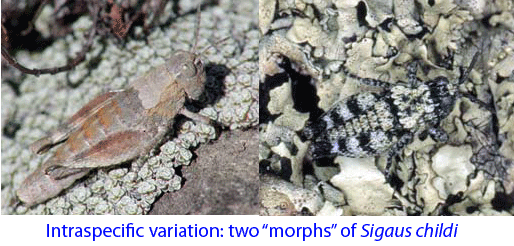 Regarding point 2, genetic methods including DNA barcoding may not resolve very young species. For Sigaus sp. grasshoppers, nuclear sequence data will help sort out whether these are young species or the products of recent hybridization or introgression.
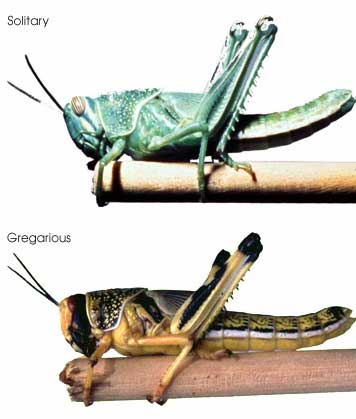 In this regard, I am struck by the apparent variability in some grasshopper species, as in the color morphs of S. childi shown above. It brings to my mind the extraordinary transformations from solitary grasshoppers to swarming locusts (these are members of the same Acrididae family as Sigaus). Perhaps grasshopper genetics include analogous latent “switches” that might enable relatively rapid evolutionary transformations.
.
.
.
.
.
.
.
.
.
.
.
.
.
.
.
.
.
.
.
.
Antarctic CoML in the NYT
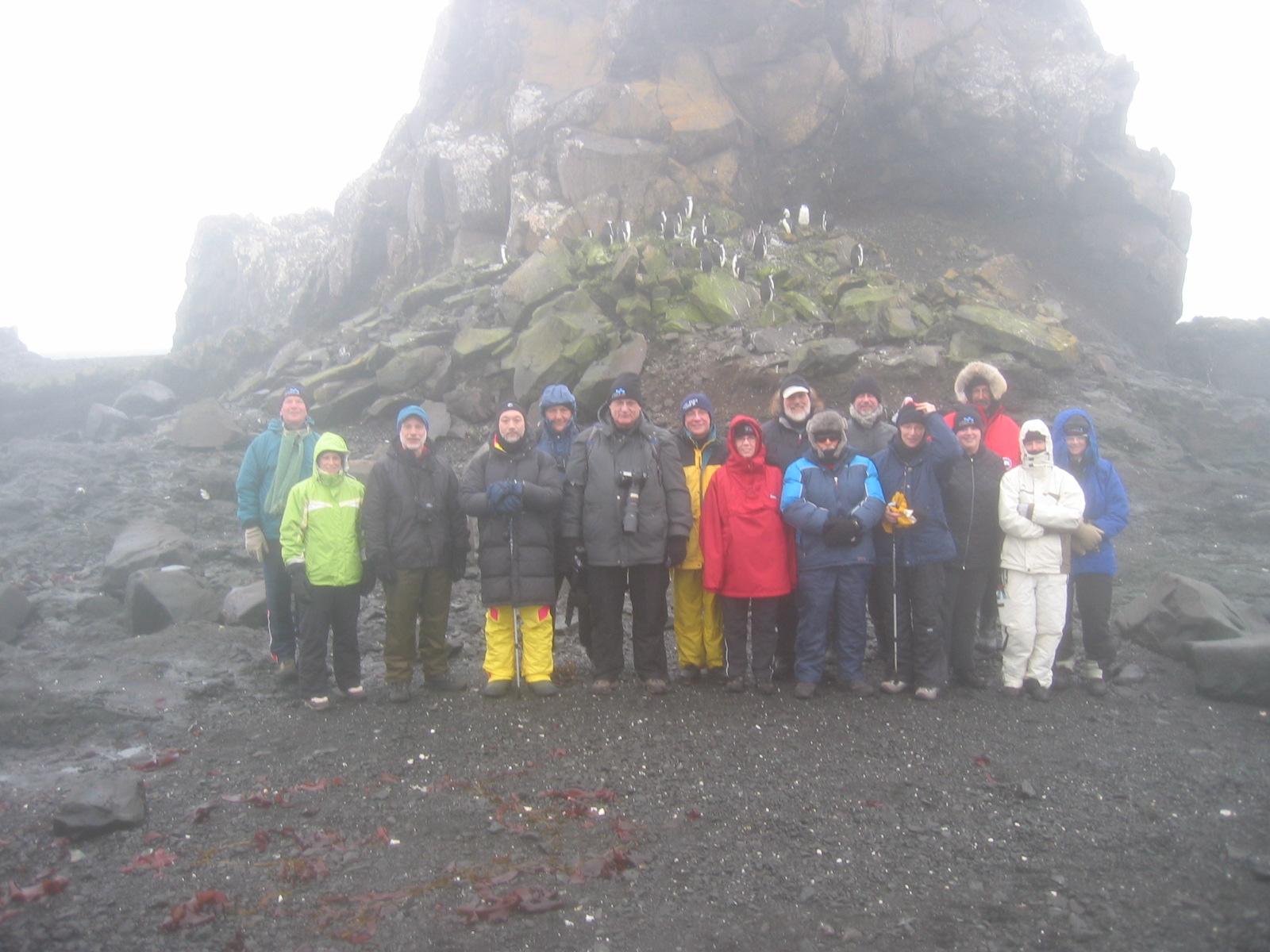
The New York Times recognizes the work of the Antarctic team of the Census of Marine Life in an editorial today. Jesse had the privilege with the CoML Scientific Steering Committee to participate in the Antarctic work photographed here on a South Shetland Island in February 2008.