Citation: The Bridge 23 (3): 15–30 1993 Also pp. 557-584 in Costs, Impacts, and Benefits of CO2 Mitigation, Y. Kaya, N. Nakicenovic, W.D. Nordhaus, and F.L. Toth, eds., International Institute for Applied Systems Analysis, Laxenburg, Austria, 1993.
This paper states knowns and unknowns about efforts to curtail greenhouse gas emissions (mitigation) and lessen the harm of climate change (adaptation). The knowns about mitigation are that decarbonization and efficiency of the energy system are advancing steadily; some mitigation will be cheap; strict curtailing of emissions might cost 2 percent of gross domestic product (GDP); gradual control steps are better; and doubling of atmospheric concentration is not inevitable. Knowns about adaptation are that vulnerability to climate is lessening; climate change might cost 0-2 percent of GDP; analysts should assume adaptation rather than dumb farmers; and analyses of mitigation and adaptation need integration. Questions are how energy prices affect emissions; whether it is preferable to regulate emission prices or quantities; the shape of the damage function from climate change; ways to improve long-term predictions of socio-technical systems; how much policies intended to affect emissions matter; and the opportunity costs of focus on the climate issue. In conclusion, prosperity and technical progress may make both mitigation and adaptation affordable and avert the climatic danger.
Keywords: climate, energy, carbon dioxide, decarbonization
Areas of Research: Energy and Climate
INTRODUCTION
Greenhouse warming vexes us because destruction threatens on one side if we do nothing to curtail emissions but bankruptcy threatens on the other if we do much. Can the growing evidence that both adapting to the climate change and curtailing the emissions will be affordable resolve the dilemma and still our vexation?
This dangerous question animated the Workshop on Costs, Impacts, and Possible Benefits of CO2 Mitigation held in September 1992 in Laxenburg, Austria, under the auspices of the International Institute for Applied Systems Analysis (IIASA) and the Intergovernmental Panel on Climate Change (IPCC). This essay draws on the papers and discussions at the Workshop first to state the answers which the Workshop and related recent research allow and then to ask the questions the answers provoke. “Mitigation” is the curtailing of emissions. “Adaptation” is the lessening of the harm or the increasing of the benefits of climate change.
ANSWERS ABOUT MITIGATION
- Decarbonization and efficiency of the energy system are advancing steadily.
- Some mitigation will be cheap.
- Strictly curtailing emissions might cost 2 percent.
- Gradual control steps are better.
- Doubling of concentration is not inevitable.
Decarbonization and efficiency of the energy system are advancing steadily.
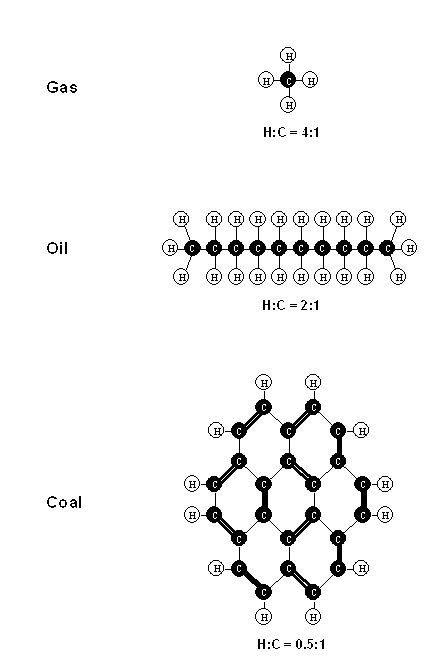
Decarbonization is the progressive lightening of the amount of carbon used to produce a given amount of energy, as the energy system favors molecules that favor hydrogen over carbon (Figure 1). Twenty years of energy analyses, largely by Arnulf Gruebler, Cesare Marchetti, and Nebojsa Nakicenovic at IIASA, were needed to reveal and establish firmly this most fundamental of all trends in the energy system, which has held for 150 years (Figure 2). Appreciation of decarbonization is recent (Ausubel, 1991a).
Figure 1: The atomic structure of typical molecules of coal, oil, and gas and ratio of hydrogen to carbon atoms.
Decarbonization began long before organized research and development in energy and has continued with its growth. Many ways to continue down the curve have been documented (Nakicenovic, 1992).
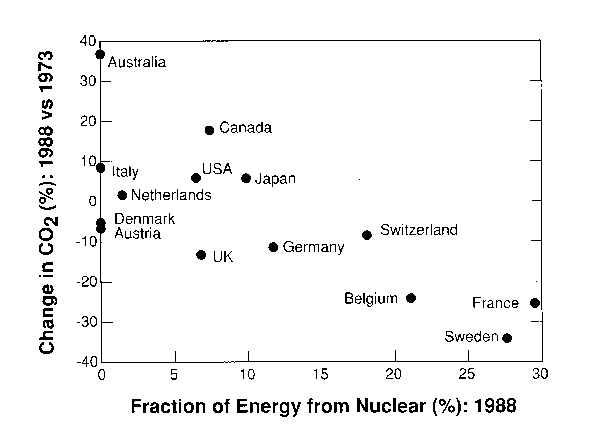
During the 1970s and the 1980s the countries that reduced their carbon emissions were for the most part countries that expanded nuclear energy (Figure 3). The 150-year history suggests an ever-changing evolutionary envelope of opportunities.
Figure 2: Decarbonization or the changing carbon intensity of primary energy for the world. Carbon intensity is calculated as the ratio of the sum of the carbon content of all fuels to the sum of the energy content of all primary energy sources. Carbon emission in tons carbon per kilowatt year are: wood, 0.84; coal, 0.73; oil, 0.55; and gas, 0.44. Courtesy A. Gruebler and N. Nakicenovic.
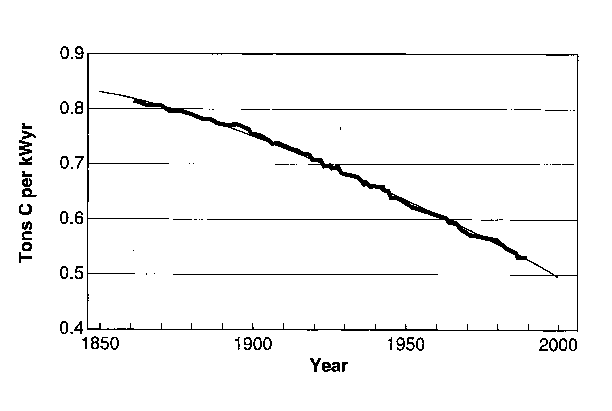
Figure 3: Decrease in CO2 from 1973-1988 for major OECD countries from nuclear power. Source: after Bodansky, 1991; data from OECD, 1990.
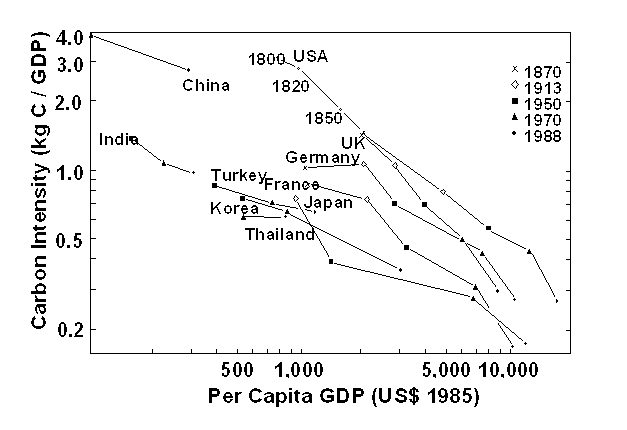
The history of the efficiency of the energy system is similarly encouraging. Though each country follows its own path, dependent on specifics of geography, capital stock, and other factors, the direction is decisively efficient (Figure 4). In the United States, as an example, on average it has taken about 1 percent less energy to produce a good or service each year since 1800. Thus, it takes less carbon to produce not only a unit of energy but a unit of gross domestic product (GDP) (Figure 5).
Figure 4: Trajectories of energy efficiency and decarbonization for selected countries. Courtesy A. Gruebler and N. Nakicenovic.
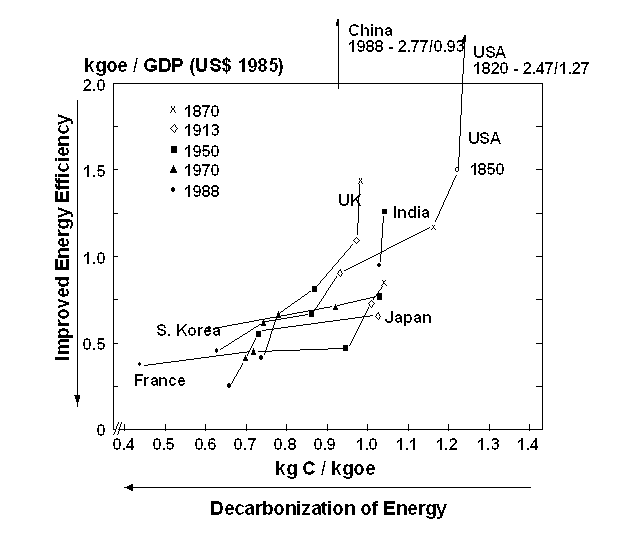
Figure 5: Diminishing carbon intensity of GDP for selected nations. Analysis includes fuelwood and other renewable sources of energy. Source: Nakicenovic, 1992.
Some mitigation will be cheap.
Many estimate that a reduction in carbon dioxide emissions of 20 percent below what they would otherwise be comes at low or no cost (Weyant, this volume; National Academy of Sciences, 1992; Pearman, 1992). Estimates range between 10-40 percent, depending on approach and assumptions. It will not be difficult to achieve lower rates of emissions, hewing to the courses of both decarbonization and efficiency, even in China (Wei, this volume). Pieces of ripe fruit are hanging low, waiting to be picked. Some argue that low hanging fruit will continue to ripen with each decade.
Strictly curtailing emissions might cost 2 percent.
What if society chooses to go beyond the favorable “dynamics-as-usual” of the energy system? After all, population and economic growth can dominate efficiency gains and decarbonization, resulting in absolute emission growth. Studies of Brazil, Japan, Russia, the European Community, and developing countries, and a survey of models suggest that the price of strictly curtailing greenhouse gases might be 2 percent of gross domestic product (see respectively, Moreira, Amano, Bashmakov, Koopman et al., Pachauri and Khanna, and Dean, this volume). Globally, 2 percent might stabilize emissions at present levels. Some confidence in the estimate comes from the lack of contradiction in the results of diverse models. The models may be more reliable than a few years ago. Coefficients are estimated with more and better data. Superior algorithms calculate the results.
Gradual control steps are better.
Gradual use of policy instruments to control emissions is preferable to abrupt moves. Quantifiable benefits exist for acquiring new information about costs that can influence policy design (Kolstad, Peck and Tiesberg (a), this volume). An economically efficient path is more likely if policies evolve through regular rounds of review and negotiation.
Doubling of concentration is not inevitable.
Studies of the greenhouse effect conventionally analyze the climate when atmospheric concentrations of greenhouse gases are twice the pre-industrial level, or 600 ppm, usually estimated to occur about 2070 AD. The good news from studies of mitigation is that the canonical doubling of concentration can be avoided. Cresting around 500 ppm is feasible, if we stay on course to wring most of the carbon out of the energy system over the next 100 years.
This conclusion is important for adaptation studies, because most adaptation studies have been pegged to at least a 600 ppm world, which may well be more distant than 2070 or never come. Doubling is founded on technological and political stagnation. Interestingly, a scenario in which decarbonization was reversed and efficiency almost freezes was labeled by the IPCC (1989, p. 341) “business-as-usual” and served as the reference case for most IPCC adaptation studies.
ANSWERS ABOUT ADAPTATION
- Vulnerability to climate is lessening.
- Climate change might cost 0-2 percent.
- Assume adaptation, not dumb farmers.
- Integrate analyses of mitigation and adaptation.
Vulnerability to climate is lessening.
A range of social and technological developments have lessened human vulnerability to the natural environment, including climate (Ausubel, 1991b). The lessening trend is widely repeated throughout the world, explained by industrialization, better built structures, telecommunications, and institutional innovations, in short, development.
Compare yourself to your grandparents and great grandparents. Climate surely mattered more for our ancestors who crossed perilous seas in windblown boats, struggled with horses and wagons through the mud when it rained, prayed for a shining harvest moon, and dried fruits and canned vegetables to tide them over the long winter.
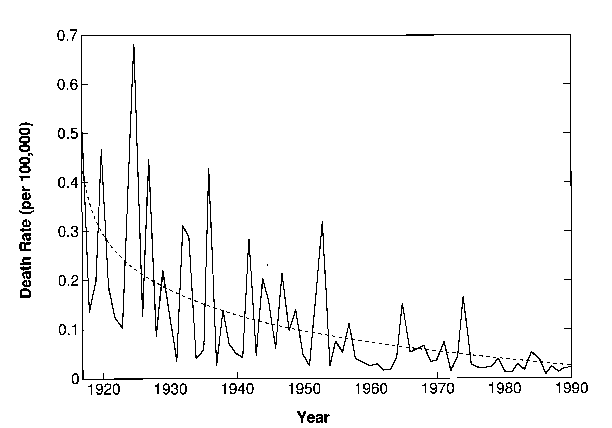
Numerous facts confirm the lessening. For example, the tornado death rate has decreased sharply in the United States in this century (Figure 6). With indoor malls for shopping and domed stadiums for athletic events, climate matters less.
Figure 6: Tornado death rate: Actual (solid line) and fitted trend (dashed line) for the United States, 1917-1990. Source: National Safety Council, 1992.
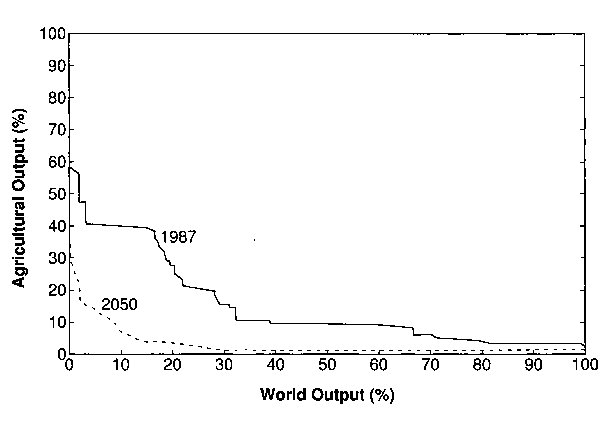
Is the trend valid globally and for developing countries? Nordhaus (personal communication) addressed this question by analyzing the changing shares of population and output associated with agriculture. Indices of agriculture, the prime activity exposed to climate, are probably the best measures of vulnerability to climate. In 1987 agriculture provided about 15 percent of total world output. As Figure 7 shows, a small fraction of world output is currently produced in economies that are heavily dependent on agriculture. In 2050 only about 5 percent of global output may be agriculture.
Figure 7: Distribution of the share of economic activity in agriculture arrayed by the fraction of world output (sum of gross national products) for 1987 (solid line) and projected for 2050 (dashed line). The area under the line, representing in total the share of world output in agriculture, is a measure of vulnerability. For any given segment of gross world output, the closer to the horizontal axis, the lower the vulnerability. To project the situation in a new climate, GDP in 2050 for each country is estimated by extending average growth rates 1965-1987 to 2050, with some downward adjustments for countries such as Japan and Korea that have had high growth rates unlikely to be sustained for six more decades. Then the relationship between per capita GDP and the share of the economy in agriculture that existed in 1987 for the cross-section of countries is applied. Source: After William Nordhaus, New Haven, CT, personal communication.
This measure elevates goods rather than people. Though the developed nations may account for 80 percent of current gross world product, only 1 billion people work in these less vulnerable economies, while over 4 billion struggle in the developing world. Though most of the developing countries hope to develop substantially by 2050, some certainly will fall short.
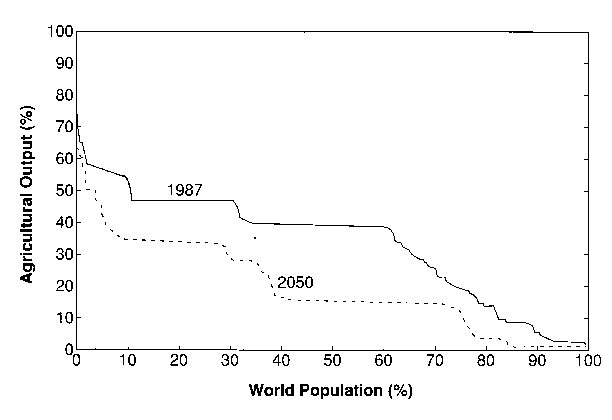
The proportion of population (by nation) gaining income from agriculture shows that people vulnerable to climate change are more plentiful than output (Figure 8). In the industrialized countries, the vulnerable are few. But, 60 percent of the world’s population still earns 40 percent or more of its income in agriculture. Yet, the trend again is toward a lessening of vulnerability to climate. By 2050 the share of world population heavily reliant on agriculture is projected to halve, though the absolute number would remain about the same.
Figure 8: Distribution of the share of economic activity in agriculture arrayed by the fraction of world population (sum of national populations) for 1987 (solid line) and projected for 2050 (dashed line). Source: After William Nordhaus, New Haven, CT, personal communication.
Hazard is a largely human construct. As the American engineer Norman Augustine (1987) observed, trailer parks cause tornadoes. Typhoons matter when an empty low-lying coastal island in the Bay of Bengal gains 100,000 residents. Hurricanes pass without legacy unless buildings are badly constructed and sited, as many were in southern Florida. Grain reserves, crop insurance, and futures markets decrease the disaster of drought.
Climate change might cost 0-2 percent.
Studies suggest that the cost to gross world product of the climate change accompanying a CO2 doubling might be between about 0.25-2.0 percent (Fankhauser, Scheraga et al., this volume). The amount is logical. If agriculture is heading toward 5 percent of world product in a 600 ppm world, loss of 20 percent of farm output would take 1 percent. That is a colossal loss, both intolerable and unlikely. If a more moderate agricultural loss is matched by costs of rising seas and other problems, the amount sums correctly.
If there is a bias in research to date, it is probably high, because most studies incorporate little or no adaptive behavior, as discussed below. Reassuringly, a novel, independent way of assessing the economic worth of climate through land values, which already reflect adaptation, produces preliminary results that also point to small numbers (Mendelsohn et al, this volume).
Though the small numbers may reassure the person on the street, they can upset people who have invested their time in climate change or want to avoid all risks.
One reason is that the small impact numbers cause a political problem for budgets of science and environmentalism. High estimates of the cost of impacts have been used to justify large expenditures for research projects, particularly for satellite programs, and drastic surgery on the energy system.
The small numbers also cause discomfort when compared to other relevant numbers. When used in a cost-benefit analysis, the conclusion might be that no social response is warranted, if avoiding the problem costs 2 percent and incurring the problem costs only 1 percent. Costs could outweigh benefits (McKibbin and Wilcoxen, this volume).
Four serious defenses are mounted against the small percentages.
One is that in absolute terms the numbers are large. 1 percent of today’s gross world product is about $200 billion. 2 percent of gross domestic product is about what industrialized nations, including the private and public sectors, now spend on environmental quality in total. The numbers may be hard to discern in statistical tables but not in the political process.
A second defense is that the distribution of costs will exacerbate problems well above what the magnitude suggests. In short, the poor will suffer more (Scheraga et al., volume), and they will add heat to warming.
A third defense is that further research on impacts and adaptation may reveal added costs. People search for neglected considerations or flaws in the analyses.
| Table 1: Deaths due to injury, United States, 1989 | |
|---|---|
| All Accidental Deaths | 95,028 |
| of which: | |
| Transport | 50,436 |
| Falls | 12,151 |
| Poison | 6,524 |
| Fire | 4,716 |
| Drowning | 4,015 |
| Medical | 2,850 |
| Excessive cold | 1,015 |
| Excessive heat | 201 |
| Storms and floods | 94 |
Threats to health hold hopes of high costs. What about deaths from hot weather? In the United States in 1989 of 95,000 killed in accidents, 201 died of the heat and 94 in storms (Table 1). Cold took five times as many as heat. From that perspective global warming does not appear a direct hazard to public health. The conjecture that greenhouse warmth will aid the emergence of alarming new viruses can form a fallback position.
More compelling is the scarce understanding of consequences for ecosystems and other non-marketed goods (Jansen, this volume). Results from one experiment with an artificially constructed tropical ecosystem suggest that increased CO2 fertilization can promote losses of soil carbon and the release of mineral nutrients similar to the effects when sugar is added to soils (Koerner and Arnone, 1992). Yet, natural vegetation near gas vents which create a chronically CO2-enriched atmosphere suggests that plants have acclimated without trauma (Miglietta and Raschi, 1992). We are in speculation. By changing the climate, the context for nature and conservation shifts. The consequences could be large. Assessment is hard, especially in monetary terms.
The fourth defense is that actions must be evaluated not only for expected net costs (or benefits), but also for the levels of uncertainty surrounding them. Here the “Precautionary Principle” for environmental management comes into play. The Precautionary Principle is a legal term found in a growing number of international environmental agreements (Cameron and Abouchar, 1991). The declarations of the Second World Climate Conference and the UN Conference on Environment and Development cite it. Basically it requires that proof of no harm exist before an activity is allowed.1
The Precautionary Principle may be understood as the appropriate treatment of uncertainty. To a considerable extent it equates with risk aversion. The Precautionary Principle should significantly influence decision making where there are abrupt thresholds in loss functions or possibilities of very large or infinite damages.
When asked the question “Would you prefer a certain million dollars or a gamble with an expected value of a million dollars?” most respondents will prefer the certain million. If the level of uncertainty surrounding the benefits is high, this fact is extremely important in the formation of strategy. Such uncertainty is a reason the insurance business is profitable. It also accounts for the popularity of casinos, where, however, most people play for small stakes.
The Precautionary Principle is a warning to take into account risk aversion in making decisions under uncertainty. Making the Principle operational for global warming is difficult because decision-makers disagree about the probability and size of potential losses. Within economics, this disagreement is usually displayed in divergences over the appropriate discount rate.
Environmentalists resort to the possibility of climatic calamity as a trump card (Cline, Grubb, this volume). Should, therefore, the central estimates or best guesses about costs and benefits of mitigation and adaptation be ignored in favor of contingencies based on outlying possibilities?
The specter of doom always hangs. The Old Testament of The Bible records the prophet Jeremiah in 612 B.C.: “I looked upon the earth and lo it was waste and void, and to the heavens and they had no light. I looked on the mountains and lo they were quaking, and all the hills moved to and fro. I looked and lo there was no man and all the birds of the air had fled. I looked and lo the fruitful land was a desert and the cities were laid in ruins.” (Jer 4:23-26)
The climate issue deals with deep human fears, the oldest human fears. It evokes the list of Kates (1992): Are we too many, will there be enough, is there too much, will humankind, any kind, survive?
The debate over climate is the latest occasion for these concerns, and we want to hedge against catastrophe. Whether the probability of climatic catastrophe is 1-1000, 1-100, or 1-2 is unknown and perhaps unknowable. A survey of 19 experts suggests the mean probability of extremely unfavorable impacts for a 3oC warming over a century is about 1-20 (Nordhaus, personal communication). Additional research in the natural sciences may not help reduce the number of possible worlds but increase it.
Our ancient fears will never go away. Jeremiah preached for forty years, and during that time, as far as we are aware, nature was not unusually harsh. Political catastrophes befell the Jewish people, including the Babylonian exile. Concern, like energy and matter, is conserved, and catastrophe always could happen. The climate issue ultimately reduces not to what is known but to fear of the unknown.
In short, +1 percent may well remain the reference estimate for cost of climate change, with arguments raging about the shape of the distribution in which this is a good guess.
Assume adaptation, not dumb farmers.
Most studies of the impact of climate change assume that the climate shifts over the next decades and other matters such as technology, trade, and diet change little or not at all. The impact of climate is usually calculated as the difference in production between today’s output and that in a different climate superimposed on today’s farm or city. Because today’s activities are adapted to today’s climate, the estimated impacts of climate change are usually losses.
Scaling up or multiplying studies made for small areas to cover larger ones tends to create a further negative bias. Compensating possibilities for trade, migration, and emergence of new activities to benefit from new conditions are neglected.
The Adaptation Panel of the National Academy of Sciences (1992) study on global warming definitively ends the reliance in climate impact studies on “dumb farmer” scenarios in which people, like turkeys, stare up at the rain with open mouths until they drown. After the massive political and media attention to climate during recent years, many people who need to know that climate is likely to change over the next decades and century are now aware of it. Even without the media attention, people are alert to changes in their environment. We should study the responses of smart farmers, smart businessmen, and smart householders, as well as dumb ones.
Climate change should not be superimposed on the world as it is, but on the world as it may be. The Missouri-Iowa-Nebraska-Kansas (MINK) study offers an advanced approach to considering impacts and adaptation (Rosenberg and Crosson, 1991). The effort to foresee climate 30 years hence is matched by effort to foresee other changes in the region over the same period.
Importantly, adaptation does not require waiting. Much adaptation is anticipatory. Like its counterpart mitigation, adaptation often takes the form of investment.
A prime example of adaptation is weather forecasting. The weather forecast precedes the storm, so behavior can adjust. Adaptation need not rely on one climate scenario but can prepare for a variety of conditions: dryer, wetter, hotter, stormier, more variable.
In fact, fitting human life better to a warm environment is a necessity. About 75 percent of today’s population of 5.3 billion live in what are now developing countries, which are largely hot countries. By 2020 the world’s population is expected to exceed 8.2 billion, and 85 percent of that will be in the countries now categorized as developing. Growth rates are highest where annual average temperature is above 20oC. Regardless of climate change, a growing share of the world’s population will dwell in high temperatures in the next century. Changes in the percent of the world’s population living in different climate zones will be influenced much more by population growth than by changes in climate, for several decades at least.
Global warming is a reality for the human population even if our emissions stop today. More efficient, pleasing, and less environmentally damaging ways to live in hot areas can help billions of people regardless of climatic shifts associated with greenhouse gases.2
The vulnerability of societies to environmental hazards can certainly be further lessened, especially in developing countries. We need to identify the actions which can reduce vulnerability and avoid the behaviors which increase it. These are the central tasks of adaptation and justify the importance of adaptation research.
Integrate analyses of mitigation and adaptation.
Almost always analysts set mitigation and adaptation in opposition or consider them unrelated alternatives. Setting mitigation and adaptation against one another may enliven the debate, but it makes the debate academic as well as unsound.
The production that creates emissions creates the income that pays for both mitigation and adaptation. Rising incomes have provided countries, regions, and individuals the means for overcoming a sequence of environmental problems. The World Bank (1992) has proposed a provocative set of relationships between income and pollution (Figure 9). The Bank finds that increasing per capita income is applied early to provide water supply and provide urbane sanitation. As income rises further, problems with local air quality continue to worsen, but these also crest and are solved by prosperity.
Figure 9: Relationship between environmental problems and income growth, based on cross-country regression analysis for data from 1980s. Approaches based on times series for individual countries may yield a different pattern for carbon dioxide emissions. Source: World Bank, 1992.

In contrast, the Bank concludes that the production of carbon dioxide and garbage have yet to show signs of abating with increase in per capita wealth. The analysis of Nakicenovic (1992) suggests the Bank’s picture of carbon dioxide emissions is not complete and possibly wrong. Per capita carbon dioxide emissions must be viewed as a function of both technology and income and may well be at or near saturation in many industrialized nations.
To illustrate the influence of income, consider the scenario prepared by the U.S. Environmental Protection Agency to study impacts of unimpeded growth in the emissions of greenhouse gases (Lashof and Tirpak, 1989). Annual global income in the year 2100 reaches $35,600 per capita, about 8 times the present level. The economic activity producing such incomes can surely emit much gas. It also permits purchase of water desalinating plants, dikes, and umbrellas, as well as energy-efficient and low-carbon devices. Moreover, technologies for energy efficiency can aid both mitigation and adaptation. A well-engineered residence or office can reduce both emissions and vulnerability to weather and climate.
Nearly all studies to date have failed to address thoughtfully the question of the resources that may become available for adaptation or how wealth itself may enhance the preference for clean energy. The resources available for adaptation are largely the same ones as for mitigation. It is curious to propose that societies will be rich in looking at energy alternatives and poor in considering approaches to provision of water and food.
The common sets of resources that should be considered in analyzing mitigation and adaptation are social as well as financial and technical. Certain mitigation strategies may require a cooperative social order, within a nation or internationally. This assumption also has implications for the capacity to adapt.
Conversely, the knowledge haunts us that, if development fails, many problems will be more serious for nations than climate change.
Explicit treatment of the rate of technical change is particularly important for an improved, consistent set of analyses of mitigation and adaptation. With respect to mitigation, it is fashionable to assume rapid progress in energy technologies, particularly for energy efficiency. Yet, comparable assumptions are scorned with regard to plant genetics, protection of human health, and supplies of freshwater. If the worldwide research and development enterprise is successful in energy over the next 50 years, work in materials, information, telecommunications, and other fields important for adaptation is unlikely to trail behind. The same cluster of technologies will determine practice in the future with respect to emissions and adaptation, just as the electric motor is found in both power plants and household appliances today.
Adaptation and mitigation must be analyzed within a consistent, dynamic framework. This needs to be reflected in the organization of academic research, within national studies, and in the activities of the IPCC.
At a national level, exemplary progress is found in the study of the Council for Agricultural Science and Technology (1992), based on the well-posed question: “For a warmer planet with more people, more trade, and more CO2 in the air, can U.S. farming and industry prepare within a few decades to sustain more production while emitting less and stashing away more greenhouse gases?”
At a global level, the first dynamic, integrated model of climate change and the economy now functions (Nordhaus, 1992a,b). Enough information about adaptation and mitigation exists to calculate an optimal investment in curtailing CO2 emissions. The calculation has been made and cannot be ignored.
Though the broad understanding of mitigation and adaptation has advanced rapidly, vexing questions remain, some technical and some fundamental.
TECHNICAL QUESTIONS
- How do energy prices affect emissions?
- Is it preferable to regulate emission prices or quantities?
- What is the shape of the damage function from climate change?
How do energy prices affect emissions?
The questions of how and when prices matter are baneful for energy economists. Powerful short-run effects have been demonstrated by the oil price flares of the 1970s. Studies comparing energy use in countries where consumers face different prices argue for strong relationships as well. But major questions remain about transferability of experience from one setting to another and about long-run behavior (Hourcade, this volume). Long-run price elasticities in the energy sector are not well-understood.
A problem is that energy prices do not want to change. Crude oil prices, one of the most telling index prices for energy, have been strikingly constant since about 1915 except for the few flares (Santini, 1990). Neither resource depletion nor market manipulation by producers or consumers has had a sustained effect. A strong invisible hand does indeed appear to be at work. This hand may not help those who see high prices as the best route to low emissions.
Of course, prices paid at the gas pump may vary greatly even if those at the wellhead do not. Filling a tank costs much more in Rome than Riyadh. Better understanding of end-use behavior is critical to the success of policies that rely on taxing energy or raising its price to reflect full social costs. It is impressive that even the price flares which were sustained for 5-10 years, while they brought recessions and temporarily depressed emissions for heavy energy users, left the configuration of the energy system intact. In energy, the price of repression may be affordable for a few years but the price of revolution out of reach.
In fact, most of the emissions “saved” or avoided globally since the early 1970s are not attributable to actual price rises. Rather they are caused by growth of nuclear energy (now saving about 1/2 Gt C/yr over the probable alternatives); global economic slow-down which has lessened energy demand by 10-20 percent of what it otherwise would be; and autonomous efficiency gains proceeding at 1-2 percent year. Of course, expectations about prices, as well as actual prices, may have played a role.
More insight would be helpful as a new round of aggressive play with energy taxes begins. It would hardly be surprising if high energy prices (disguised as taxes) fall quickly after a few years. Transport, housing, food, and other sectors resist alteration in the share of the social budget which they receive.
One price puzzle is how innovative technologies become economically superior to those they replace. At the time of introduction, the fresh competitors are often decidedly inferior by standard bottom-line calculations. A combination of continuing technical improvements, productivity change in related industries, economies of scale in production, and the growth of related networks for provision of goods and services work to their advantage. Also, richer consumers change tastes.
In brief, as much as prices may pinch, they are not sufficient alone to explain quantities.
An important asymmetry has also appeared in the price debate. Scarcely anyone thinks now about the virtues of cheap energy, a popular theme in the 50s, 60s, and early 70s. Should all the benefits of low energy prices be forgotten because of environmental issues?
Is it preferable to regulate emission prices or quantities?
In a classic paper, Weitzman (1974) pointed out that under conditions of perfect information prices and quantities are equivalent control instruments. With perfect information a market-based system is superfluous, because a center could specify the efficient output (quantity) for every producer. Information is imperfect, and several studies conclude that an approach based on prices (including taxes) may be economically several times as efficient as regulation of quantities.
But, where marginal costs are uncertain, an error in the quantity of outputs (including pollution) may occur. The reduction that would be achieved, for example, in greenhouse gas emissions by a given price or tax for carbon is not known in advance. If the impacts of climate change on society are highly nonlinear, as the proponents of Precautionary behavior uphold, then even small quantity errors may be intolerable. Reliance on taxes then becomes risky.
A system of marketable permits could achieve a specified reduction while equalizing marginal costs (Okada and Yamaji, this volume). A market for emissions trading requires high quality data about baseline emissions, information about the characteristics of site operations, sound models of consequences, and means for emitters to identify and contact one another. Some have expressed optimism about creation of a worldwide greenhouse gas permit market (United Nations Conference on Trade and Development, 1992). Others, less sanguine, argue that the market will take decades to form and trading will be thin. Experience with the Clean Air Act in the United States suggests that pollution markets are still experimental and may need twenty or thirty years to bustle.
Will institutional and other considerations allow market formation and operation quick enough to respond to the fears that are driving social action? Idealized discussion is often shocked by the harsh tests of practice. Whatever the analytic community will propose will be distorted by politics and institutions. The resulting laws and regulations will also have some perverse effects.
Moreover, in most countries green taxes will prove unpopular like other taxes. People hate taxes. Public skepticism is warranted that governments will make carbon taxes revenue-neutral. Tax collectors have been shot and killed all over the biosphere. Green camouflage may not provide protection if the arm inside it reaches deep into many pockets. Thus, carbon taxes will likely have a largely symbolic value, at least in the United States (Schelling, 1992).
Uniform approaches for carbon or energy taxes, sometimes proposed for all of the European Community or all of the industrialized nations, also worry. Countries have historically taken different paths toward the destination of low carbon and high efficiency (Figure 4). Moving down either axis reduces emissions. Each country is on a particular historical path and faces specific technological and other choices. Diverse instruments thus apply (Jorgenson and Wilcoxen, this volume). Uniform policies may fail to appreciate the heterogeneity and specificity of individual countries. On the other hand, international trade may confound diverse national strategies (Manne and Rutherford, this volume).
As theoretically appealing as market-based strategies are, serious study of quantity approaches needs to be sustained. We should not put all our eggs into the market basket. We ought to examine carefully the experiences in Britain, Japan, and Poland with proposals to shut down or vastly reduce their coal industries. What would abandonment of coal involve globally and for key nations such as China? It may be as feasible as global taxes, and, with transfer payments and retraining, reliable and even economical.
What is the shape of the damage function from climate change?
The search is underway for the shape of the climatic damage function, which relates loss of gross domestic or world product to climate change over time. Rather than tamely linear, its form could be quadratic or cubic, changing abruptly (Peck, this volume).
The question can never be fully resolved. Climate change will not be experienced apart from the general tangle of the one economic history of the Earth. Experiments to verify the shape of the function over decades are hard to envision. But, several approaches are possible. One is to estimate cumulative expenditure on adaptation which would otherwise not be made. Analogies with other chronic problems and surveys of expert opinion may also be suggestive.
FUNDAMENTAL QUESTIONS
- Can we improve long-term predictions of socio-technical systems?
- How much do policies intended to affect emissions matter?
- What are the opportunity costs of focus on the climate issue?
Can we improve long-term predictions of socio-technical systems?
Long-term means more than 20 years. Global climate modeling and carbon cycle modeling are supported generously around the world. Comparable support for study of the socio-technical dimensions of the climate problem is due. New computational tools set off a wave of futures studies in the 1970s. Few new approaches have been tried since the early 1980s. An ambitious, fresh worldwide research program for long-term analysis of socio-technical systems is needed.
A new generation of socio-economic and socio-technical models involves ways to chart not only future development, but to understand long-run economic history as well. Reconstruction of long times series of data about economic performance and the diffusion of technologies is needed, going back as far as possible, and at least a hundred years. Such series exist for only the United States, Sweden, United Kingdom, and a handful of other countries. For most of the world, especially developing countries, quantitative economic history has yet to be written. With imaginative use of sources, the record can be built with which to calibrate models and predict more confidently.
A vexing problem is the inability of almost all current models to reproduce the historical decarbonization trend and the changing historical market shares of primary energy sources.
Areas for improvements in analytic tools are recognized. One is technical change and the issue of “autonomous energy efficiency improvement.” What exactly does autonomous mean? To what extent is it price-induced? To what extent can it be made endogenous through incorporating more realistic treatment of R&D in models? What about the view that technology advances in certain directions and is not fine-tuned to changing demand and cost conditions? Better ways to understand and show uncertainty ranges and forecast errors are needed. Advances in the generic study of complex systems may provide a fresh analytic vocabulary.
Empirical data on how people budget their time and where flexibility lies are required to separate probable scenarios from wishful thinking. Clas-Otto Wene pointed ironically in the Workshop to the poor match between “the top-up and the bottom-down models.” Time budgets and the budgets for expenditures in various social sectors are among the checks to achieve consistency at the various levels of analysis.
The set of world regions to use for analysis is in question. The political geography that underlay the global studies of the 1970s and the 1980s has fractured. Today’s division of developing and developed countries is already blurred and surely will not apply in 2050 or 2070. When we do not know East from West and North from South, it is time to begin again.
Many models are still inappropriately constrained by availability of energy resources. Updated geological knowledge shows oil and natural gas resources as plentiful through the 21st century (World Energy Council, 1992).
Imaginative thinking is needed about the far future of energy, food, transport, and other human wants. The needs go well beyond economic modeling, but long-term economic modeling may provide a framework to raise many of the right questions.
How much do policies intended to affect emissions matter?
Recall the analyses of the factors modifying population growth. Billions of dollars are spent each year under the rubric of family planning. Reviews of the literature (Lapham and Maudlin, 1987) show that the slowing of births has been largely the result of factors incidental to other social and economic changes underway, changes primarily associated with development. Perhaps 15-20 percent of the change is attributable to intentional population programs. Some scientists report lower efficacy.
Deliberate policies to affect greenhouse gas emissions may also account for only 15-20 percent of the change in emissions that will take place. More thought is needed about the factors that will account for the other 80+ percent. These include growth of general productivity as well as population (Birdsall, 1992). According to Ogawa’s (1991) analysis of the factors that contributed to global growth in CO2 emissions 1973-1987, the net annual +1.75 percent increase owed to population increase (+1.74), GDP per capita increase (+0.99), energy/GDP ratio decline (efficiency gains) (-0.59), and CO2/energy ratio decline (decarbonization) (-0.39).
What are the opportunity costs of focus on the climate issue?
The 2 percent that a stringent regime might cost is equal to the average current total national expenditure of industrialized nations on environmental quality. If society wants to double its green budget, should the full amount be allocated to the climate issue? Alternatively, is the world focusing its environmental investments on the most serious problems? Largely due to bad water, 800 million people have hookworm, and 750 million children a year suffer from diarrhea, of whom 4 million die. The list of risks in the human environment remains long. Will commitment to strict greenhouse gas control leave money for other important issues? Opportunity costs must be considered.
The fundamental question is “What are rational allocations of funds for environment around the globe?” The UN Conference on Environment and Development produced no priorities, only rosters of problems and renewed competition among issue entrepreneurs seeking to micro-optimize. New institutional means are required for international consultations on the agenda for environmental research and development worldwide (Carnegie Commission, 1992).
In considering mitigation and adaptation for climate change, “tie-ins” and “no regrets” strategies are much mentioned. How much other good will accompany the greenhouse gas emission reductions to help justify the sums expended? Large collateral benefits are promised for investments in energy efficiency, water use efficiency, and coastal zone management. The economics of these investments needs to be rigorously evaluated. Recognizing that solving one environmental problem may help solve others, we must not forget the hard, unfinished environmental problems such as water quality, waste disposal, and degraded lands that climate-oriented policies are unlikely to alleviate. Tradeoffs will remain.
CLIMATE CHANGE AMIDST GLOBAL CHANGE: FIN-DE-SIECLE THEN AND NOW
Let us close with a thought experiment about the climate question as it might have arisen in the 1890s. Toward the end of the last century the Swedish geochemist Svante Arrhenius (1896) published his classic article projecting a warming as high as 5oC for doubling of CO2. Suppose this came to the attention of the leading governments…
The Swedes contacted the British, French, and Germans, who were deeply concerned. An enormous, populous, coal-burning nation loomed on the far shore of the ocean. Called the United States, it was building railroads, steel mills, and power plants at a furious rate. Its population had soared from 5 to 80 million in the 19th century. Emissions would surely rise rapidly.
To prepare memoranda for governmental use, the European Panel on Climate Change (EPCC) was created. The rest of the world did not count scientifically. The British assumed the chairmanship. They selected for the role the world’s foremost expert on economic growth, Alfred Marshall, author of Principles of Economics (1890). Marshall had excelled in his advisory capacity with the Royal Commission on the Depression of Trade and Industry in 1886.
Marshall assembled leading experts from diverse fields. From France came Henri Poincare, to assess the mathematics; Antoine Becquerel, to consider energy; and Gabriel Tarde, specialist on the diffusion of innovations. From Norway came oceanographer Fridtjof Nansen, from Russia fluid dynamicist Alexander Lyapunov, from Austria-Hungary the geologist Eduard Suess, and from Italy sociologist Vilfredo Pareto. Marshall added fellow Englishmen in physics, William Thompson (Lord Kelvin) and John Strutt (Lord Rayleigh), and statistics (Francis Galton). Germany contributed engineer Karl Benz, climatologist Vladimir Koeppen, and zoologist Ernst Haeckel, inventor of “ecology.”
The EPCC considered energy and emissions. About 65 percent of world energy came from coal and about 30 percent from wood and hay. The geological community asserted energy was not a question: coal was king. Oil was a novelty that would soon be depleted. Coal consumption was 500 million tons in 1890 and emissions 340 million tons. The growth rate of emissions 1850-1890 had been 4.7 percent.
The “business-as-usual” forecast was troubling. If the rate of emission growth and airborne fraction were maintained, the atmospheric concentration of CO2 would rise from the 290 ppm recorded currently at the observatories to double that level by the year 2000.
Poincaré was alarmed about chaotic behavior of the climate system, Nansen worried that the ice caps would melt, and Suess pointed out that such changes had not occurred for millions of years. Koeppen and Haeckel feared that vegetation would be mismatched with the new atmosphere and the intricate web of life destroyed. Anxious letters kept arriving from water expert John Wesley Powell, head of the United States Geological Survey. In short, catastrophic and irreversible developments were underway.
Marshall himself was sensitive to the fact that England imported many of its food staples from poor, unstable regions such as Ireland and the Ukraine. “Corn laws” to protect domestic farmers and prevent dependence on foreign food supplies had caused massive political crises earlier in the 19th century. Gross domestic product per capita in Western Europe in 1890 had reached $1,000 per capita and gross world product $1.4 trillion ($1985). Who would responsibly jeopardize this achievement?
But, Lord Rayleigh was unsatisfied with the energy balance in Arrhenius’ model, and Lyapunov was concerned about the stability of the equations and missing feedbacks. Galton questioned the reliability of the data and insisted on the need to state the confidence with which conclusions were stated. Becquerel and Benz asserted that innovations in energy and transport were sure to come. Tarde and Pareto insisted societies would adapt; the social and economic transformation of European societies in the 19th century was surely more rapid than what added sunshine would bring. And, after all, Europeans were competing madly to colonize tropical territories.
Marshall set out to define a compromise. An eager consumer of statistics, Marshall noted that economic growth since the start of the industrial revolution had averaged about 3 percent. If emissions rose at this rate, which assumed advances in efficiency and fuels, then concentrations would reach about 355 ppm a hundred years later. The atmosphere would warm by at least 0.6oC, and possibly as much as 2oC, depending on the climate’s sensitivity. Earth would still be the hottest it had been for 1000 years. This seemed a reasonable case to consider.
As an economist, Marshall sought to reckon how much income the world should forego to stay at 290 ppm. To answer, he wondered what would be the gross world product in 1990 if Earth warmed and if it retained the climate of 1890. Working with an actuary, Marshall laboriously calculated what the next 100 years might bring. Assuming the established rate of long-term growth continued, the result was that between 1890 and 1990 world product would grow from $1.4 trillion to $20 trillion, and income per capita from $1,000 to $10,000 dollars in Western Europe.
Marshall was astonished. Both adaptation and mitigation would be affordable. In fact, the 0.6oC warming would be lost in the noise of such massive change. Provided there was genuine development, neither would emissions rise at a reckless rate, nor would climate threaten human survival.
Marshall circulated a draft report with his prognosis for global change. Almost the entire panel was disbelieving. Lord Kelvin’s copy came back with derisive marginal annotations about prospects for technical progress: “Heavier than air flying machines are impossible” and “Radio has no future.” Marshall was suddenly called to work on urgent near-term issues of unemployment. Tensions between the European powers worsened. The report of the EPCC was forgotten.
Marshall, of course, was right.
Acknowledgements: J. Broadus, A. Gruebler, R. Kates, N. Nakicenovic, W. Nordhaus, A. Solow, and P. Waggoner for helpful conversations and comments.
ENDNOTES
- In the extreme, the Precautionary Principle equates with “guilty until proven innocent,” or, in Robert Frosch’s words, the injunction, “Don’t do anything for the first time.”
- It is curious that this “natural” warming is ignored. The preference for addressing “man-made” additions to the environment also appears in regulation of carcinogens and radiation. If the goal is to reduce risks to human health and safety, high payoffs may well come from reducing exposure to natural carcinogens and radiation. In the case of climate change, adapting to actually existing climate variation may be more rewarding than planning for sea level rise.
References
Arrhenius, S., 1896, On the influence of carbonic acid in the air upon the temperature of the ground, Philosophical Magazine 41: 237-276.
Augustine, N.R., 1987, Augustine’s Laws, Viking Penguin, New York.
Ausubel, J.H., 1991a, Energy and environment: the light path, Energy Systems and Policy 15:181-188.
Ausubel, J.H., 1991b, Does climate still matter?, Nature 350:649-652.
Birdsall, N., 1992, Another look at Population and Global Warming, Country Economics Department, World Bank, Washington DC, 3 September draft.
Bodansky, D., 1991, Global warming and clean electricity, Plasma Physics and Controlled Fusion 33(13):1489-1507.
Cameron, J. and J. Abouchar, 1991, The Precautionary Principle: a fundamental principle of law and policy for the protection of the global environment, Boston College International and Comparative Law Review 14:1-27.
Carnegie Commission on Science, Technology, and Government, 1992,
International Environmental Research and Assessment: Proposals for Better Organization and Decision-Making, Carnegie Commission, New York, NY.
Council for Agricultural Science and Technology (CAST), 1992, Preparing U.S. Agriculture for Global Climate Change, CAST, Ames, Iowa.
Intergovernmental Panel on Climate Change (IPCC), 1989, Climate Change: The IPCC Scientific Assessment, Cambridge University Press.
Kates, R.W., 1991, The Jeremiah Experiment: Hope for a Sustainable World, World Hunger Program, Brown University, Providence, RI.
Koerner, C. and J.A. Arnone III, 1992, Responses to elevated carbon dioxide in artificial tropical ecosystems, Science 257:1672-1675.
Lapham, R.J. and W.B. Maudlin, 1987, The effects of family planning on fertility: research findings, in Lapham, R.J. and G.B. Simmons, eds., Organizing for Effective Family Planning Programs, National Academy Press, Washington, DC.
Lashof, D.A. and D.A. Tirpak, eds., 1989, Policy Options for Stabilizing Global Climate, Draft Report to Congress, Office of Policy Planning and Evaluation, Environmental Protection Agency, U.S. Environmental Protection Agency, Washington, DC.
Miglietta, F. and A. Raschi, 1993, Studying the effect of elevated CO2 in the open in a naturally enriched environment in Central Italy, Vegetatio 104/105:391-400.
Nakicenovic, N. (project leader)(1992), Long-Term Strategies for Mitigating Global Warming: Towards New Earth, Environmentally Compatible Energy Systems Project, International Institute for Applied Systems Analysis, Laxenburg, Austria (also in Energy Journal, 1993).
National Academy of Sciences, 1992, Policy Implications of Global Warming: Mitigation, Adaptation, and the Science Base, National Academy, Washington, DC.
National Safety Council, 1992, Accident Facts, 1992 Edition, National Safety Council, Itasca, IL.
Nordhaus, W.D., 1992a, Explaining the DICE: Background Paper on a Dynamic Integrated Model of Climate Change and the Economy, Cowles Foundation Discussion Paper No. 1009, Yale University, New Haven, CT.
Nordhaus, W.D., 1992b, An optimal transition path for controlling greenhouse gases, Science 258: 1315-1319.
Ogawa, Y., 1991, Economic activity and the Greenhouse Effect, Energy Journal 12(1):23-36.
Organization for Economic Cooperation and Development (OECD), 1990, Energy Balances of OECD Countries: 1987-1988, International Energy Agency, OECD, Paris.
Pearman, G.I. (ed.), 1992, Limiting Greenhouse Effects: Controlling Carbon Dioxide Emissions, Wiley, Chichester.
Rosenberg, N.J. and P.R. Crosson, 1991, The MINK project: A new methodology for identifying regional influences of and responses to increasing atmospheric CO2 and climate change, Environmental Conservation 18:313-322.
Santini, D.J., 1990, Past and future of the petroleum problem: the increasing need to develop alternative transportation fuels, Transportation Research Record 1175:1-14.
Schelling, T.C., 1992, Some economics of global warming, American Economic Review 82(1):1-14.
United Nations Conference on Trade and Development, 1992, Combating Global Warming: Study on a Global System of Tradeable Carbon Emission Entitlements, UNCTAD/RDP/DFP/1, United Nations, New York, NY.
Weitzman, M.L., 1974, Prices vs. quantities, Review of Economic Studies 41:477-491.
World Bank, 1992, World Development Report 1992: Development and the Environment, Oxford University Press, New York, NY.
World Energy Council (WEC), 1992, Draft Summary Global Report, WEC Commission on Energy for Tomorrow’s World, London (presented at 15th WEC Congress, Madrid, September 1992).