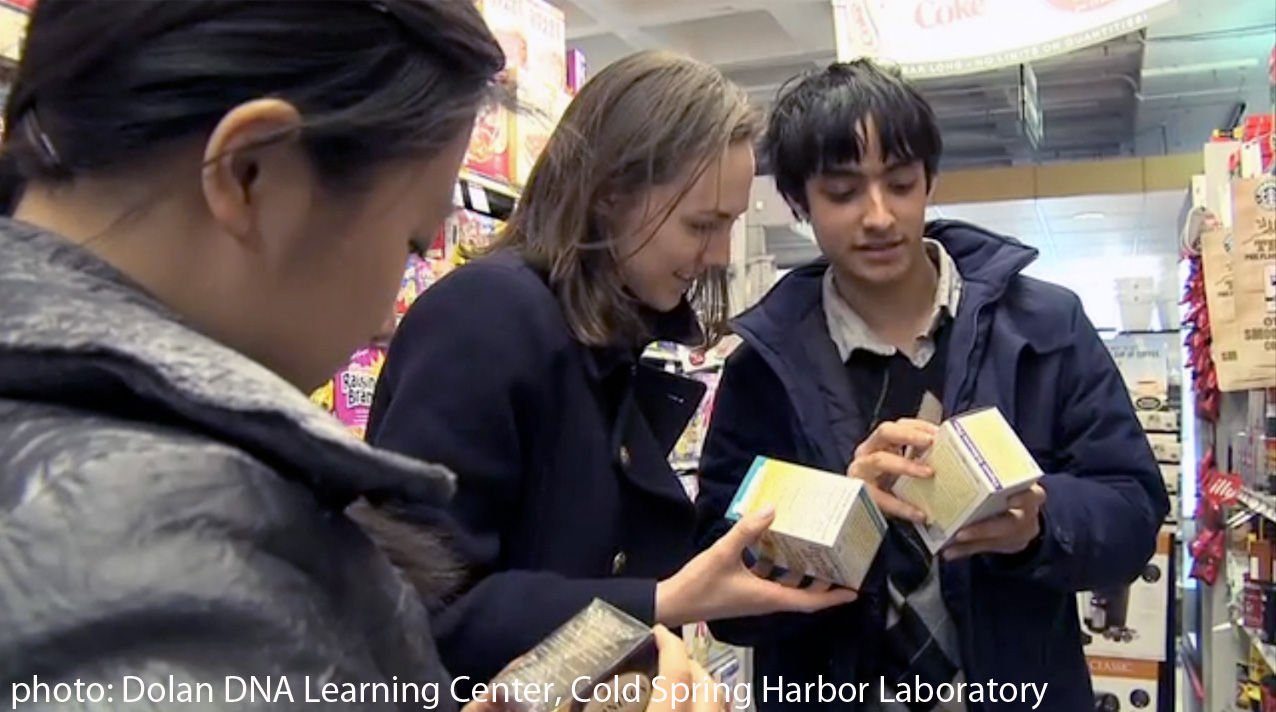
 Grace Young, Catherine Gamble, and Rohan Kirpekar inspect tea labels.
Grace Young, Catherine Gamble, and Rohan Kirpekar inspect tea labels.
Grace Young, Catherine Gamble, and Rohan Kirpekar inspect tea labels.
The dried and sometimes cooked or fermented bits of plants used to make teas are not easily identified to species by appearance. We tested whether DNA barcoding can identify the ingredients in commercial tea products.
Tea. Infusions prepared from leaves of the tea plant, Camellia sinensis, an evergreen flowering tree native to mountainous regions of southwestern China and neighboring countries.
Herbal “tea.” Infusions prepared from a diversity of other plants.
DNA barcoding. Identifying species using a short DNA sequence from a uniform locus in the genome. For land plants, the agreed-upon standard loci are rbcL and matK.
Matching DNA identifications to listed ingredients was limited by incomplete databases, shared or nearly identical barcodes among some species, and lack of standard common names for plant species.
21/60 (35%) of herbal and 3/70 (4%) of CS teas generated DNA identifications not found on labels. Some of the surprise "ingredients" were plants used in tea, like chamomile, and some were common weeds or non-food plants, like lawn grass and goosefoot.
 Urban Barcode Project interview
 Our dining room DNA lab