Citation: With the Vishnu Group, The Rockefeller University and Lawrence Livermore National Laboratory 1997
Keywords: Industrial ecology, dematerialization, material substitution, economics, zero emission, materials, life cycle, recycling
Areas of Research: Technology & Human Environment
May 1997 – Pre Publication Draft
Prepared by:
Iddo K. Wernick and Jesse H. Ausubel
Program for the Human Environment, The Rockefeller University
with the Vishnu Group for the Office of Energy and Environmental Systems, Lawrence Livermore National Laboratory
ISBN 0-9646419-0-7
Vishnu Group
David T. Allen, University of Texas at Austin
Braden R. Allenby, Lawrence Livermore National Laboratory and the AT&T Corporation
Jesse H. Ausubel, The Rockefeller University
Robert U. Ayres, European Institute of Business Administration
R. Darryl Banks, World Resources Institute
Faye Duchin, Rensselaer Polytechnic Institute
John R. Ehrenfeld, Massachusetts Institute of Technology
Peter M. Eisenberger, Columbia University
Reid Lifset, Yale University
Robert A. Frosch, Harvard University
Thomas E. Graedel, Yale University
Bruce R. Guile, Washington Advisory Group
David Rejeski, Office of Science and Technology Policy
Deanna J. Richards, National Academy of Engineering
Robert H. Socolow, Princeton University
Iddo K. Wernick, The Rockefeller University
Foreword
The recent diffusion of the term “industrial ecology” stems from its use by physicist Robert Frosch in a paper on environmentally favorable strategies for manufacturing co-authored with Nicholas Gallopolous published in September 1989 in Scientific American. Frosch embraced the concept of “industrial metabolism” which Robert Ayres has developed to organize thinking about the massive, systematic transformations of materials in modern economies. Industrial metabolism as well as dematerialization (the diminishing amount of material required for a good or service) had been explored at an August 1988 workshop of the National Academy of Engineering chaired by Frosch (Ausubel and Sladovich, 1988). Frosch sought a term that conveyed not only the sense of transformation but also the networks of actors doing the producing and consuming – or disposal – of materials and associated energy.
The new term resonated. The National Academy of Sciences, in association with the AT&T Corporation, convened a “Colloquium on Industrial Ecology” chaired by Kumar Patel in May of 1991 to consider the subject more fully. The Colloquium addressed optimization of the total materials cycle, from virgin to finished material, including components, products, waste products, and ultimate disposal (PNAS 89(3), 793-884, 1992).
During the past few years, a growing number of researchers as well as practicing engineers and managers have been attracted to “industrial ecology.” The term appears to offer a framework within which to improve knowledge and decisions about materials use, waste reduction, and pollution prevention. Some dozen workshops, many organized by NAE, have explicitly addressed aspects of industrial ecology. These include applicability in selected manufacturing sectors, applicability in services industries, environmentally symbiotic co-location of industries, comparative experiences in different nations, relationship to global environmental problems, and performance measures. Braden Allenby and Thomas Graedel codified much of the early knowledge in a 1995 textbook. Several universities and other research institutions now have courses or programs in industrial ecology. The U.S. government’s National Environmental Technology Strategy endorsed the concept. A Journal of Industrial Ecology has been established as well as a fellowship program. Swiss journalist Suren Erkman (serkman@mail.vtx.ch) has built a database of relevant publications containing over one thousand items. Popular articles have appeared in newspapers and magazines, and even a sociological review (O’Rourke et al, 1996) .
Of course, no subject is wholly new, and antecedents have been traced. Importantly, individuals with similar and related interests in numerous countries have joined the discussion.
In this period of maturation, a group of us who have participated in the growth of industrial ecology (calling ourselves the Vishnu Group, for the Hindu deity embodying preservation) agreed in December of 1995 that it could be useful to outline research directions for the field. Notwithstanding the existence of much research planning in fields of environmental science and technology, we found little language that addressed the needs we see. The interest of the US Department of Energy, and Lawrence Livermore National Laboratory in particular, to learn more about industrial ecology provided the occasion and generated the needed financial support. The Program for the Human Environment at The Rockefeller University agreed to serve as the hub for the activity. We met twice as a group and interacted extensively in smaller meetings and through telecommunications. Iddo Wernick took the lead in drafting the report.
We speak about issues and problems rather than disciplines. We believe people with diverse backgrounds, skills, and specialized knowledge from physical and life sciences, engineering, and social sciences as well as industrial practice will all contribute to the advancement of industrial ecology. Many of the problems will benefit from analysis by teams combining fields of expertise. Universities, government laboratories, and both for-profit and not-for-profit private sector research groups may all find areas appropriate for their labors.
We are well aware that researchers are conducting a considerable amount of high-quality, relevant work in Austria, Canada, Denmark, Netherlands, Japan, Germany, Italy, Switzerland and other countries. Although some of this is represented in the bibliography, we have not had the time or means to carry out a systematic global survey. We have tried to identify directions that soundly reflect the mix of industries and environmental issues that characterize the United States. We have yet to estimate the costs in human effort or dollars of the research envisioned. An obvious next step is to make such an assessment and to search for bargains.
We are grateful to numerous individuals for materials, comments, and suggestions. These include Stefan Anderberg (IIASA), David Berry (President’s Council on Environmental Quality), Raymond Cote (Dalhousie), Richard Dennison (Environmental Defense Fund), Peter Eisenberger (Columbia University), Suren Erkman (Geneva), Gregory Eyring (formerly US Office of Technology Assessment), Peter Ince (USDA Forest Service), Greg Keoleian (Michigan), Catherine Koshland (U. of California, Berkeley), Roberto Galli (Milan), Grecia Matos (Department of Interior), Donald Rogich (formerly US Bureau of Mines), Thomas Schneider (EPRI), Walter Stahel (Geneva), William Stigliani (IIASA & U. of Northern Iowa), Valerie Thomas (Princeton), and Paul Waggoner (Connecticut Agricultural Experiment Station). Karen Blades, Michael Fluss, T. J. Gilmartin,John Tennyson, and several of their colleagues Lawrence Livermore assisted on both substantive and practical matters. We all owe a debt of gratitude to Braden Allenby, whose energy, scope, and determination account for much of the development of industrial ecology in general and this report in particular.
Jesse H. Ausubel
Director, Program for the Human Environment
PREFACE
Among the goals of industry must be the preservation and enhancement of the environment. Anticipating a world with more industrial activity, we must find ways to make large improvements in the totality of industrial interactions with the environment. Each corporation may see incentives to better its individual environmental performance. Consideration of the collective performance of an economy is necessarily a public function. A broad view is needed, for example, to encourage waste minimization as a property of the industrial system even when it is not completely a property of an individual process, plant, or industry. Much of the research and understanding that underlie such a system must also be of a public and open character.
The energy sector is the largest handler of materials in the economy. Current annual global emissions of carbon, our main fuel, are about 6 billion tons, or more than 1,000 kilograms per person on the planet. In comparison, the global steel industry annually produces about 700 million tons, or about 120 kilograms per person. Energy, of course, also interacts with every other industry, ranging from cars and chemicals to paper and electronics. For these and other urgent reasons, the energy sector and the US Department of Energy have thus had a long-standing and growing interest in how industry can be more safely and cleanly embedded in the environment.
The commitment of the US government to more effective, long-term approaches to environmental quality has been reiterated and elaborated in such recent reports as Technology for a Sustainable Future (National Science and Technology Council, 1994) and the 1996 report of the President’s Commission on Sustainable Development. The 1995 report on Alternative Futures for the Department of Energy National Laboratories prepared by the Advisory Board of the Secretary of Energy (Galvin Committee) pointed out that the laboratories have areas of demonstrated expertise that could provide the basis for an expanded mission in environmental research and technology development.
In the spirit of these deliberations, the Office of Energy and Environmental Systems of the Lawrence Livermore National Laboratory concluded it would be useful to learn more about the promising directions for research in the emerging field of industrial ecology. We received encouragement in this regard from our colleagues elsewhere in the Department of Energy as well as from other federal mission agencies and the White House. We hope that this report will now helpfully stimulate not only the performers and sponsors of research within the DOE, but thoughout the government and in industry and academia as well.
Phrases such as “sustainable development” will remain little more than slogans unless disciplines such as industrial ecology can provide operational concepts that improve both the economy and the environment.
Braden R. Allenby
Director, Office of Energy and Environmental Systems, Lawrence Livermore National Laboratory (1994-1996)
Vice President for Environment, Safety, and Health, AT&T
Annotated Table of Contents
I. INTRODUCTION
The Goal and the Role – Lightening environmental impact per person and per dollar of economic activity, the search for leverage
How Industrial Ecology Got Its Name – Application of ecological theory to industrial systems
II. MEANS and MEASURES
a) Candidates for Lessening Impacts
Zero Emission Systems – Leaky and looped systems, plausible future scenarios
Materials Substitution – Evolution of materials use as it effects the environment, the role of changes in material properties, time scales of change
Dematerialization – Conceptual development and testing, complementary concept of decarbonization
Functionality Economy – Frameworks and opportunities for emphasizing services over goods
b) Methods for discovering and measuring progress
Materials Flow and Balance Analysis – Materials accounting for analysis of industrial ecosystems at several levels (firm, sector, region, nation, globe), elemental studies, input-output frameworks
Life Cycles of Products – Alternative methods for Life Cycle Analysis, difficulties, needs
Indicators – Assessing environmental performance at the national, regional, sectoral, and firm levels; waste-to-product ratios, circulation measures, loss rates, intensity measures
Discovering dynamics in history – Dynamics and trajectories of materials use in the economy, long term effects of technology-environment interactions, rates and trajectories of technological evolution
International Comparisons – Practices in different countries, possibilities for transfer of concepts and strategies
III. IMPLEMENTING INDUSTRIAL ECOLOGY
a) The Material Basis
Choosing the Material – Designing materials for recycling/reuse; improving materials processing technologies; information to reduce resource use and waste generation
Designing the Product – Designing products for recycling/reuse; case studies
Recovering the Material – Separation based on physical and chemical properties; extracting metals from wastes; recovering chemicals and solvents from wastes; recycling and reusing high-volume industrial wastes
Monitoring and Sensing Technology – Tracking of materials and wastes
b) Institutional Barriers and Incentives
Market and Informational -Waste markets and exchanges, information needs, scale of agglomeration, price/cost issues
Business and Financial – Roles of private firms and corporate organization in decisions affecting environmental performance, linking IE to quality, accounting, flows of information; service and non-profit sectors
Regulatory – Effects of current regulatory structures (federal, state, local, international) on the recovery and transport of industrial wastes; reforms to favor more desirable industrial ecosystems; takeback legislation
Legal – Role of civil liability in facilitating or hampering the recovery of industrial wastes; reforms to favor innovation in industrial ecosystems, anti-trust, consumer protection, international trade, government procurement
c) Regional Strategies and Experiments – Geographic, economic, political and other factors affecting regional industrial networks; industrial symbioses (EcoParks)
IV. CONCLUSION
V. BIBLIOGRAPHY
VI. DATA SOURCES, JOURNALS, AND WEB RESOURCES
VII. BIOGRAPHICAL INFORMATION
FIGURES
1. Mass balance of an element: The case of chlorine
2. Regional materials flow: The non-ferrous metals industry in New England
3. Material flow in an industrial sector: The case of forest products
4. Evolution of end uses of cadmium
5. Wastes or ore bodies? Metallic waste streams assessed against price (Sherwood Plot)
6. Symbiosis of industrial facilities: The Kalundborg ecopark
TABLES
1. Materials inputs to the US economy, 1990
2. Mass-balance analysis, candidate elements
3. Materials flow analysis, candidate industrial sectors
4. Life cycle analysis: Comparing a 1950s and a 1990s car
I. INTRODUCTION
The Goal and the Role
If humanity grows in number and wealth yet tries to meet its desires for goods and services only in the same ways we do today, we will surely suffer from a badly polluted environment. If technology and the organization of economic activity stagnate, pollution will multiply. Fortunately, the historical record shows some hope that people can change their ways and lessen their impact on the environment while wealth increases. In fact, wealth pays for the innovations that can lessen our impact.
The role of Industrial Ecology (IE) is to learn about the levers for lightening the impact on the environment of each person and each dollar of economic activity. This report sets out how diverse engineers, scientists, and investigators and practitioners in other fields can learn where some of the levers are, how they work, and how they might be improved and used.
IE accepts as givens population and income. Industrial ecologists listen to demographers, experts in economic development, and others for definition of the dimensions of the challenge to be addressed. For example, if the US population rises from its present level of about 260 million to 400 million in the year 2100 and the economy doubles per capita roughly every 30 years, as it has since the year 1800 in the industrialized countries, the United States would have more than 12 times today’s emissions, other things being equal. To enhance environmental quality over the next century in this scenario, the annual cleaning of the US economy needs to exceed 2.5 percent. It is the job of American industrial ecologists to exceed 2.5 percent.
To do our job of minimizing waste and thus harmful exposures, various forms of environmental disturbance, and inefficiency, industrial ecologists examine such factors as choices of raw material, the intensity and efficiency of use of materials, and fates of materials. We focus on technical aspects of a particular set of links in the chain of economic activity, while recognizing the value of other social and behavioral approaches to improving the human environment as well. We believe research is a gilt-edged investment to fulfill the stated contract of industrial ecology.
A recognizable body of IE research has emerged in recent years. This includes comprehensive accounts of the flow of selected materials in the economy, descriptions of the environmental dimensions of industrial systems as distinct from their artifacts, means for analysis and design of environmentally benign systems as well as artifacts, and alternatives to disposal for various wastes.
This report categorizes some of the main directions for research for IE and specifies avenues of inquiry. To view IE, we first talk about its fundamental means, the candidate ways for lessening impacts. These include industrial systems conceived to approach zero emissions, the substitution of materials with superior environmental performance, “dematerialization” or reduced intensity of use of materials, and reconceptualization of the economy to emphasize functions, i.e., services over goods. Then we discuss the measures for discovering and quantifying progress. These include materials accounting frameworks, analyses of the life cycles of products, indicators, and historical and comparative studies to discover dynamics and tendencies. Subsequently we discuss research aimed at implementation of IE, first through the technical means to advance the material basis of the economy and then through institutional means, including informational, financial, regulatory, and legal, as well as regional strategies. Works listed in the accompanying bibliography provide background and examples for each section.
Before turning to the practical core of our report, we comment briefly on the conceptual premise of industrial ecology, which itself merits research.
How Industrial Ecology Got Its Name
The name or phrase “industrial ecology” prima facie implies that models of non-human biological systems and their interactions in nature are instructive for industrial systems that we design and operate. What makes the biological model attractive? Foremost is the cleverness with which evolution has developed things to live off the bodies and wastes of one another. Additionally, during the past few decades ecologists appear to have developed some skill at understanding systems by analyzing or depicting their flows and cycles of materials and energy.
A more problematic question is efficiency. Ecosystems are not necessarily exemplars of efficiency. Even the most efficient ecosystem, say, a corn field, captures only about 5 percent of solar energy as the product of photosynthate. In the summertime, most of the energy overheats the plant or evaporates water that the plant needs to keep turgid. In a mature, stagnating forest (likely to please the eyes of a naturalist), decay returns the CO2 in the photosynthate to the air, making the efficiency zero.
The proposition that industrial systems may be beneficially viewed as ecosystems merits critical probing. An early step is simply to articulate a vocabulary matching or accommodating different morphologies. Research should also explore the applicability to industry of ecology’s concepts (adaptive pathways, food webs, limiting factors, energy and material budgets) and rules (e.g., Cope’s rule that increase in body size confers adaptive advantages, the least work principle). Also valuable might be an exploration of the properties that favor ecosystem resilience, and what these suggest for the design of industrial networks. For an introduction to the ecological analogy, see Graedel, T.E., 1996, On the Concept of Industrial Ecology, Annual Review of Energy and Environment, Volume 21; Allenby, B.R. and Cooper, W.E., 1994, Understanding Industrial Ecology from a Biological Systems Perspective, Total Quality Environmental Management, Spring 1994 pp. 343-354.
Over the long run, industrial ecology is a good name for the discipline we have in mind only if there is merit to, and insight from, the analogy, not because it connotes an environmentally friendly industry.
II. MEANS AND MEASURES
Candidates for Lessening Impacts
Zero Emission Systems
An overarching goal of IE is the establishment of an industrial system that cycles virtually all of the materials it uses and releases a minimal amount of waste to the environment. Theoretically, the developmental path to such an end state follows an orderly progression from what Allenby and Graedel call Type I, II, and III systems. Type I systems require a high throughput of energy and materials to function and exhibit little or no resource recovery. Type II systems represent a transitional stage where resource recovery becomes more integral to the workings of the system but do not satisfy its requirements for resources. The final stage, the Type III system, cycles all of the material outputs of production, though still relying on external energy inputs.
Research is needed to elaborate this vision of future industrial ecosystems that are looped rather than leaky and to develop dynamic scenarios of how to achieve it technologically, at various levels of economic activity and population. Achieving it means that part of IE is a systematic search for leverage.
The research must especially consider basic industries (such as those providing energy, food, shelter, transport, as well as services) that currently rely on the vast mobilization of material resources. Fundamentally, this effort involves the search for alternatives to present systems that incorporate technologies that limit initial resource requirements and generate and recover usable waste products. The most developed thinking about zero emissions has occurred in the context of energy systems, particularly in relation to the use of hydrogen as an energy carrier. Recent attention has focused on electric cars as zero-emission vehicles and the larger question of the energy and material system in which the vehicles are embedded. Classic studies about hydrogen energy might be revisited and extended in the context of industrial ecology (Gregory, D.P., 1973, A hydrogen-energy system, L21173, American Gas Association, Washington DC). See Hafele, W., Barnert H., Messner, S., Strubegger, M., and Anderer, J., 1986, Novel Integrated Energy Systems: The case of zero emissions, pp. 171-193 in Clark, W.C. and Munns, R.E., eds., Sustainable Development of the Biosphere, Cambridge University Press, Cambridge, U.K.
Material Substitution
The goal of minimizing waste may be reached by the leap of using a wholly new material for a purpose rather than refining the processing of an old material. The new material should perform the function longer, be processed less wastefully, or be acquired with less waste. Widespread examples of materials substitution include metals for wood, aluminum for steel, and high carbon steel for other steels, and, more specifically, steel for rayon in tires and plastics for glass in beverage containers. Historically, many of the substitutions have been alloyed blessings, bringing new environmental problems as well as reducing old ones.
Research is needed to understand the evolving consumption levels and applications of the materials used to provide various economic functions, the physical and chemical properties (e.g., strength-to-weight ratio, corrosibility, toughness, thermal stability) that motivate the selection of one material over another, and the time scales necessary for the substitution of materials by superior competitors. The purpose of the research would be to identify the materials for which we should most actively seek substitutes, the most promising alternatives, and the feasible time scales to effect substitution.
Dematerialization
Materials substitution is considered a principal factor in the theory of dematerialization. The theory asserts that as a nation becomes more affluent the mass of materials required to satisfy new or growing economic functions diminishes over time. The complementary concept of decarbonization, or the diminishing mass of carbon released per unit of energy production over time, is both more readily examined and has been amply demonstrated by researchers over the past two decades. For materials in general, several forms of innovation (more efficient recovery of minerals and metals from crude ores, imbuing materials with improved properties per unit mass; and better societal mechanisms for handling and reusing wastes) drive this purported phenomenon. Dematerialization is advantageous only if using less stuff accompanies or at least leaves unchanged lifetime, waste in processing, and waste in acquistion.
Despite the collection of multiple anecdotes to support the dematerialization hypothesis few studies have offered a systematic approach for testing it. Research is needed to both advance the theoretical framework for dematerialization and for identifying the means to validate it. For a presentation of the dematerialization hypothesis see Bernardini, O., and Galli, R., Dematerialization: Long Term Trends in the Intensity of Use of Materials and Energy, Futures, May 1993, pp. 431-48 (1993); See also Wernick, I.K., Herman, R., Govind, S., Ausubel, J.H., Materialization and Dematerialization: Measures and Trends, Daedalus 125(3):171-198.
Functionality Economy
An interoffice envelope can carry a new address and a new message, but carries many messages before the space for addresses is filled. One cathode ray tube or flat screen display can convey countless messages. From the viewpoint of IE, products represent a means for serving a particular function to the consumer. A shift in the prevalent attitude of managers, engineers, and public officials from viewing products as endpoints in themselves to seeing them as providing functions to end users could translate to wholesale reductions in national resource use and diminished waste streams.
For example, in this view one does not purchase an automobile but rather the function of transporting passengers and goods. As a result the manufacturer does not relinquish prime ownership of the vehicle at any time and must reassume possession at the end of the vehicle’s useful life. This arrangement provides strong incentive to design the vehicle for extended useful life and maximum recoverable value after use. The proliferation of cheap telephones with short service lives provides a counter example where the end of a decades-long leasing arrangement for telephones has led to a new source of municipal solid waste and significantly increased the number of devices manufactured.
Due to the incentive to extend product life the planned obsolescence of products could itself become obsolete as the acquisition of a physical object would be subordinate to the purchase of the function it provides. Research is needed to examine the most promising industries in the economy where this view may yield fruitful results. Further research is then needed to design the economic, regulatory, and legal systems necessary to introduce such `function as product’ arrangements in the broader marketplace. The functionality economy substantially redefines industrial activity, with particularly profound implications for manufacturing concerns. For an introduction to this topic see Stahel W. R., The Utilization-Focused Service Economy: Efficiency and Product-Life Extension, pp. 178-190 in The Greening of Industrial Ecosystems, B.R. Allenby and D.J. Richards, eds, 1994.
Methods for Discovering and Measuring Progress
Three analytical methods for finding leverage suggest themselves. The first maps the flow of a material such as lead through the nation’s industry, a sector, and even an individual firm. This mapping resembles the analysis of the dollars or energy in an economy. The second follows a product through its life from assembly to junk yard (and beyond) and encompasses all the material in it. The third examines the course of, say, iron per dollar of GDP, to learn whether a society is approaching or retreating from IE’s goal of lightening the environmental impact per person and per dollar.
Materials Flow and Balance Analysis
Understanding the structure and environmental effects of industrial systems requires a knowledge of their anatomy and physiology. Materials flow studies reveal structure, and webs of economic and material relationships among actors, in the industrial system as they map the flow of natural resources into processing and manufacturing industries and the fate of products and wastes exiting them. The object for study can be the mass of individual chemical elements, compounds, or entire classes of materials. The framework for such studies include individual facilities, whole industrial sectors, and geographic regions.
Currently much of the challenge in constructing materials flow accounts at all levels lies in the absence of organized data sets. In many cases the data are collected but effort is necessary to compile data from many sources into a useful form. In other cases the data simply do not exist.
Much effort has been made to detail the mass flows of carbon, nitrogen, sulfur, and phosphorus. Their role in the biogeochemical functioning of the planet attaches importance to changes in their concentration in environmental media and their biological availability. In addition to the enormous volume of these elements cycling in the biosphere, their environmental significance depends strongly on their chemical form. Despite decades of effort researchers have yet to arrive at a full understanding of the natural sources and sinks of these elements and the precise impact of anthropogenic perturbations to the cycle. Still, IE can learn from our understanding of the global sources and sinks, including anthropogenic ones, for these elements, and their transport through environmental media, and seek to contribute practical opportunities for reducing human perturbations to the global system. For example, attractive ideas need to be developed for the industrial recapture of carbon dioxide.
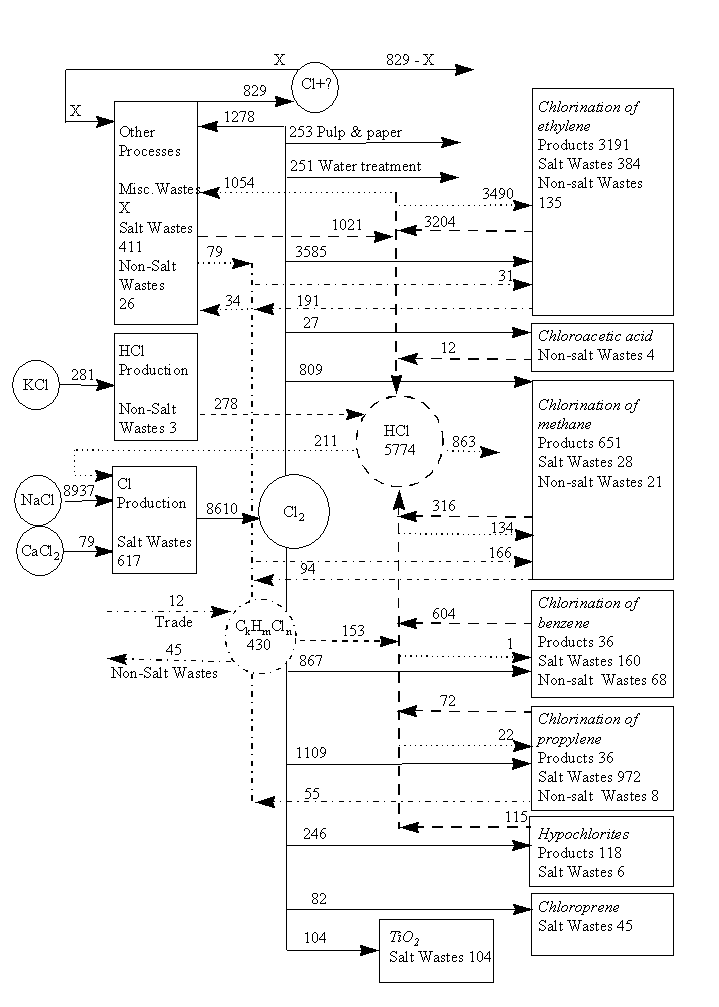
For less ubiquitous elements that carry with them a clearly harmful environmental impact, however, the task of circumscribing the amounts mobilized by natural and human activity and examining their metabolism in the industrial system is more feasible. Mass balance studies must consider the manifold chemical transformations that elements, such as chlorine (1991 US production 10.4 Million Metric Tons (MMT)), undergo in industry. Figure 1 shows a first-order analysis of the industrial metabolism of elemental chlorine in Western Europe in 1992. The complex structure of use of this element in industry highlights the different possible levels of details for mass balance studies.
If the goal is to minimize toxic waste, not just waste, surely the form of the waste ranks with all the other concepts. For example, if we are making poisonous phosgene (COCl2), it matters much whether we emit phosgene or CO2 and NaCl. De-toxifying waste is a pre-eminent engineering task.
Mass flows for elements consumed in far smaller quantities than chlorine, such as cadmium (1993 US consumption 3.1 kMT), can be described more fully due to their smaller volume and relatively limited number of industrial applications. Mass flow analyses for arsenic, cadmium, chromium, cobalt, manganese, mercury, salt, tungsten, vanadium, and zinc are available from the Office of Minerals Information at the US Geological Survey (formerly the Branch of Materials, Division of Mineral Commodities at the US Bureau of Mines) located in Reston, Virginia. These analyses vary in their level of detail and in their environmental, as opposed to economic, relevance. At a minimum however, the studies contain valuable data and provide an excellent base for future studies.
Scanning the periodic table of elements brings into focus the most promising candidates for the development of detailed mass-balance accounts. Toxic elements such as those identified on the Agency for Toxic Substances and Disease Registry (ATSDR) as priority substances for toxic profiles provide some initial guidance in selecting elements for mass-balance accounts. (An element’s LD50, the dosage that will, on average, kill 50% of a group of experimental animalsprovides another possible method for ranking elements by toxicity and is regularly used as a basic toxicity indicator for hazardous chemicals.) Toxic elements enter the environment through industrial activities that deliberately use them for their unique properties and from the processing and thermal treatment of ore and mineral bodies where they occur as trace elements. These are of course prime candidates for an engineer to find substitutions. Other elements and basic minerals to be included on the priority list are those involving large materials and waste flows even if they themselves do not present any acute toxic threat. Table 1 lists some representative metallic elements for which mass balance accounts are most needed along with some of the criteria for their determination.
Consideration of these elements begins with the amount the nations consumes, goes on to how much escapes from processing, and ends with whether the escape matters, the toxicity of the element.
Table 1.
| Element | 1994 US Consumption(1,000 metric tons) | 1992 Toxics Release Inventory (TRI) Production-related Waste (1,000 metric tons)* | ATSDR Priority group listing |
| Lead | 1500 | 620.752 | 1 |
| Nickel | 131 | 68.792 | 1 |
| Arsenic | 19.4 | 6.209 | 1 |
| Beryllium | 0.2 | 0.0063 | 1 |
| Cadmium | 2.0 | 7.069 | 1 |
| Chromium | 387 | 125.184 | 1 |
| Mercury | 0.6 | 0.927 | 2 |
| Zinc | 1350 | 260.346 | 2 |
| Selenium | 0.5 | 0.364 | 2 |
| Silver | 4 | 2.733 | 3 |
| Copper | 2800 | 534.298 | 3 |
| Thallium | 0.8 | 0.038 | 4 |
*Wastes values for elements and their compounds For relatively well understood systems, such as single industrial facilities, mass-balance studies rely on the simple, though underutilized, law of conservation of mass. By using available data establishing the mass of either inputs or outputs, the conservation law along with other process information (e.g., chemical reaction rates) allows researchers to construct the other side of the equation. For energy consumption, knowledge of the energy diet of the system under question allows researchers to gauge the amount of energy used for plant operation, embedded in manufactured products, and dissipated as heat.
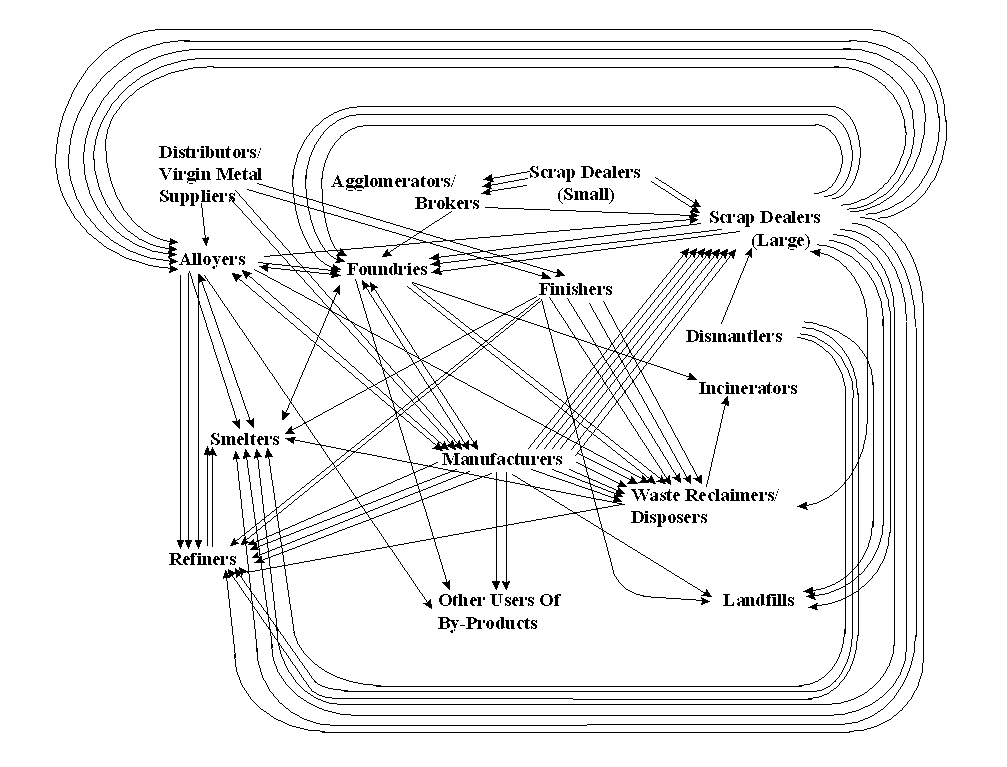
Another vantage point for assessing materials flows is via industrial sectors. Figure 2 shows a `spaghetti diagram’ indicating both the magnitude and direction of the metals flows for a portion of the non-ferrous metals sector in New England. The data used for the figure are drawn from direct interviews and site visits, official state and federal reports, and telephone questionnaires. Notwithstanding the extensive time and human effort expended, the study was limited both geographically and in the number of facilities examined, demonstrating the difficulty involved in obtaining reliable and accurate waste data. The study also underscores the fact that, when viewed in absolute terms, even small loss rates (around 1% for copper and 5% for lead) translate to significant environmental releases and suggest the need for even more scrutiny when examining larger scale flows where small differences in calculated efficiency can hide or reveal substantial volumes of waste. See Frosch, R.A., Clark, W.C., Crawford, J., Sagar, A., Tschang, T.T. and Weber, A., 1996, The Industrial Ecology of Metals: A reconnaissance, available from the John F. Kennedy School of Government, Harvard University, Cambridge, MA.
For more comprehensive, if less detailed, studies of entire sectors, IE can draw on an analytic base established by United States government departments and agencies. The US Department of Energy’s “Industries of the Future” program focuses on the fundamental materials processing industries of petroleum refining, chemicals, pulp and paper, aluminum and glass, and steel. In addition to being industries with large resource requirements and waste outputs, these industries are considered basic to future national economic health and competitiveness. The US Environmental Protection Agency’s (USEPA) “Common Sense” program looks at automobile manufacturing, computers and electronics, iron and steel, petroleum refining, and the printing industries. In addition to environmental concerns, economics and politics figure prominently in driving the selection of industries for these government programs. Table 2 lists a preliminary selection of industrial sectors (arranged by SIC code), as well as some criteria for determining their priority for IE research.
Consideration of these sectors begins with the amount the nations consumes, goes on to how much escapes from processing, and ends with whether the escape matters, the toxicity of the element.
Table 2.
| Sector | Two DigitStandard IndustrialClassification (SIC) Code | 1990 Domestic Production est.(106 MT) | 1985* Non-Hazardous Waste Generation(106 MT) | 1992** TRI Production-related Waste(106 MT) |
| Chemicals | 28 | 300 | 1264 | 9.0 |
| Petroleum | 29 | 360 | 153 | 1.3 |
| Primary Metals | 33 | 112 | 1241 | 1.8 |
| Electric\Electronic | 36 | 0.4 | ||
| Pulp & Paper | 26 | 77 | 2043 | 1.1 |
| Fabricated Metals | 34 | 0.4 |
* Waste quantities include water fraction which can exceed 90%.
** Accounts for 84% of total TRI Production-related waste in 1992
The chemical sector stands out in accounting for about the half of the hazardous waste generated in the United States. The performance of detailed mass balance studies for this industrial sector is complicated by the variety of resources used as input materials, the use of intermediate chemicals in production, and the production of outputs that fall under several different SIC codes (e.g., chemicals 28 and petroleum 29) . As a result, environmental analyses of the chemical sector often rely on highly aggregated data and emphasize innovations in processing and other changes in practice that can improve environmental performance. Independent studies have amply shown the gains achievable through better plant maintenance and material substitution among other innovations. For a review of opportunities to improve environmental performance in the chemical industry see D. Allen, The Chemical Industry: Process Changes and the Search for Cleaner Technologies, pp. 233-273 in Reducing Toxics, R. Gottlieb, Ed., Island Press, 1995. For case studies on chemical plants that have reduce waste generation through a series of innovations in practice, materials selection, process modifications, etc. see INFORM, Cutting Chemical Wastes, INFORM, New York, 1985, and INFORM, Environmental Dividends: Cutting More Chemical Wastes, INFORM, New York, 1992.
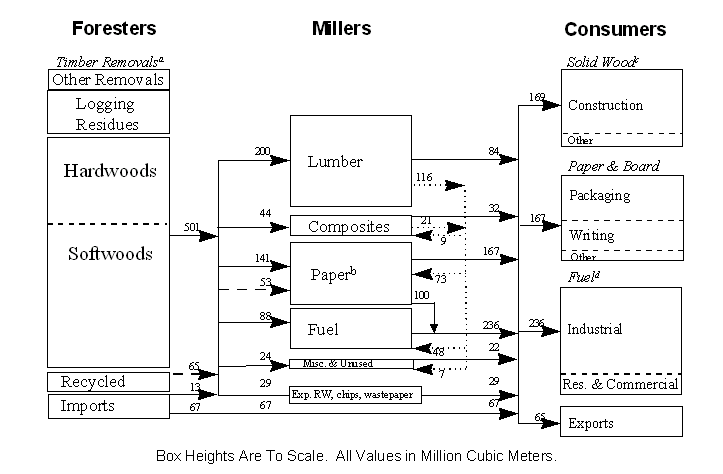
In contrast to the chemical sector, the forest products sector relies on a highly uniform feed material (i.e., wood) and produces a relatively well defined class of output products. Figure 3 shows a mass flow diagram for the forest product industry for 1993. The flow chart includes both the use of virgin feedstocks as well as streams of residues and recycled materials used in production. For a review of resource efficiency in the forest products sector see Ince, P.J., Recycling of Wood and paper Products in the United States, U.S. Dept. of Agriculture Forest Service, 1994. Such analyses can reveal where leverage lies to reduce draw on the forest, municipal waste, or other environmental concerns. See for example, Wernick, I.K., Waggoner, P.E., and Ausubel, J.H., Searching for Leverage to Conserve Forests: The Industrial Ecology of Wood Products in the U.S., Journal of Industrial Ecology 1(3), in press, 1997.
Service sectors account for roughly three quarters of the annual Gross Domestic Product in the US. Though their environmental impact is not commensurate with this economic clout many of the activities associated with the service sector contribute significantly to environmental fallout. Studies of sectors such as health care, wholesale and retail trade, and communications focus on environmentally-important activities that support the provision of services and distribution of goods but are often hidden from the public eye. Studies in this area should assess issues like the transportation networks and energy needs associated with various service industries as well as direct material requirements for equipment ranging from the medical instruments to office paper and their disposal. Service industries can play a strategic environmental role in influencing their materials suppliers to act in an environmentally responsible manner as well as induce consumers to make environmentally responsible choices. Furthermore, a half hour along an interstate reading the signs on the trucks from Ben and Jerry’s to Sears and air conditioning services shows how services dominate the distribution channels. For an example of environmentally oriented management in service industries see Bravo, C.E., 1995, A View of the United States Postal Service as a Service Sector Corporation, presented at the Fourth Annual NAE Workshop on Industrial Ecology, July 5-7, Woods, Hole, MA. Also see Guile, B.R. and Cohon, J.L., 1996, Services and the Environment: More questions than answers, Available from the National Academy of Engineering, Washington, D.C.
Unlike mining and manufacturing industries with visible, and sometimes massive, flows of materials no obvious strategy exists for examining sectors that provide medical services or deliver and sell goods. Research is needed to further develop a conceptual basis for addressing and evaluating the environmental impact of various service industries and to perform sector studies to test their hypotheses. For a rudimentary framework for assessing the environmental impact associated with the provision of services see Schmidt-Bleek, F., 1993, MIPS – A universal ecological measure?, Fresenius Environmental Bulletin 2:306-311.
Materials and energy flows correspond to some degree to money flows. Constructing materials accounts on the model of existing monetary input-output accounts of the economy encourages awareness, and clarifies understanding, of the use of physical resources in the economy, the addition of value to raw materials, and the amounts of waste generated in US industry. Input-output studies attempt to relate the effect of economic growth and technological innovation with the material input and output of economic sectors. One recent study examines the projected use and disposal of plastics in the US by linking a database describing plastics use per unit of sectoral output to an input-output database of the US economy. Expanding this framework to general material use will require researchers to estimate coefficients relating the consumption of specific materials to output across all economic sectors. Using a full set of coefficients, researchers could better estimate the cascade effects of activities, such as materials substitution and the diminished use of a given resource on other sectors and the resulting environmental impact. For an example of an input-output analysis of plastics in the US under different scenarios for consumer recycling see Duchin, F. and Lange, G., 1995, Prospects for the Recycling of Plastics in the United States, Structural Change and Economic Dynamics, July 1995.
Geography-based mass balance studies can encompass localities, regions, and the nation as a whole. Though such studies blur local detail by relying on aggregated data, they can provide usefully comprehensive accounts of resource use and, depending on their scale, better locate the sources and sinks of major materials flows. At the national level, mass-balance studies allow resource managers to gauge the impact of federal policies on national resource use, determine per capita values for resource use, and plan strategically for the future. Research in this area should help clarify the difficulties in obtaining the necessary data for place-based mass-balance studies, including the need for better information on materials origin, identify data gaps, generate taxonomies for classifying resources, and specify the appropriate level of detail for materials accounts. As an example of a national materials account, Table 3 shows an account of materials inputs into the US economy in 1990. Such analyses should, again, help show where to seek leverage for environmental improvement.
Table 3.
| MATERIAL GROUP | APPARENTCONSUMPTION (MMT) | TOTAL US (MMT) | PER CAPITA PER DAY (kgs) | |
| Coal | 843 | |||
| Energy | Crude Oil | 667 | ||
| Natural Gas | 378 | |||
| (Petroleum Products) | 62 | 1950 | 21 | |
| Crushed Stone | 1092 | |||
| Construction Minerals | Sand & Gravel | 828 | ||
| Dimension Stone | 1 | 1921 | 21 | |
| Salt | 41 | |||
| Phosphate Rock | 40 | |||
| Clays | 39 | |||
| Industrial Minerals | Industrial Sand & Gravel | 25 | ||
| Gypsum | 23 | |||
| Nitrogen Compounds | 17 | |||
| Lime | 16 | |||
| Sulfur | 13 | |||
| Cement (imported)Other | 1224 | 223 | 4 | |
| Iron & Steel | 100 | |||
| Metals | Aluminum | 5 | ||
| Copper | 2 | |||
| Other | 4 | 111 | 1 | |
| Saw Timber | 123 | |||
| Forestry Products | Pulpwood | 73 | ||
| FuelwoodOther | 5213 | 260 | 3 | |
| Grains | 220 | |||
| Hay | 133 | |||
| Fruits & Vegetables | 71 | |||
| Agriculture | Milk & Milkfat | 64 | ||
| Sugar Crops | 51 | |||
| OilseedsMeat & Poultry | 4542 | |||
| Other | 5 | 631 | 7 |
Life Cycles of Products
From the mapping of material, we turn to analyzing a product throughout its life to learn its environmental impact. Used with rising frequency in this decade to study consumer products,
Life Cycle Analysis (LCA) has been defined by the USEPA as a way to “evaluate the environmental effects associated with any given industrial activity from the initial gathering of raw materials from the earth until the point at which all residuals are returned to the earth.” Several organizations have developed methods for LCA each using a different analytic approach to this complex activity. Regardless of the approach, several generic difficulties challenge LCA, including poor quality data, weak reasons or procedures for establishing analytic boundaries, and diverse values inherent in comparing environmental factors with no common objective, quantitative basis. The selection of products undergoing LCA to date has been haphazard, with several products receiving intense scrutiny while others are neglected almost completely. Consistent with the goal of establishing rigorous parameters for measuring the environmental impact of industrial activity, IE research properly focuses on each of these concerns about LCA.
Comparing existing methods for LCA gives insight into the conceptual framework used by researchers. The Society for Environmental Toxicology and Chemistry (SETAC) `Code of Practice’ for LCA stands out currently as the most widely recognized procedural model. The Code divides LCA into four distinct components: 1) Scoping; 2) Compiling quantitative data on direct and indirect materials/energy inputs and waste emissions; 3) Impact assessment; and 4) Improvement assessment. While variations exist, the theme of taking an inventory and performing an assessment based on collected data is common to all LCA approaches dating back to the early 1970’s.
Different methods for obtaining and presenting LCA results have evolved in response to the uncertainty associated with input data and the difficulty of reducing disparate indicators to a few meaningful numbers useful to managers and product designers. Methods for LCA differ in how they accommodate the need for qualitative analysis. LCAs variously denominate the value of environmental impact in kgs, dollars, square meters, and other numerical values. Continued research will shed light on what are the most effective methods for LCA and when can they be used in conjunction to reflect the multiple axes of environmental quality.
Though some methods for LCA receive approval for thoroughness and analytic consistency, these same methods have been criticized as requiring too much data, time, and money when each are in short supply. As an alternative method for assessing the environmental impact of products, researchers at AT&T have devised the Abridged Life Cycle Assessment Matrix, a method that couples quantitative environmental data with qualitative expert opinion into an analysis that conveys the uncertainty and multidimensionality of LCA and also yields a quantitative result. Table 4 shows an example of this LCA method in a comparison of the generic automobile of the 1950s and the 1990s. See Graedel, T.E., Allenby, B.R., and Comrie, P.R., 1995, Matrix Approaches to Abridged Life Cycle Assessment, Environmental Science and Technology, 29:134A-139A.
Table 4.
Life cycle analysis: Comparing a 1950s and 1990s car
Generic 1950s automobile
| Life Cycle Stage | Environmental Concern | |||||
| Materials choice | Energyuse | Solid residues | Liquid residues | Gaseous residues | Total | |
| Premanufacture | 2 | 2 | 3 | 3 | 2 | 12/20 |
| Product manufacture | 0 | 1 | 2 | 2 | 1 | 6/20 |
| Product packaging and transport | 3 | 2 | 3 | 4 | 2 | 14/20 |
| Product use | 1 | 0 | 1 | 1 | 0 | 3/20 |
| Refurbishment-recycling-disposal | 3 | 2 | 2 | 3 | 1 | 11/20 |
| Total | 9/20 | 7/20 | 11/20 | 13/20 | 6/20 | 46/100 |
Generic 1990s automobile
| Life Cycle Stage | Environmental Concern | |||||
| Materials choice | Energyuse | Solid residues | Liquid residues | Gaseous residues | Total | |
| Premanufacture | 3 | 3 | 3 | 3 | 3 | 15/20 |
| Product manufacture | 3 | 2 | 3 | 3 | 3 | 14/20 |
| Product packaging and transport | 3 | 3 | 3 | 4 | 3 | 16/20 |
| Product use | 1 | 2 | 2 | 3 | 2 | 10/20 |
| Refurbishment-recycling-disposal | 3 | 2 | 3 | 3 | 2 | 13/20 |
| Total | 13/20 | 12/20 | 14/20 | 16/20 | 13/20 | 68/100 |
Table 4. The two panels show environmental performance values for 1950s and 1990s generic American automobiles. This LCA method allows for broad comparison environmental performance at major stages of the product life cycle (e.g., product manufacture and product use) between two historical periods. Note, for example, the improved performance in product manufacture between the two periods, and also note the relatively low score for product use still assessed in the 1990s. The best possible value for each cell is 4 and a maximum score is 100. Source: Graedel, T.E., Allenby, B.R., and Comrie, P.R., 1995, Matrix Approaches to Abridged Life Cycle Assessment, Environmental Science and Technology, 29:134A-139A.
Research is needed to compare existing methods for LCA with an eye on their treatment of uncertain data, the weight given to various environmental parameters, and the format for presenting results. The aim of such research is the development of standardized methods for LCA that convey the data uncertainty and reflect the multidimensional character of environmental impacts caused by products. For a critical review of current methods for LCA see R.U. Ayres, 1995, Life Cycle Analysis: A Critique, Resources Conservation and Recycling, 14: 199-223. In the search for leverage, the question remains which products deserve an LCA and which do not.
Indicators
When we cannot measure a material within an industry or the components and fate of a product, our environmental knowledge is of a meager and unsatisfactory kind. The measurements must serve their purpose of navigation toward the goal of IE, revealing whether a great environmental impact is growing or shrinking in the long term, whether a policy is succeeding or failing, and differentiate the trivial from the deadly.
In our vocabulary, measures or metrics show the tons needed to perform a materials- balance or life cycle analysis. Indicators combine measurements into an index of progress or regress broadly for an industry, firm, or policy. Like the Cost of Living Index or the Index of Leading Indicators, a suite of indicators tell a more reliable story than a single measure.
In line with the objectives of IE, metrics should measure the efficiency with which resources and energy are converted to useful products and byproducts in industry with metrics such as product-to-waste ratios, and circulation and loss rates. These environmental metrics extend to all scales in the industrial system. At the global, national, and regional level the need is for metrics that integrate within and across industrial sectors, recognize the interdependence among them, and determine their combined effect on the population and environmental quality. For industrial sectors, research is needed to devise metrics that measure the average efficiency of materials use, identify the gap between leaders and followers in environmental performance, and examine the relative value of mandated as opposed to voluntary adoption of best environmental practices.
Metrics can isolate salient environmental variables that allow for more informed investigation of opportunities for synergism in the industrial system through the exchange of residual materials and energy. For firms, metrics should aim to provide measures of internal resource use and waste generation and the impact of products when they are consumed and disposed of. The challenge at this level is to devise meaningful environmental metrics that fit with existing benchmarks used to assess business operations, such as productivity, inventory accounting, and overhead costs. Several large US and European firms (e.g., 3M, AT&T, Novo Nordisk, Volvo) have incorporated environmental metrics into their business operations and have taken lead international positions in promoting improved environmental performance.
To show general progress in reducing environmental impacts the indicators must consistently link or relate the performance of a firm to that of an industry, or a region and nation. It must link an LCA to an analysis of material in a nation. The purpose of linkages is to avoid optimizing a single factory or sector at the expense of hurting the larger system’s environmental performance. The same is true of geography-based metrics: community level assessments should be coordinated with state-wide initiatives and contribute to achieving national goals for environmental quality. In developing a strategic environmental vision, the global optimization of the system should not be compromised by pursuing what are in fact only local maxima. Selecting the right scale for metrics is critical to ensuring that the system of interest is not arbitrarily defined and does not exclude relevant activities nor include too much that is irrelevant.
Finally, metrics should be devised such that do assume or promote lock-in to current technologies that are inherently problematic while ignoring promising innovations that are fundamentally more environmentally sound. For instance, optimizing the environmental attributes of the personal automobile based on a gasoline powered internal combustion engine should not hinder the development of inherently cleaner, though not yet commercial, alternatives. The metrics should promote the understanding of industrial evolution and its possibilities.
Discovering Dynamics in History
Research on the historical development of technological innovation and diffusion into society provides useful models for looking to the future and puts present performance in context. Historical rates yield the record of outcomes of technical and behavioral change, of political and economics forces all interacting. Patterns may also repeat from one nation to another. If historic rates for master processes such as decarbonization and dematerialization appear too slow to avert future problems, we might learn whether needed acceleration is within achieved experience or extraordinary. Most attempts to discover dynamics in history have been for the US and a few other industrialized countries for which good data are readily accessed. More effort needs to be applied to the records of China, India, and other countries, data permitting. For discussion of rates of diffusion in space and time, see Gruebler, A., Time for a Change: On the Patterns of Diffusion of Innovation, Daedalus 125(3): 19-42.
International Comparisons
As history can teach about the potential for change and its likely directions, so can international comparisons of practice in such fields as waste generation. Ongoing, comparative review of emerging strategies and frameworks for implementing IE in diverse countries would help shed light on efforts of each country. International comparisons yield insights into the roles, relative significance, and malleability of industrial structure, social organization, and culture as well as technology. For a decade-old comparison of environmental regimes in various countries which thus allows insight into both durable and transient national features, see Hoberg, G. Jr., 1986, Technology, Political Structure, and Social Regulation: A cross-national analysis, Comparative Politics, 18:357-376. For more information on IE activities in Japan see Industrial Ecology: US/Japan Perspectives, National Academy of Engineering, National Academy Press, 1994.
III. IMPLEMENTING INDUSTRIAL ECOLOGY
With means and measures for progress in IE, we turn to implementation. We group research on implementation into technical matters of the material basis and into institutional barriers and incentives.
a) The Technical Basis
Choosing the Material
IE research in the area of basic materials focuses on ways to increase the potential for reusing, recovering, and recycling materials used and generated by industry (including products, byproducts, and wastes) from the primary processing of materials and from actual industrial and consumer products leaving factories.
For instance, research on “smart materials” capable of sensing and responding to ambient changes in surrounding media as well as internal structural change offers the promise of reducing the mass necessary for different economic functions and saving the resources needed to replace failed structures through early detection and prevention. Research on surface and interfacial properties of materials could allow for more durable products that better resist corrosion and wear. Improving the strength-to-weight ratio and the thermal performance of materials can facilitate the development of transportation vehicles that require less mass to maintain structural integrity and allow engines to achieve greater thermodynamic efficiencies.
Anticipating the recycling that we shall discuss later, we note that choosing the right material can ease or retard recycling. Optimizing the performance features of materials often comes at the expense of increasing their complexity in products and heightening their sensitivity to contaminants, for example, the low tolerance for contaminants in high performance metals with strict alloying ratios. This complexity complicates later efforts at reprocessing. In cases where complex materials are recovered, their presence in a mixture with other less or differently refined materials translates to downgrading the recovered materials to lower performance standards and thus forfeiting much of their initial value. Research on improving materials composition in products to better accommodate materials cycling as well as research on materials selection and process design must remain aware of the current technical and economic drivers in the materials industries (e.g., high throughput, materials efficiency, and increased value added) in pursuing technological innovation in this environmentally strategic industry.
Research on alternative methods for materials processing to reduce toxicity must consider both the selection of feed materials as well as the processes involved in all stages of production. In many cases more environmentally benign starting materials exist but can not be used with existing capital equipment. IE research on materials processes thus focuses on opportunities for modifying processes to accommodate different starter materials, minimizing toxics generation, and optimizing the character of products and byproducts for reuse.
Research on these topics is well established, but the salutary environmental dimension remains to be much more fully explored. Research on the end-of-life stage of materials and products needs to be increased. For a review of materials research needs for IE see Basic Research Needs for Environmentally Responsive Technologies of the Future, P. Eisenberger, Ed., Princeton Materials Institute, Princeton, NJ, 1996.
Designing the Product
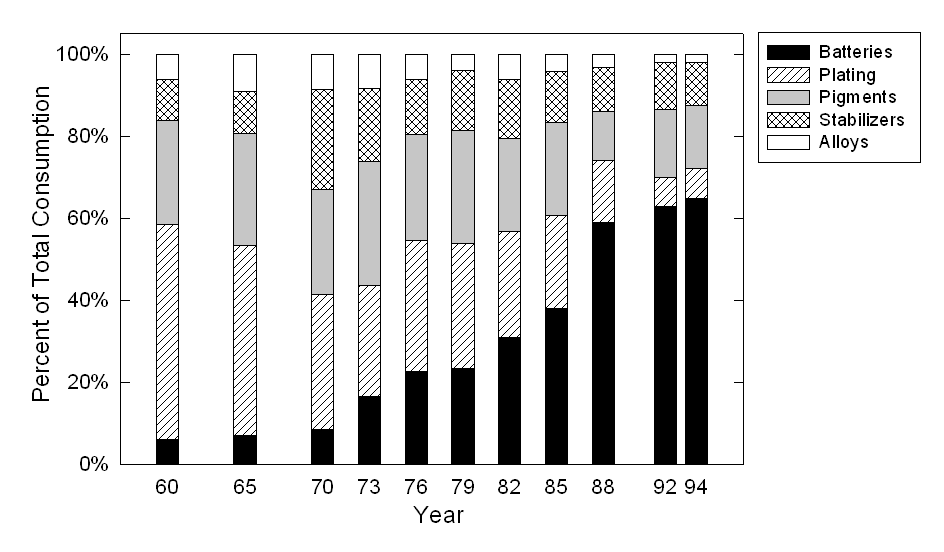
Research to improve the environmental character of consumer products (i.e., Design for Environment) complements research on the component materials that comprise them. Here too the purpose of research is to help achieve the objective of a closed materials cycle. Research on product design should aim to minimize the waste generated during product manufacture, simplify the reuse of products and their components, and minimize energy consumption use and other negative impacts of product use. In general, product designers have greater flexibility in selecting the materials components of products, including the use of reprocessed materials, than is the case for primary materials processors. The evolution of the uses of cadmium illustrates how a hazardous material can be incorporated either in dangerously dissipative products such as paint or in much easier to contain and recycle products such as batteries (Figure 4).
The stage of product assembly also offers opportunity for reducing the use of toxic materials and minimizing wastes. Designing products to ease disassembly is of considerable practical importance to enable recovery. The less labor and capital equipment necessary for disassembly, the more economically attractive recovery becomes. Clever design can also reduce the amount of materials needed in a product, for instance, the use of lower gauge metal sheet in aluminum beverage cans. Research in each of these areas of product design can be complemented by Life Cycle Analysis to understand the tradeoffs that occur in optimizing one stage of the manufacturing process in isolation from others. For a review of strategies and design options for improving the environmental character of products see US Congress Office of Technology Assessment, Green Products by Design: Choices for a Cleaner Environment, OTA-E-541, Washington, DC, US Government Printing Office, 1992.
Manufactured “Products” in the marketplace include items made of distinct material components assembled into more complex forms as well as intricate blends of materials such as chemicals. They range in size from jumbo jets to children toys and from gasoline to shampoo. Selecting representative products for case studies provides concrete examples that illustrate the leverage of product design on the subsequent environmental attributes of products and the processes used to make them. The selection of products that reflect the wide variety of industrial and consumer products in the marketplace and the performance of detailed case studies looking at the possible design choices and their effects constitutes a further area of IE research. For a case study on the environmental design of the telephone see Sekutowski, J.C. 1994. Greening the Telephone: A Case Study. pp. 178-185 in The Greening of Industrial Ecosystems, B.R. Allenby and D.J. Richards, eds., National Academy Press, Washington, D.C. For a case study on the environmental design of household refrigerators see Naser, S.F., Keoleian, G.A., and Thompson, L.T., 1993, Design of a CFC-Free, Energy Efficient Refrigerator, Chemical Engineering Dept., University of Michigan, Ann Arbor. Available from the National Pollution Prevention Center, Ann Arbor, MI.
Recovering the Material
The minimizing of waste and so environmental impact by choosing the right materials and assembling them right continues with the reuse of materials. For mixtures of material the challenge for recovery lies in separation. Using humans to separate materials is both costly and inefficient. Furthermore, in some cases two materials (e.g., different plastic resins) may appear similar to the naked eye but may differ significantly in their chemical and physical properties. Automated methods for materials separation are capable of detecting such differences by exploiting disparities in physical and chemical properties to distinguish between materials. Taking advantage of differences in particle size, density, and magnetic and optical properties of materials in municipal solid waste allows secondary materials processors to separate out organics, and ferrous and non-ferrous metals from waste streams. Sensor arrays and high speed computing capability now allow for real time identification and separation of different plastic resins in mixed waste streams.
For materials more intricately bound in waste streams, more sophisticated approaches are needed. Metals can be found in rinse waters from metal finishers, stack emissions and pollution control sludge from coal-fired power plants, and baghouse dusts from metal smelters among others. A range of technical approaches exist for recovering metals from wastes including electrolytic techniques (common in hydrometallurgical processes used for primary materials), acidic leaching (familiar to mining engineers) as well as a variety of membrane technologies. For a review of state of the art in the recovery of metals from complex solutions see Hager, J.P., et al., eds., 1994, Extraction and Processing for the Treatment and Minimization of Wastes, published by The Minerals, Metals, and Materials Society, Warrendale, PA.
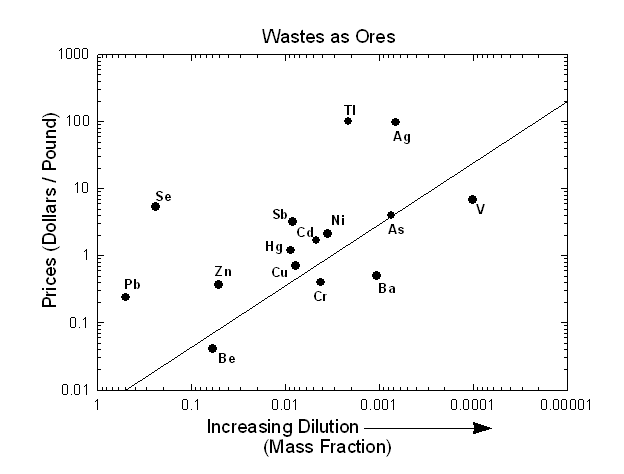
Many tons of metals are annually lost to productive use as a result of their dilution or minute concentrations in wastes. In a national analysis of metals concentrations in waste streams in the US, researchers have found that metals concentrations are frequently higher in waste stream compared with those in typical ore bodies. This analysis was conducted using the “Sherwood Plot,” which relates the selling price of a material with its degree of dilution in the matrix from which it is being separated. Figure 5 shows the “Sherwood Plot” for resource concentrations in their natural matrix and those found in US waste streams. Based on this analysis large amounts of valuable resources are annually discarded as a result of their being viewed as “wastes” (a phenomenon that reflects the regulatory, as opposed to technical, origin of this term). The analysis also demonstrates that in this instance enhanced materials recovery would not only provide environmental benefits but economic ones as well.
For each of the above areas, IE research can freshly synthesize knowledge on materials separation and recovery in an environmental framework. The research should include the identification of needs for improving existing recovery systems based on their demonstrated ability to isolate distinct materials as well as the need for new separation and recovery technologies. More advanced research in this area could explore opportunities for recovering materials that are currently dissipated (i.e., lost) through normal use, in cases where this is feasible. Lots of caustics and solvents go down our drains.
The massive quantities of several relatively safe, non-toxic wastes surely provide opportunities for recovery. These materials are often byproducts from large-scale industrial activity and, though mostly benign, may contain small amounts of trace contaminants. The largest of these waste streams are coal combustion byproducts (CCB) (i.e., fly and bottom ash, slag, and desulfurization sludge), averaging about 100 MMT annually in the US. Currently some fraction of this material is used in road aggregate and cement manufacture, however the majority of CCB continues to accumulate in waste piles. For an analysis of the uses CCB and other bulk wastes see Ahmed, I., Use of Waste Materials in Highway Construction, Noyes Data Corporation, Park Ridge, New Jersey, 1993. Also see Barsotti, A.F., and Kalyoncu, R., Implications of Flue Gas Desulfurization on the Mineral Industries, US Bureau of Mines (RIP), Washington, D.C., 1995.
Phosphogypsum provides an example of a bulk material where the presence of contaminants confounds efforts at recovery. Roughly 50 MMT of phosphogypsum are generated annually as a byproduct from the production of phosphoric acid, mostly used for producing fertilizer and animal feed, in the US. The use of phosphogypsum for road construction and as a cement additive is constrained by the presence of radionuclides (e.g., uranium-230 & 234, radium-226, and radon-222) and, in some cases, heavy metals (e.g., arsenic, chromium). Development continues on means for purifying this waste material for productive use. Other examples of large scale potentially reusable industrial waste flows include spent potliners from metals smelters and refractory materials used in glass manufacture.
Substituting these bulk materials in the economy directly displaces masses of virgin materials and thus avoids environmental disruption from mining and quarrying. The factors limiting fuller integration of these waste resources include the presence of contaminants and the costs associated with their transport. IE research on bulk industrial wastes should aim to neutralize the problems preventing greater recovery of these materials. Specifically, IE research should identify major sources and potential uses for bulk industrial wastes, clarify the type and level of contaminants found in them, point to the technologies involved in rendering wastes suitable for reuse, and analyze the further possibilities for their greater use in the economy.
Monitoring and Sensing Technology
Accurate empirical data on waste streams and other operational variables are a prerequisite for designing and using environmental performance measures in industry and for implementing new processes and practices. Additionally, environmental monitoring of natural systems and the services they provide helps gauge pollution and its effects. The National Resources Inventory, concentrating on soil erosion and farming, illustrates the utility of such monitoring (Kellogg, RL, GW TeSelle, and JJ Goebel, 1994, Highlights from the 1992 National Resources Inventory, Journal of Soil and Water Conservation 49:521-527.) In areas such as agriculture and forestry research might consider how monitoring and sensing technologies can contribute to achieving greater efficiency, e.g., in application of chemicals. Research is also needed to develop reliable, low-cost monitoring systems for measuring total emissions to all environmental media stemming from an industrial facility. To consider a facility or ecopark inside a “bubble” we need to measure more than the smoke from one or a few chimneys or pipes.
b) Institional barriers and incentives
Overcoming the technical barriers associated with recovering materials from waste streams is a necessary but insufficient step for stimulating the greater use of wastes in the economy. Technology making recovery cheap and assuring high quality input streams must be followed by encouraging regulations and easy informational access. Finally a ready market must appear. Technologes are inseparable from institutional and social strategies. We need to learn why IE is not already the rule in industry and remove the impediments. Is this going to pay? From whose perspective? What balance of market-based, financial, regulatory, and legal strategies may dispose the industrial system to move in the desired direction at reasonable cost? For a conceptual introduction, see Frosch, R.A., 1996, Toward the End of Waste: Reflections on a New Ecology for Industry, Daedalus 125(3):199-212.
Market and Informational Barriers
Absent direct governmental interference, the markets for waste materials will ultimately rise or fall based on their economic vitality. Markets are sophisticated information processing machines whose strength resides in large part on the richness of the informational feedback available. The potential size and character of markets for what we currently label wastes remain open questions.
One option for waste markets are dedicated `Waste Exchanges’ where brokers trade industrial wastes like other commodities. By using internet technology to facilitate the flow of information, the need for centralized physical locations for either the stuff or for the traders in the stuff may be minimal. Research is needed on waste information systems that would form the basis for waste exchanges. Systems would need to list available industrial wastes as well as the means for buyers and sellers to access the information and conduct transactions. The degree to which such arrangements would allow direct trading or rely on the brokers to mediate transactions presents a further question. As part of the market analysis for waste materials, research is needed to understand past trends regarding the effect of price disparities between virgin and recovered materials, and to assess the effect of other economic factors associated with waste markets, such as additional processing and transportation costs. A further matter for investigation concerns whether some threshold level of industrial agglomeration is necessary to make such markets economically viable. For a recent review of this topic see USEPA, 1994, Review of Industrial Waste Exchanges, Report # EPA-530-K-94-003, Waste Minimization Branch, Office of Solid Waste, USEPA, Washington, D.C.
Progress is already being made on this front. The Chicago Board of Trade (CBOT), working with several government agencies and trade associations, has begun a financial exchange for trading scrap materials. Other exchanges such as the National Materials Exchange Network (NMEN) and the Global Recycling Network (GRN) facilitate the exchange of both materials recovered from municipal waste streams and of industrial wastes. Analysts might propose ideas for improving or facilitating the development of these exchanges. The value of such exchanges as a means of improving the flow of information depends on the deficiency of the current information flow, and how much this particular aspect of recycling plays in recycling’s success or failure. The CBOT is different from the other exchanges in that it is a financial market — starting now as a cash exchange with hopes that it will evolve into a forward and/or futures market.
A simple waste exchange is premised on the notion that opportunities for exchange are going unrealized. A cash exchange has a related premise that there is a need for what economists call price discovery. Finally, a futures or forward market exists to allow the risk associated with price volatility to be traded independent of the commodity.
The value of mechanisms such as the CBOT may be indirect, that is, price discovery may not be the main problem in the recyclables market, though important in some circumstances. Similarly, creating a market for buying and selling price risk through futures or forward contracts is useful but not likely to be extensive in the near term. The real value in the CBOT-type scheme may prove to be infrastructure and standards that it brings. The existence of the CBOT recyclables exchange requires specifications for scrap materials sufficiently robust that distant entities can trade sight unseen. Further, the CBOT system has forced the creation of dispute arbitration mechanisms. Analysts need to watch such developments and report on them.
Business and Financial
The private firm is the basic economic unit and collectively constitutes the mechanism for reducing inventions and innovations to practice, in service of environmental quality or other goals. Corporations employ a spectrum of organizational approaches to handle environmental matters. In some cases the environment division of a corporation concerns itself exclusively with regulatory compliance and the avoidance of civil liability for environmental matters. For other firms the environment plays a more strategic role in corporate decision making. Decisions made at the executive level strongly determine whether or not companies adopt new technologies and practices that will effect their environmental performance. Relatedly, the manner in which corporations integrate environmental costs into their accounting systems, for instance how to assign disposal costs, bears heavily on its ability to make both short and long term environmentally responsible decisions.
Research is needed to understand better the role of corporate organization and accounting practices in improving environmental performance and the incentives to which corporations respond for adopting new practices and technologies. Such studies would examine the learning process in corporate environments as well as investigate how corporate culture influences the ultimate adoption or rejection of environmentally innovative practices. For a study on the influence of corporate organization and culture on environmental decision making see Porter, M.E. and van der Linde, C., 1995, Toward a New Conception of the Environment-Competitiveness Relationship, Journal of Economic Perspectives 9(4):xx-xx. For an analysis of the current methods for integrating environmental costs into corporate accounting systems see Ditz, D., Ranganathan, J., and Banks, R.D., Green Ledgers: Case Studies in Corporate Environmental Accounting, World Resources Institute, 1995.
Several management/learning approaches (e.g., Total Quality Management, High Performance Workplace, Lean Production) currently enjoy widespread recognition in business. Many of the efficiency enhancing practices advocated by these approaches bear strong resemblance to those of IE, for example, the stress on performance measures and improved information flows. Research is needed to integrate IE principles into the framework of TQM and other management/learning approaches now widely recognized in diverse industries. For discussion of the new environmental context for private firms, see Allenby, B.R., Evolution of the Private Firm in an Environmentally Constrained World, The Industrial Green Game: Implications for environmental design and management, D.J. Richards, ed., National Academy Press, Washington, D.C., in press.
Regulatory
Environmental regulation strongly induces companies to appreciate the environmental dimensions of their operations. Businesses must respond to local, national, and international regulatory structures established to protect environmental quality. Although few question that regulations have helped to improve environmental quality, many argue that wiser, less commanding regulation would improve quality further at less cost. Agreements on hazardous waste tightly regulate the transport of these wastes across state and national boundaries, perhaps reducing opportunities for re-use and encouraging greater extraction of virgin stocks. Elements of the US federal regulatory apparatus for wastes, (e.g., RCRA and CERCLA) heavily regulate the storage and transport of wastes and dictate waste treatment methods that also serve to dissuade later efforts at materials recovery. Research is needed to determine the role of past and current environmental regulation in encouraging or discouraging materials recovery efforts.
With better understanding of the effects of past regulation, researchers could explore regulatory reforms to provide greater incentive to recover materials from waste. This line of inquiry into the effect of regulatory reform should include a broader analysis of policies that favor more environmentally sound industrial ecosystems, such as rewarding firms that exploit materials symbioses within and between facilities, providing incentives for investment in capital equipment that uses secondary materials inputs, promoting manufacturer responsibility for product after their useful life (i.e., takeback legislation), encouraging disposal practices that do not prevent later access to materials, and discontinuing subsidies to virgin materials producers. For a discussion of the design and implications of takeback legislation see Lifset, R., 1993, Take it Back: Extended producer responsibility as a form of incentive-based environmental policy, Journal of Resource Management and Technology 21(4):163-175.
Legal
Like regulation, the risk of civil liability from handling industrial waste also affects how much is recycled. The question of how developments in liability law affect decisions on the recovery of wastes from materials thus forms a further area for IE research. Such research would also investigate the potential for legal reforms that would facilitate greater materials recovery, for instance by limiting the responsibility of parties handling wastes, while maintaining the societal protection that the statutes were meant to ensure.
Though ostensibly unrelated to environmental law, a host of other statutory bodies can affect the development of efficient industrial ecosystems. Anti-trust statutes can effectively bar the agglomeration of enterprises necessary to effectively close materials loops. Consumer protection law can encumber efforts to improve the environmental design of products. Law governing external trade impact international resource allocation as well as the transport of recoverable wastes. Legal decisions relating to government procurement practices can also help or hurt markets for recovered materials and can directly exert pressure environmentally important sectors. The prime motivations for these laws (or rules) are usually not environmental. However, research in this area can identify cases where environmental considerations may indicate reforms that do not interfere with the otherwise desired political, social, or economic effect. For an extended discussion on the environmental dimension of trade law see Esty, D.C., 1994, Greening the GATT: Trade, environment, and the future, Institute for International Economics, Washington, D.C.
Comparisons among policies and firms was one of the promised benefits of indicators and metrics. Studies in business, regulation, and law can yield similar benefits. The studies should advance IE’s goal of lightening the environmental impact per person and per dollar.
Regional Strategies
Often geographic regions may provide a sensible basis for implementing IE. Industries tend to form spatial clusters in specific geographic regions based on factors such as access to raw materials, convenient transportation, technical expertise, and markets. This is particularly true for `heavy’ industries requiring large resource inputs and generating extensive waste quantities. Furthermore, the industries supporting large industrial complexes tend to be located within reasonable proximity to their principal customers. These compact complexes, such as the steel industry around the southern Great Lakes, provide excellent subjects for the flow charts of industrial ecology. Research can investigate the geographic, economic, political and other factors that contribute to the development of symbiotic materials flows among industries in a region and overall regional environmental performance. Due to the unique character of different regions this work could proceed in the form of case studies of regions containing a concentration of industries in a particular sector, for example, the steel industry in the southern Great Lake states.
Still more compact and so more ideal subject for IE are Ecoparks. They are industrial facilities clustered to minimize both energy and material wastes through the internal bartering and external sales of wastes. One industrial park located in Kalundborg, Denmark has established a prototype for efficient reuse of bulk materials and energy wastes among industrial facilities (Figure 6). The park houses a petroleum refinery, power plant, pharmaceutical plant, wallboard manufacturer, and fish farm that have established dedicated streams of processing wastes (including heat) between facilities in the park. Figure 6 shows a schematic diagram of the Kalundborg Industrial Ecopark. Research should investigate the prospects for similar industrial ecoparks. Factors include the need for high quality inputs streams a nd the reliability of supplies. What are the, business reasons for failure? Will Ecoparks self assemble? Research could also more broadly address the question of what spatial scales are most advantageous and practical for the establishment of regional industrial networks. Must they be physically co-located or is there a limited range of proximities for which regional networks could operate effectively?
IV. CONCLUSION
Industrial ecology is both a job and a discipline. As a discipline, industrial ecology seeks to provide rigorous technical understanding that fosters systems of production and consumption that can be sustained for very long periods of time, even indefinitely, without significant environmental harm. IE takes a systems view of industry in developing strategies to facilitate more efficient use of material and energy resources and to reduce the release of hazardous as well as non-hazardous wastes to the environment. The ultimate objective of the field is the emergence of an economy that cycles virtually all of the materials it uses, emitting only micro amounts of wastes and pollutants, while providing high and increasing services to the large human population already here and still likely to grow. For the United States, at least a factor of ten improvement in emissions per dollar of GDP seems needed during the next century.
Research on goals and concepts sets the framework of IE. An underlying question is what is to be learned from the analogy between natural and industrial ecosystems. Exploiting the biological analogy, how can we better understand the evolution of industrial metabolism and resource consumption in industrialized society and can we extract patterns of development that explain the past use of resources and indicate likely futures? Indispensable to this activity are accurate accounts of the size and structure of current resource use, and deeper understanding of the environmental implications of the manufacture, distribution, use, and disposal of present products.
Tracking the flow of an individual chemical element from initial extraction to final disposition usefully highlights the industries using that element and indicates opportunities for conserving resources and limiting harmful exposures. Following the resource needs and waste generation in individual firms and whole industrial sectors provides public and private managers the means to assess the environmental performance of a given firm or sector, learn more about the network of materials flows wherever they may lead, and isolate the factors and forces driving network development.
Research on implementation lies at the heart of IE as an applied science. Implementing IE in the diverse industries that form the economy will require both technological innovations and economic, regulatory, and legal incentives, or at least fewer disincentives. Technical research should focus on materials, products, and processes that lead to reduced resource use and waste generation in industry. Complementary efforts should consider the organizational factors and incentives that affect the ability of corporations and other actors to make operational changes that lead to improved environmental performance. Regional studies underscore the possibilities for cycling materials through local industrial networks and shed light on the impact of local or regional industrial activity on surrounding populations and landscapes.
First one and then another road may be the best route to the goal of IE. Research underlies them all. Improved means to work together, such as a research network on metals, are needed and must be actively considered during the next phase of the development of the field. At this stage, wisdom suggests that the research community limit the agenda of IE and do the limited work well. We should seek to answer specific questions that will produce environmental returns. For example, how shall we combine the harm per kilogram with the kilograms of wastes to guide control measures to the most important wastes and chart our progress in minimizing environmental impact? What indices will integrate environmental impact and so reveal success or failure in terms of the costs of such things as choice of material or product design or recovery of material?
Industrial ecology began with a shared intuition that a vastly superior economy for the environment is both technically feasible and necessary if the economy is to grow. The rough drawings we have been able to make so far are encouraging, and history seems to be on our side. Properly elaborated during the coming years, industrial ecology could show where the most powerful levers are, efficiently guiding us to the means for a lean, durable, and highly productive economy.
V. BIBLIOGRAPHY
The following bibliography lists publications that deal explicitly with industrial ecology as an area of research as well as related literature. The structure of the bibliography corresponds to the categories used in this report and also adds sections for cross-cutting references and relevant scholarly journals. The subsequent list of web sites can only hint at the rapidly evolving state of electronic information resources.
For publications explicitly or clearly within industrial ecology we have endeavored to sample the work of recognized active authors and researchers in this area. As regards the more general, related environmental literature cited, we have selected references to illustrate substantive analyses that may inform and contribute to industrial ecology research. References appear in chronological order within each section.
For excellent, complementary bibliographies, see Erkman, S., 1997, Industrial Ecology: A Historical View, Journal of Cleaner Production, in press; and Erkman, S., 1994, Ecologie industrielle, metabolisme industriel, et societe d’utilisation, Etude effectuee pour la Fondation pour le progres de l’homme, Geneva, e-mail: serkman@vtx.ch
Introduction (The Goal and the Role)
Ausubel, J.H., 1996, Can Technology Spare the Earth?, American Scientist, 84(3):166-178.
O’Rourke, D., Connelly, L., and Koshland, C.P., Industrial Ecology: A Critical Review, 1996, International Journal of Environment and Pollution 6(2/3):89-112.
Schulze, P., ed., 1996, Engineering Within Ecological Constraints, National Academy Press, Washington, D.C.
Cohen, J.E., 1995, How Many People Can the Earth Support?, Norton, New York.
Frosch, R.A., 1995, Industrial Ecology: Adapting Technology for a Sustainable World, Environment 37(10):16-37.
Graedel, T.E., and Allenby, B.R., 1995, Industrial Ecology, Prentice Hall, Englewood Cliffs, NJ.
Lowe, E. and Evans, L., 1995, Industrial Ecology and Industrial Ecosystems, Journal of Cleaner Production, 3(1-2).
Allenby, B.R., 1994, Industrial Ecology Gets Down to Earth, Circuits and Devices, January `94 pp. 24-28.
Allenby, B.R. and Richards, D.J., eds., 1994, The Greening of Industrial Ecosystems, National Academy Press, Washington, D.C.
Frosch , R.A., 1994, Industrial Ecology: Minimizing the Impact of Industrial Waste, Physics Today, 47(11):63-8.
Socolow, R., 1994, Six Perspectives from Industrial Ecology, p. 3-16 in Industrial Ecology and Global Change, Socolow, R., Andrews, C., Berkhout, F., and Thomas V., eds., Cambridge University Press, New York.
Allenby, B.R., 1992, Achieving Sustainable Development Through Industrial Ecology, International Environmental Affairs, 4(1):56-68.
Ayres, R.U. and Simonis, U., eds., 1992, Industrial Metabolism, United Nations University Press, Tokyo, Japan.
Ausubel, J.H., 1992, Industrial Ecology: Reflections on a Colloquium, Proceedings of the National Academy of Sciences of the USA 89(3):879-884.
Ehrenfeld, J.R. 1992, Industrial Ecology: A Technological Approach to Sustainability, Hazardous Waste & Hazardous Materials 9(3):209-211.
Frosch, R.A., 1992, Industrial Ecology: A Philosophical Introduction, Proceedings of the National Academy of Sciences of the USA 89(3):800-803.
Jelinski, L.W., Graedel, T.E., Laudise, R.D., McCall, W., and Patel, C.K.N., 1992, Industrial Ecology: Concepts and Approaches, Proceedings of the National Academy of Sciences of the USA 89(3):793-797.
Tibbs, H., 1992, Industrial Ecology: An Environmental Agenda for Industry, Whole Earth Review, Winter 1992. Pp. 4-19.
Ausubel, J.H. and Sladovich, H.E., eds., 1989, Technology and Environment, National Academy, Washington DC.
Frosch, R.A. and Gallopoulos, N.E., 1989, Strategies for Manufacturing, Scientific American, September 1989, pp. 144-152.
Huisingh, D., 1989, Waste Reduction at the Source: The Economic and Ecological Imperative for Now and the 21st Century, pp. 96-111 in Management of Hazardous Materials and Wastes: Treatment, Minimization, and Environmental Impacts, Majumdar, S.K., et al., eds., Pennsylvania Academy of Sciences.
Marchetti, C., 1979, On 1012: A Check on the Earth-Carrying Capacity for Man, Energy 4:1107-1117.
Ayres, R.U., 1978, Resources, Environment and Economics: Applications of the Materials/Energy Balance Principle, John Wiley & Sons, New York.
How Industrial Ecology Got its Name
Graedel, T.E., 1996, On the Concept of Industrial Ecology, Annual Review of Energy and Environment, Volume 21.
Allaby, M. ed., 1994, The Concise Oxford Dictionary of Ecology, Oxford University Press, Oxford, U.K.
Allenby, B.R. and Cooper, W.E., 1994, Understanding Industrial Ecology from a Biological Systems Perspective, Total Quality Environmental Management, Spring 1994 pp. 343-354.
Odum, E. 1989, Ecology and Our Endangered Life-Support Systems, Sinnauer Associates, Sunderland, MA.
Odum, H.T., 1988, Self-Organization, Transformity, and Information, Science 242:1132-1139.
Holling, C.S., 1986, Resilience of Ecosystems, Local Surprises and Global Change, pp. 292-317 in Clark, W.C. and Munns, R.E., eds., Sustainable Development of the Biosphere, Cambridge University Press, Cambridge, U.K.
Odum, H.T., 1986, Ecosystem Theory and Application, John Wiley and Sons, New York.
Holling, C.S., ed., 1978, Adaptive Environmental Assessment and Management, John Wiley and Sons, London, U.K.
Zero Emission Systems
Iantovksi, E., and Mathieu, P., Highly Efficient Zero Emission CO2-Based Power Plant, University of Liege, Dept. of Nuclear Engineering and Power Plants, Belgium.
Lave, L.B., Hendrickson, C.T., and McMichael, F.C., 1995, Environmental Implications of Electric Cars, Science 268:993-5.
Allam, R.J., and Spilsbury, C.G., 1992, A Study of the Extraction of CO2from the Flue Gas of a 500 MW Pulverised Coal Fired Boiler, Energy Conversion and Management 33(5-8):373-378.
Marchetti, C., 1989, How to Solve the CO2 Problem Without Tears, International Journal of Hydrogen Energy 14(8):493-506
Lee, T.H., 1989, Advanced Fossil Fuel Systems and Beyond, pp. 114-136 in Ausubel, J.H., and Sladovich, H.E., eds., Technology and Environment, National Academy, Washington DC.
Hafele, W., Barnert H., Messner, S., Strubegger, M., and Anderer, J., 1986, Novel Integrated Energy Systems: The Case of Zero Emissions, pp. 171-193 in Clark, W.C. and Munns, R.E., eds., Sustainable Development of the Biosphere, Cambridge University, Cambridge, U.K.
Materials Substitution and Dematerialization
Wernick, I.K., Herman, R., Govind, S., and Ausubel, J.H., 1996, Materialization and Dematerialization: Measures and Trends, Daedalus 125(3):171-198.
Wernick, I.K., 1994, Dematerialization and Secondary Materials Recovery: A Long-Run Perspective, Journal of the Minerals, Metals, and Materials Society, 46(4):39-42.
Bernardini, O. and Galli, R., 1993, Dematerialization: Long Term Trends in the Intensity of Use of Materials and Energy, Futures 25(4):431-448.
Rogich, D.G. and Staff, 1993, Materials Use, Economic Growth, and the Environment, Presented at the International Recycling Congress and REC’93 Trade Fair, U.S. Bureau of Mines, Washington, D.C.
Sousa, L.J., 1992, Towards a New Materials Paradigm, U.S. Bureau of Mines, Washington, D.C.
U.S. Bureau of Mines, 1990, The New Materials Society: Volume I-III, U.S. Government Printing Office, Washington, D.C.
Herman, R., Ardekani, S.A., and Ausubel, J.H., 1989, Dematerialization, pp. 50-69 in Technology and Environment, Ausubel, J.H. and Sladovich, H.E., eds., National Academy Press, Washington, D.C.
Waddell, L.M. and Labys, W.C., 1988, Transmaterialization: Technology and Materials Demand Cycles, Materials and Society 12(1):59-86.
Williams, R.H., Larson, E.D., and Ross, M.H., 1987, Materials, Affluence and Industrial Energy Use, Annual Review of Energy and Environment (12):99-144.
Tilton, J.E., ed., 1983, Materials Substitution: Lessons from the Tin-Using Industries, Resources for the Future, Inc., Washington, D.C.
Spencer, V.E., 1980, Raw Materials in the United States Economy 1900-1977, Bureau of the Census Technical paper No. 47, U.S. Department of Commerce/U.S. Department of the Interior, Washington D.C.
Malenbaum, W., 1978, World Demand for Raw Materials in 1985 and 2000, McGraw-Hill, New York.
Goeller, H.E. and Weinberg, A.M., 1976, The Age of Substitutability: What do we do when the mercury runs out, Science 191:683-689.
Functionality Economy
Stahel W. R., 1994, The Utilization-Focused Service Economy: Efficiency and Product-Life Extension, pp. 178-190 in The Greening of Industrial Ecosystems, B.R. Allenby and D.J. Richards, eds.
Stahel, W.R., 1993, Product Design and Utilization, The Product Life Institute, Geneva, Switzerland.
Materials Flow and Balance Analysis
Wernick, I.K., Waggoner, P.E., and Ausubel, J.H., Searching for Leverage to Conserve Forests: The Industrial Ecology of Wood Products in the U.S., Journal of Industrial Ecology 1(3), in press, 1997
Ayres, R.U. and Ayres, L.W., The Life-Cycle of Chlorine: Part I-IV, Journal of Industrial Ecology, 1(1), in press, 1997.
Ayres, R.U. and Ayres, L.W., Use of Material Balances to Estimate Aggregate Waste Generation in the United States (Excluding Chemicals), in Measures of Environmental Performance and Ecosystem Condition, P. Schulze ed., National Academy Press, Washington, D.C., in press, 1997.
Kleijn, R., Tukker, A., and van der Voer, E., Chlorine in the Netherlands: Part I, Journal of Industrial Ecology, in press, 1997.
Sagar, A.D. and Frosch R. A., Industrial Ecology: A Perspective and an Example, Journal of Clean Technology, in press, 1997.
Ayres, R.U. and Ayres, L.W., 1996, Industrial Ecology: Towards Closing the Materials Cycle, Edward Elgar Publishing, Cheltenham, U.K.
Duchin, F. and Lange, G., 1995, Prospects for the Recycling of Plastics in the United States, Structural Change and Economic Dynamics, July 1995.
Environmental Defense Fund et al., 1995, Paper Task Force Recommendations for Purchasing and Using Environmentally Preferable Paper, Final Report & Technical Supplements I-V, (Duke University, Environmental Defense Fund, Johnson & Johnson, McDonald’s, The Prudential Insurance Company of America, Time Inc.), Published by the Environmental Defense Fund, New York.
Wernick, I.K. and Ausubel, J.H., 1995, National Materials Flows and the Environment, Annual Review of Energy and Environment, 20:462-492.
Thomas, V.M. and Spiro, T.J., 1995, An Estimation of Dioxin Emissions in the United States, Toxicological and Environmental Chemistry, (50):1-37.
Ayres, R.U. and Ayres, L.W., 1994, Chemical Industry Wastes: A Materials Balance Analysis, INSEAD, Fontainebleau, France.
Ince, P.J., 1994, Recycling of Wood and Paper Products in the United States, U.S. Dept. of Agriculture Forest Service, paper delivered at United Nations Economic Commission for Europe Timber Committee Team of Specialists on New Products, Recycling, Markets, and Applications for Forest Products, June 1994. Copies available from USDA Forest Service Forest Products Laboratory, Madison Wisconsin, 53705, USA.
Kinzig, A.P. and Socolow, R.H., 1994, Human Impacts on the Nitrogen Cycle, Physics Today 47:24-31.
Lave, L., Cobas-Flores, E., Hendrickson, C.T., McMichael, F.C., 1995, Using Input-Output Analysis to Estimate Economy-Wide Discharges, Environmental Science and Technology 29(9):420A-426A.
Duchin, F., 1992, Industrial Input-Output Analysis: Implications for Industrial Ecology, Proceedings of the National Academy of Sciences of the USA 89(3):851-855.
Stigliani, W.M. and Anderberg, S., 1992, Industrial Metabolism at the Regional Level: The Rhine Basin, International Institute for Applied Systems Analysis, Laxenburg, Austria.
Thornton, I., 1992, Sources and Pathways of Cadmium in the Environment, IARC Scientific Publications 118:149-62, Lyon, France.
Life Cycles of Products
Ayres, R.U., 1995, Life Cycle Analysis: A Critique, Resources Conservation and Recycling, 14:199-223.
Graedel, T.E., Allenby, B.R., and Comrie, P.R., 1995, Matrix Approaches to Abridged Life Cycle Assessment, Environmental Science and Technology, 29:134A-139A.
Narodoslawsky, M., Krotscheck, C., 1995, The Sustainable Process Index (SPI): Evaluating Process According to Environmental Compatibility, Journal of Hazardous Materials, 14(2-3):383-397.
Weitz, K.A., Malkin, M., and Baskir, J.N., eds., 1995, Streamlining Life-Cycle Assessment Conference and Workshop, Research Triangle Institute, Research Triangle Park, NC.
Organization for Economic Co-operation and Development, Life-Cycle Management and Trade, 1994, Paris, France.
Klimisch, R.L., 1994, Designing the Modern Automobile for Recycling, pp. 172-178 in The Greening of Industrial Ecosystems, B.R. Allenby and D.J. Richards, eds., National Academy Press, Washington, D.C.
Sekutowski, J.C., 1994, Greening the Telephone: A Case Study, pp. 178-185 in The Greening of Industrial Ecosystems, B.R. Allenby and D.J. Richards, eds., National Academy Press, Washington, D.C.
Society of Environmental Toxicology and Chemistry [SETAC], 1994, Life-Cycle Assessment Data Quality: A Conceptual Framework, SETAC, Pensacola, FL.
Curran, M.A., 1993, Broad-Based Environmental Life Cycle Assessment, Environmental Science and Technology 27(3):431-436.
Naser, S.F., Keoleian, G.A., and Thompson, L.T., 1993, Design of a CFC-Free, Energy Efficient Refrigerator, Chemical Engineering Dept., University of Michigan, Available from the National Pollution Prevention Center, Ann Arbor, MI.
Sage, J., 1993, Industrielle Abfallvermeidung und deren Bewertung am Beispiel der Leiterplattenherstellung, dbv-Verlag, Technische Universitat Graz, Austria. [Describes Sustainable Process Index method for LCA]
Schmidt-Bleek, F., 1993, MIPS – A Universal Ecological Measure?, Fresenius Environmental Bulletin 2:306-311.
Society of Environmental Toxicology and Chemistry, 1993, Guidelines for Life-Cycle Assessment: A “Code of Practice,” SETAC, Pensacola, FL.
U.S. Environmental Protection Agency, 1993, Life-Cycle Assessment: Inventory Guidelines and Principles, EPA Report no. EPA/600/R-92/245, USEPA, Office of Research and Development, Washington, D.C.
Fava, J.A., ed., 1991, A Technical Framework for Life-Cycle Assessments, Society of Environmental Toxicology and Chemistry, Washington D.C.
Hocking, M.B., 1991, Paper Versus Polystyrene: A Complex Choice, Science 251:504-505.
Lubkert, B., Virtanen, Y., Muhlberger, M., Ingman, I., Vallance, B., and Alber, S., 1991, Life Cycle Analysis: IDEA an International Database for Ecoprofile Analysis, International System for Applied Systems Analysis, Laxenburg, Austria.
Steen, B. and Ryding, S-O., 1991, The EPS Environmental Accounting Method: An Application of Environmental Accounting Principles for Evaluation and Valuation of Environmental Impact in Product Design, Swedish Environmental Research Institute, Goetberg, Sweden.
Ahbe, S., Braunschweig, A., and Mueller-Wenk, R., 1990, Methodik fuer Oekobilanzen auf der Basis Oekologischer Optimierung, Schriftenreihe Unwelt Nr. 133, Bundestat fuer Unwelt, Wald and Landschaft (BUWAL), Bern, Switzerland. [Describes Swiss Eco-Points method for LCA]
Indicators
Adriaanse, A., Bringezu, S., Hammond, A., Moriguchi, Y., Rodenburg, E., Rogich, D., and
Schuetz, H., 1997, Resource Flows: The Material Basis of Industrial Economies, joint publication of World Resources Institute, Wuppertal Institute for Climate, Environment and
Energy, Netherlands Ministry of Housing, Planning, and Environment, and National Institute for Environmental Studies, available from World Resources Institute, Washington DC.
Wernick, I.K., and Ausubel, J.H., 1995, National Materials Metrics for Industrial Ecology, Resources Policy 21(3):189-198.
Discovering Dynamics in History
Gruebler, A., 1996, Time for a Change: On the Patterns of Diffusion of Innovation, Daedalus 125(3): 19-42.
Curzio, A.Q., Fortis, M., and Zoboli, R., eds., 1994, Innovation, Resources, and Economic Growth, Springer-Verlag, New York.
Smil, V., 1994, Energy in World History, Westview, Boulder.
Vasey, D.E., 1992, An Ecological History of Agriculture: 10,000B.C.-A.D. 10,000, Iowa State, Ames IA.
Nakicenovic, N. and Gruebler, A. eds., 1991, Diffusion of Technologies and Social Behavior, International Institute for Applied Systems Analysis, Springler-Verlag, Berlin.
Gruebler, A., 1989, The Rise and Fall of Infrastructures: Dynamic Evolution and Technological Change in transport, Physica-Verlag, Heidelberg, Germany.
Ausubel, J.H., 1988, Regularities in Technological Development: An Environmental View, pp. 70-94 in Technology and Environment, Ausubel, J.H. and Sladovich, H.E., eds., National Academy Press, Washington, D.C.
International Comparisons
Erkman, Suren, 1995, Ecologie Industrielle, Metabolisme Industriel, et Socie’te’ D’utilisation, Supported by the Foundation for the Progress of Humanity, Paris.
Fishbein, B.K, 1994, Germany, Garbage, and the Green Dot, INFORM, New York.
Overcash, M.R., 1994, Cleaner Technology Life Cycle Methods: European Research and Development, Hazardous Waste & Hazardous Materials 11(4):459-477
Watanabe, C., 1993, Energy and Environmental Technologies in Sustainable Development: A View From Japan, The Bridge, Summer 1993, National Academy of Engineering, Washington D.C.
Smith, T.T., 1993, Understanding European Environmental Regulation, Conference Board Report #1026, Conference Board, New York.
World Bank, 1989, Environmental Accounting for Sustainable Development: Selected Papers from Joint World Bank Workshops, World Bank, Washington, D.C.
Hershkowitz, A. and Salerni, E., 1987, Garbage Management in Japan: Leading the Way, INFORM, New York.
Hoberg, G. Jr., 1986, Technology, Political Structure, and Social Regulation: A Cross-National Analysis, Comparative Politics, 18:357-376.
Choosing the Material
Eisenberger, P., ed., 1996, Basic Research Needs for Environmentally Responsive Technologies of the Future, Princeton Materials Institute, Princeton, NJ.
US Congress Office of Technology Assessment, 1993, Biopolymers: Making Materials Natures Way, OTA Report no. OTA-BP-E-102, Washington, D.C.
Allenby, B.R., 1992, Industrial Ecology: The Materials Scientist in an Environmentally Constrained World, Materials Research Bulletin (17)3:46-51.
Douglas, J.M., 1992, Process Synthesis for Waste Minimization, Industrial & Engineering Chemistry Research, v. 31 no. 238.
Mitchell, J.W., 1992, Alternative Starting Materials for Industrial Processes, Proceedings of the National Academy of Sciences of the USA 89(3):821-826.
National Academy of Sciences, 1989, Materials Science and Engineering for the 1990s, National Academy Press, Washington, D.C.
Ashby, M.F., 1979, The Science of Engineering Materials, pp. 19-48 in Science and Future Choice, Hemily, P.W. and Özdas, M.N., eds., North Atlantic Treaty Organization, Clarendon Press, Oxford, U.K.
Designing the Product
U.S. Congress Office of Technology Assessment, 1992, Green Products by Design: Choices for a CLeaner Environment, OTA-E-541, U.S. Government Printing Office, Washington, D.C.
Overby, C., 1990, Design for the Entire Life Cycle: A New Paradigm, 1990 ASEE Annual Conference Proceedings, Industrial & Systems Engineering Dept., Ohio University, Athens, OH.
Recovering the Material
Barsotti, A.F. and Kalyoncu, R., 1995, Implications of Flue Gas Desulfurization on the Mineral Industries, Available from Minerals Information Office, U.S. Geological Survey, Reston, VA.
Council for Agricultural Science and Technology, 1995, Waste Management and Utilization in Food Production and Processing, CAST, Ames, IA.
Philbin, M.L., 1995, Sand Reclamation 1995: Is it Time for Your Foundry?, Modern Casting 85:25-9.
Allen, D.T. and Behamanesh, N., 1994, Wastes as Raw Materials, pp. 68-96 in The Greening of Industrial Ecosystems, Allenby, B.R. and Richards, D.J., eds., National Academy Press, Washington, D.C.
Lave, L., Hendrickson, C.T., and McMichael, F.C., 1994, Rethinking How We Recycle, Environmental Science and Technology 28(1):19A-24A.
Hager, J.P., et al., eds., 1994, Extraction and Processing for the Treatment and Minimization of Wastes, The Minerals, Metals, and Materials Society, Warrendale, PA.
Ahmed, I., 1993, Use of Waste Materials in Highway Construction, Noyes Data Corporation, Park Ridge, NJ.
Butterwick, L. and Smith, G.D.W., 1986, Aluminum Recovery from Consumer Waste: Technology review, Conservation & Recycling 9(3):281-92.
Markets and Information
Frosch, R.A., 1996, Toward the End of Waste: Reflections on a New Ecology for Industry, Daedalus 125(3):199-212.
USEPA, 1994, Review of Industrial Waste Exchanges, EPAReport no. EPA-530-K-94-003, Waste Minimization Branch, Office of Solid Waste, USEPA, Washington, D.C.
Beckerman, W., 1992, Pricing for Pollution: An Analysis of Market Pricing and Government Regulation in Environment Consumption and Policy, Institute for Economic Affairs, London, U.K.
JETRO (Japan External Trade Organization), 1992, Ecofactory-Concept and R&D Themes, special issue of New Technology, FY 1992, Ecofactory Research Group, Agency of Industrial Science and Technology, Tokyo, Japan.
Page, T., 1977, Conservation and Economic Efficiency: An Approach to Materials Policy, Published for Resources for the Future by the Johns Hopkins University Press, Baltimore, MD.
Business and Finance
Richards, D.J., ed., The Industrial Green Game: Implications for Environmental Design and Management, National Academy of Engineering, National Academy Press, Washington, D.C., in press.
Allenby, B.R., Evolution of the Private Firm in an Environmentally Constrained World, in The Industrial Green Game: Implications for Environmental Design and Management, D.J. Richards, ed., National Academy Press, Washington, D.C., in press.
Battelle Pacific Northwest Laboratory, 1996, The Source of Value: An Executive Briefing and Sourcebook on Industrial Ecology, Prepared for the Future Studies Unit, Office of Policy, Planning, and Evaluation, U.S. Environmental Protection Agency by Battelle, Pacific Northwest Laboratory, Richland, WA.
Fiksel, J., ed., 1996, Design for Environment: Creating Eco-Efficient Products and Processes, McGraw-Hill, New York.
Guile, B.R. and Cohon, J.L., 1996, Services and the Environment: More Questions Than Answers, Available from the National Academy of Engineering, Washington, D.C.
Bravo, C.E., 1995, A View of the United States Postal Service as a Service Sector Corporation, presented at the Fourth Annual National Academy of Engineering Workshop on Industrial Ecology, July 5-7, Woods, Hole, MA.
Ditz, D., Ranganathan, J., and Banks, R.D., 1995, Green Ledgers: Case Studies in Corporate Enronmental Accounting, World Resources Institute, Washington D.C.
Porter, M.E. and van der Linde, C., 1995, Green and Competitive: Ending the Stalemate, Harvard Business Review, September-October 1995, pp. 122-134.
Porter, M.E. and van der Linde, C., 1995, Toward a New Conception of the Environment-Competitiveness Relationship, Journal of Economic Perspectives 9(4).
Rejeski, D., 1995, The Forgotten Dimensions of Sustainable Development: Organizational Learning and Change, Corporate Environmental Strategy, 3(1):19-29.
National Academy of Engineering, 1994, Corporate Environmental Practices: Climbing the Learning Curve, National Academy Press, Washington, D.C.
Romm, J.J., 1994, Lean and Clean Management: How to Boost Profits and Productivity by Reducing Pollution, Kodansha America, New York.
Walley, N. and Whitehead, B., 1994, It’s Not Easy Being Green, Harvard Business Review May-June 1994 pp. 46-52.
3M Corporation, 1993, 3M Waste Minimization Guidelines, 3M Corporation, St. Paul, MN.
3M Corporation, 1982, Low- or Non-Pollution Technology Through Pollution Prevention: An Overview, 3M Corporation, St. Paul, MN.
Regulation and Law
Allenby, B.R. and Graedel, T.E., 1996, The Policy Implications of Industrial Ecology.
Andrews, C., 1994, Policies to Encourage Clean Technology, pp. 405-423 in Industrial Ecology and Global Change, Socolow, R., Andrews, C., Berkhout, F., and Thomas V., eds., Cambridge University Press, New York.
U.S. Congress, Office of Technology Assessment, 1995, Environmental Policy Tools: A User’s Guide, OTA Report no. OTA-ENV-634, US GPO, DC.
Portney, P, (ed.), 1990, Public Policies for Environmental Protection, Resources for the Future, Washington, DC.
Vig, N.J. and Kraft, M.E., 1990, Environmental Policy in the 1990s, Congressional Quarterly inc., Washington, DC.
Lester, J.P., 1989, Environmental Politics and Policy, Duke University Press, Durham, NC.
Rejeski, D., 1996, Clean Production and the Command-and-Control Paradigm, in Environmental Management Systems and Cleaner Production, John Wiley and Sons, New York.
Hodges, C.A., 1995, Mineral Resources, Environmental Issues, and Land Use, Science 268:1305-12.
Wilt, C. and Davis, G., 1995, Extended Producer Responsibility: A New Principle for a New Generation of Pollution Prevention, Proceedings of the Symposium on Extended Producer Responsibility, Washington, D.C., Nov. 14-15, 1995.
Esty, D.C., 1994, Greening the GATT: Trade, Environment, and the Future, Institute for International Economics, Washington, D.C.
National Academy of Engineering, 1994, Industrial Ecology: US/Japan perspectives, National Academy Press, Washington, D.C.
Lifset. R., 1993, Take it Back: Extended Producer Responsibility as a Form of Incentive-Based Environmental Policy, Journal of Resource Management and Technology, 21(4):163-175
President’s Commission on Environmental Quality, Deland, M.R., Chairman, 1993, Partnerships to Progress: The Report of the President’s Commission on Environmental Quality, Executive Office of the President, Washington D.C.
President’s Commission on Environmental Quality, Derr, K.T., Chairman, 1993, Total Quality Management: A Framework for Pollution Prevention, Executive Office of the President, Washington D.C.
MacDonald, G.J., 1989, Policies and Technologies for Waste Reduction and Energy Efficiency, MITRE Corporation, McLean, VA.
Regional Strategies
Lowe, E., et al., 1995, Fieldbook for the Development of Eco-Industrial Parks V. II, Final Report, Indigo Development, Research Triangle Institute Project Number 6050, Research Triangle Park, NC.
Cote’, R., et al., 1994, Designing and Operating Industrial Parks as Ecosystems, School for Resource and Environmental Studies, Faculty of Management, Dalhousie University, Halifax, Nova Scotia B3J 1B9.
Technology Studies (General and Specific)
General
AT&T Technical Journal, November/December 1995, Volume 74, Number 6, Special Issue-AT&T Technology and the Environment.
Fresenius Environmental Bulletin, 1993, Special issue on materials, 2(8):407-490.
Specific
Swan, C., 1996, Transportation Transformation, Ten Speed Press, Berkeley, CA.
Lovins, A.B., Barnett, J.W., and Lovins, L.H., 1995, Supercars: The Coming Light-Vehicle Revolution, Rocky Mountain Institute, Snowmass, CO.
Microelectronics and Computer Technology Corporation, 1993, Environmental Consciousness: A Strategic Competitiveness Issue for the Electronics and Computer Industry, The Microelectronics and Computer Technology Corporation, Austin, TX.
Overcash, M.R., 1993, Net Waste Reduction Analysis Applied to Air Pollution Control Technologies, Journal of the Air & Waste Management Association 43:1449-1554
INFORM, 1992, Environmental Dividends: Cutting More Chemical Wastes, Dorfman, M.H., Muir, W.R., and Miller, C.G., eds., INFORM, New York.
Douglas, J.M. , 1988, Conceptual Design of Chemical Processes, McGraw-Hill, New York, NY.
Fathi-Afshar, S. and Yang, J.C., 1985, The Optimal Structure of the Petrochemical Industry for Minimum Cost and Least Gross Toxicity of Chemical Production, Chemical Engineering Science 40, 781.
INFORM, 1985, Cutting Chemical Wastes, INFORM, New York.
Overcash, M.R., 1985, Land Treatment of Wastes: Concepts and General Design, Journal of Environmental Engineering 111:141-160
Wastes (General )
General
Gottlieb, R., ed., 1995, Reducing Toxics, Island Press, Washington, D.C.
Rathje, W. and Murphy, C., 1992, Rubbish, Harper Collins, New York.
U.S. Congress, Office of Technology Assessment, 1992, From Pollution to Prevention: A Progress Report on Waste Reduction, OTA Report no. OTA-ITE-347, U.S. Government Printing Office, Washington, D.C.
U.S. Congress, Office of Technology Assessment, 1986, Serious Reduction of Hazardous Waste for Pollution Prevention and Industrial Efficiency, OTA Report no. OTA-ITE-317, U.S. Government Printing Office, Washington, D.C.
Consumers
Wernick, I.K., 1996, Consuming Materials: The American Way, Technological Forecasting and Social Change, 53(1).
Lebergott, S., 1993, Pursuing Happiness: American Consumers in the Twentieth Century, Princeton University Press, Princeton, NJ.
Durning, A., 1992, How Much is Enough? The Consumer Society and the Future of the Earth, W.W. Norton & Company, New York.
Uusitalo, L., 1986, Environmental Impacts of Consumption Patterns, St. Albans Press, New York.
Global Issues
Socolow, R., Andrews, C., Berkhout, F., and Thomas V., eds., 1994, Industrial Ecology and Global Change, Cambridge University Press, New York.
Waggoner, P.E., 1994, How Much Land Can Ten Billion People Spare for Nature, Council for Agricultural Science and Technology, Task Force Report no. 121, Ames, IA.
Ayres, R.U., 1992, Toxic Heavy Metals: Materials Cycle Optimization, Proceedings of the National Academy of Sciences of the USA 89(3):815-20, National Academy Press, Washington, D.C.
Forrest, D. and Szekely, J., 1991, Global Warming and the Primary Metals Industry, Journal of the Minerals, Metals, and Materials Society, 43(12):23-30.
General
Barsotti, A.F., 1994, Industrial Minerals and Sustainable Development, U.S. Bureau of Mines, Division of Minerals Commodities, Branch of Industrial Minerals, Washington, D.C.
Sawyer, D.T. and Martell, A.E., eds., 1992, Industrial Environmental Chemistry, Plenum Press, New York.
Hirschhorn, J.S., 1991, Prosperity Without Pollution: The Prevention Strategy for Industry and Consumers, Van Nostrand Reinhold, New York.
National Academy of Sciences, 1991, Industrial Ecology, Proceedings from NAS colloquium on industrial ecology held May 20-21, 1991, Washington, D.C.
VI. JOURNALS, DATA SOURCES, AND WEB RESOURCES
Journals
Environmental Science & Technology, Glaze, W. ed., American Chemical society
Journal Homepage: https://acsinfo.acs.org/hotartcl/est/est.html
International Journal of Environmentally Conscious Manufacturing, Jeff Weinrach, ed., POB 20959, Albuquerque NM.
Journal of Hazardous Materials, G. F. Bennett, ed., Dept. of Chemical Engineering, University of Toledo, 2801 West Bancroft, Toledo OH 43606
Journal of Industrial Ecology, Quarterly, Lifset, R., ed., MIT Press.
Journal homepage: https://www-mitpress.mit.edu/jrnls-catalog/indus-ecol.html
Journal of Cleaner Production, , Huisingh, D., ed., Elsevier Science
Journal homepage: https://webhost1.cerf.net/cas/estoc/contents/SAG/09596526.html,
Science of the Total Environment, Weekly, Nriagu, J.O., ed., Elsevier Science
Journal homepage: https://www.elsevier.com/locate/estoc
Scrap Recycling and Processing, Institute of Scrap Recycling Industries, A bi-monthly trade journal for the scrap reprocessing industry. Homepage: https://www.isri.org/pubcat00.htm#scrapmag
Selected Data Sources (General and Specific)
General
Organization for Economic Cooperation and Development (OECD), 1994, Environmental Indicators, Paris, France.
U.S. Bureau of the Census, 1975, Historical Statistics of the United States, Colonial Times to 1970, U.S. Government Printing Office, Washington, D.C.
U.S. Bureau of the Census, Annual editions, Statistical Abstract of the United States, U.S. Government Printing Office, Washington, D.C.
Council on Environmental Quality, Annual editions, Environmental Quality, U.S. Government Printing Office, Washington, D.C.
Specific
INFORM, 1995, Toxics Watch 1995, INFORM, New York.
Allen, D.T. and Jain, R.K., eds., 1992, Special Issue on National Hazardous Waste Databases, Hazardous Waste & Hazardous Materials 9(1):1-111.
American Petroleum Institute, 1992, Generation and Management of Wastes and Secondary Materials: Petroleum Refining Performance 1989 survey, API, Washington, D.C.
U.S. Congress, Office of Technology Assessment, 1992, Managing Industrial Solid Wastes from Manufacturing, Mining, Oil and Gas Production, and Utility Coal Combustion, OTA Report no. OTA-BP-O-82, U.S. Government Printing Office, Washington, D.C.
U.S. Environmental Protection Agency, 1992, Characterization of Municipal Solid Waste in the United States: 1992 Update, Final Report, EPA Report no. 530-R-92-019, USEPA, Washington, D.C.
U.S. Bureau of Mines, 1991, Minerals Yearbook 1991, U.S. Government Printing Office, Washington, D.C.
Franklin, W.E., and Associates, 1990, Paper Recycling: The View to 1995, Summary Report, Prepared for the American Paper Institute Feb. 1990, Prairie Village, KS.
U.S. Environmental Protection Agency, 1990, Report to Congress on Special Wastes from Mineral Processing, Summary and Findings, Methods and Analysis, EPA Report no. 570-SW-90-070C, USEPA, Washington, D.C.
U.S. Environmental Protection Agency, 1988, Report to Congress: Solid Waste Disposal in the Unites States, Vols. 1-2, EPA Report no. EPA/530-SW-89-033A, USEPA, Washington, D.C.
U.S. Environmental Protection Agency, 1986, Waste Minimization: Issues and Options, EPA Report no. 530-SW-86-04, USEPA, Washington, D.C.
Chemical Manufacturers Association, Annual editions, United States Chemical Industry Statistical Handbook, Chemical Manufacturers Association, Washington, D.C.
U.S. Bureau of Mines, Annual editions, Mineral Commodity Summaries, U.S. Government Printing Office, Washington, D.C.
U.S. Bureau of Mines, Annual editions, Mineral Facts and Problems, U.S. Government Printing Office, Washington, D. C.
Wards Automotive Yearbook, Annual editions, Wards Communications. Detroit, MI.
Website List
Center for Clean Technology (CCT) at UCLA
https://cct.seas.ucla.edu/cct.pp.html
Global Recycling Network
https://grn.com/grn/ora.html
National Materials Exchange Network
https://www.earthcycle.com/nmen
IEEE white papers on sustainable development and industrial ecology
https://www.ieee.org/ehs/ehswp.html
USEPA Homepage
https://www.epa.gov
Program for the Human Environment, Rockefeller University
https://phe.rockefeller.edu
World Resources Institute (databases)
https://www.wri.org/wri/
National Pollution Prevention Center for Higher Education at the University of Michigan
https://www.umich.edu/~nppcpub/ind.ecol.html
The Technology, Business and Environment Program at the Massachusetts Institute of Technology
https://web.mit.edu/ctpid/www/tbe
The Department of Energy Pollution Prevention Clearinghouse
https://146.138.5.107/epic/html
The Department of Energy Efficiency and Renewable Energy Network (EREN)
https://www.eren.doe.gov
Oak Ridge National Laboratory CADDET (Database of demonstration projects on energy efficient and renewable energy technologies)
https://www.ornl.gov/CADDET
Center for Green Design and Manufacturing (UC Berkeley)
https://euler.berkeley.edu/green/cgdm.html
VI. Biographical Information
David T. Allen is a Professor of Chemical Engineering at the University of Texas at Austin. From 1987 to 1995 Dr. Allen led the Waste Reduction Engineering research effort at the University of California at Los Angeles.
Braden R. Allenby is Vice President for Environment, Safety, and Health at AT&T. Formerly, Dr. Allenby directed the Office of Energy and Environmental Systems at Lawrence Livermore National Laboratory. Dr. Allenby has written and lectured widely on industrial ecology, especially as it relates to the electronics industry.
Jesse H. Ausubel directs the Program for the Human Environment at The Rockefeller University in New York City, where he has led a series of studies exploring how technology can spare demand for materials, energy, land, and other resources.
Robert U. Ayres is Sandoz Professor of Management and the Environment at the European Institute of Business Administration (INSEAD) near Paris. Dr. Ayres has pioneered studies of marterials flows, especially of heavy metals.
R. Darryl Banks directs the program for Technology and the Environment at the World Resources Institute in Washington DC, having served earlier as one of New York State’s top environmental officials. His recent work has included studies of improving methods for corporate environmental accounting.
Faye Duchin is Dean of the School of Humanities and Social Sciences at Rensselaer Polytechnic Institute. An economist, Prof. Duchin has developed numerous applications of input-output modeling, including to issues of environmentally sound development, in the United States as well as developing countries.
John R. Ehrenfeld directs the Program on Technology Business & Environment at the Center for Technology Policy & Industrial Development at the Massachusetts Institute of Technology. Dr. Ehrenfeld’s research focuses on the way businesses manage environmental concerns and implement organizational and technological changes to improve their environmental performance.
Peter Eisenberger directs the Earth Institute as well as the Lamont Doherty Earth Observatory, both at Columbia University. Formerly, Dr. Eisenberger headed the Princeton Materials Institute and worked as an industrial research physicist investigating the properties of materials.
Robert A. Frosch, a Senior Research Fellow at the John F. Kennedy School of Government at Harvard University, earlier served as Vice President for Research of General Motors. Dr. Frosch also serves as leader of Industrial Ecology project in the Technology and Environment Program at the National Academy of Engineering.
Thomas E. Graedel is Professor of Industrial Ecology at the Yale School of Forestry & Environmental Studies. While a member of the technical staff at AT&T Bell Laboratories, Dr. Graedel published more than two hundred articles in areas ranging from atmospheric chemistry to environmental life cycle assessment, and co-authored the first university textbook on industrial ecology.
Bruce R. Guile is managing director of the Washington Advisory Group, a consultancy specializing in management of technology and research. From 1989-1995, Dr. Guile served as director of programs for the National Academy of Engineering. He edits the policy perspectives section of the Journal of Industrial Ecology.
Reid Lifset is Associate Director of the Industrial Environmental Management Program at the Yale School of Forestry & Environmental Studies and editor of the Journal of Industrial Ecology. His research focuses on the application of industrial ecology and policy analysis to solid waste problems in the United States.
David Rejeski serves in the White House Office of Science and Technology Policy where he works on developing and implementing the National Environmental Technology Strategy. Formerly Mr. Rejeski headed the Office of Policy, Planning, and Evaluation at the US EPA.
Deanna Richards directs the Technology and Environment program at the US National Academy of Engineering (NAE). Dr. Richards has published in the area of advanced biological wastewater treatment systems and overseen the publication of several volumes on industrial ecology at the NAE.
Robert H. Socolow directs the Center for Energy and Environment Studies at Princeton University. Dr. Socolow has published widely on technology-environment interactions, especially in the field of energy, and was a contributing editor to Industrial Ecology and Global Change.
Iddo Wernick is a Research Associate in the Program for the Human Environment at The Rockefeller University and a Research Scientist with Columbia’s Earth Institute. A physicist by training, Dr. Wernick’s research has focused on materials production and usage in the United States.
Figures